
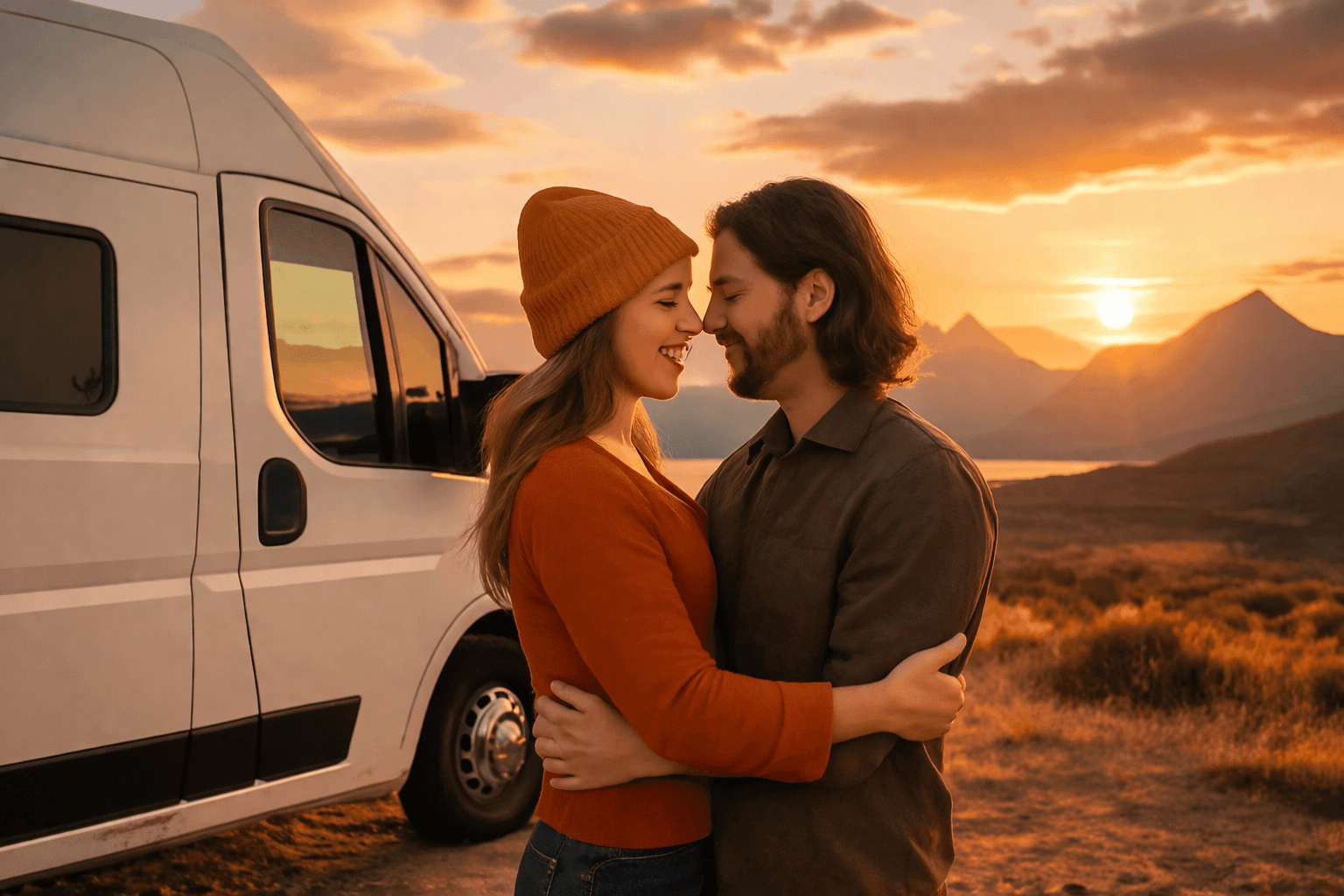
When it comes to actually finding love while travelling, van life can make things feel a bit more complicated.
Most people start life on the road for freedom, adventure, or a bit of space to figure things out. Romance is not always part of the plan. But the need for connection does not disappear just because your home happens to have wheels.
The real question is not whether love fits into van life, but how it works in practice. Dating, intimacy, and long-term relationships all look slightly different when you are constantly moving, living in a small space, and making plans week by week rather than year by year.
Like most things in van life, it comes with a few challenges, but also a lot of moments that feel more real and immediate than conventional dating.
The Challenges of Love on the Road
Before getting into the easier parts, it is worth being honest about what makes relationships on the road difficult.
Constant movement
It can be hard to build momentum with someone when one of you is always planning the next stop. Even when things are going well, travel routes do not always line up.
Different lifestyles
Van life appeals to some people in theory far more than it does in reality. The lack of routine, the limited space, and the practical day-to-day jobs can quickly test whether someone genuinely enjoys the lifestyle.
Practical barriers
Poor signal, lack of privacy, changing plans, and basic logistics all affect how easy it is to stay connected or spend time together.
Emotional uncertainty
Opening up to someone can feel harder when both of you know one person may be driving off in the next few days.
That said, these same challenges often make road-based relationships feel more honest. People tend to be clearer about what they want because time together can be limited and practical realities surface quickly.
Meeting People on the Road
Love is rarely something you can plan, but van life does create natural ways to meet people with a similar outlook.
Van life gatherings and festivals
Meet-ups, festivals, and camper events are one of the easiest ways to connect with other people already living a similar lifestyle. The shared context helps conversations start naturally, and people tend to be more open in these spaces.
Facebook groups, local vanlife communities, and Instagram accounts often post upcoming events. In the UK and across Europe, seasonal gatherings can be a surprisingly good way to meet people beyond just quick campsite conversations.
Campsites and overnight spots
Some of the best connections happen by accident. A quick chat over a morning brew, helping someone with a flat battery, or sharing a campfire with neighbouring vans can easily turn into something more.
These moments tend to feel natural because they start with ordinary shared experience rather than formal dating.
Dating apps on the road
Apps like Bumble and Hinge still work well for vanlifers, provided you are upfront about your lifestyle. Being clear that you live and travel in a van saves confusion later and usually leads to better conversations.
Traveller-focused apps such as Fairytrail can also be useful, particularly if you want to meet people who understand a location-independent lifestyle.
Volunteering and work exchanges
Platforms like Workaway and WWOOF can be excellent for meeting people more slowly. Shared work, routine, and community naturally create stronger conversations than a quick overnight stop.
Dating Safety While Solo Travelling
If you are travelling alone, dating on the road comes with a few extra practical considerations. The freedom of van life is part of the appeal, but it also means you need to be a bit more deliberate about personal safety.
It helps to meet in public places first, especially in towns or busier areas where there are people around. A daytime coffee, a walk through a well-used park, or meeting at a campsite café tends to feel far more comfortable than inviting someone straight to your van.
Let a friend know where you are parked and who you are meeting, even if that means dropping a quick message into a group chat. Sharing your live location for the evening can also offer a bit of peace of mind.
Most importantly, trust your instincts. One of the useful things about living on wheels is that you always have the option to move on if something feels off.
Building a Relationship While Travelling
Meeting someone is one thing. Making it work while constantly moving is the bigger challenge.
Be honest about plans
One of the most useful things you can do early on is be clear about your route and timeframe. If one person is heading for Scotland and the other is planning to cross into Spain, it helps to say that early.
Focus on the time you do have
Van life often compresses time. Spending several days together in a row can build closeness quickly. Rather than comparing it to conventional dating, it often works better to simply stay present in the time you share.
Protect personal space
Even in a close relationship, constant togetherness can be tiring. A solo walk, a quiet coffee alone, or taking separate time during the day makes a noticeable difference.
Stay flexible
Road relationships do not always follow a fixed path. Sometimes people travel together for a few weeks, separate for a while, then meet up again later. Flexibility matters far more than trying to force a traditional structure onto it.
Boundaries and Personal Safety at Overnight Spots
Boundaries matter just as much as romance, particularly when overnight parking is involved.
If you are meeting someone new, it is worth thinking carefully before sharing your exact overnight spot, especially if you tend to use quieter wild camping locations. Some travellers prefer to meet elsewhere first and only share where they are staying once trust has been built.
Even in established relationships, having boundaries around personal space can make van life far easier. That might mean agreeing on quiet time, solo walks, or simply having moments in the day where each person gets a bit of breathing room.
Practical safety still comes first. Choose places where you feel comfortable staying overnight, keep essentials easy to reach, and avoid letting a new connection override your usual judgement about where and how you park.
Van Life as a Couple
For couples already together, van life brings its own version of relationship pressure.
Compromise becomes daily life
Where to park, how long to stay, what to spend money on, and who handles which jobs all become shared decisions.
Keep small rituals
Romance on the road is usually less about grand gestures and more about small habits. Cooking together, making coffee for each other in the morning, or watching the sunset from the van roof can do more than planned date nights.
Split responsibilities fairly
The less glamorous jobs matter. Emptying the loo, topping up water, sorting power issues, and dealing with maintenance should feel balanced.
Give conflict room to settle
Arguments feel bigger in a small van. Sometimes the most practical solution is simply taking a walk before continuing the conversation.
Long-Distance Relationships While Living on the Road
Not every relationship will be with another traveller. Sometimes the person you meet lives a far more fixed life.
That does not automatically make it unworkable, but it does require honesty about expectations.
Reliable mobile data, planned visits, and clear communication all matter more than they might in a conventional relationship. In practice, planning the next meet-up often becomes just as important as the day-to-day messaging.
How Van Life Affects Breakups and Solo Recovery on the Road
Breakups can feel different when they happen on the road. There is no familiar home environment to return to, and sometimes the places you shared together stay closely tied to the memory of the relationship.
At the same time, van life can offer a kind of space that helps with recovery. Changing location, adjusting your route, or simply spending a few quiet days somewhere restorative can help create mental distance.
Solo recovery often means rebuilding routine in small ways. A morning coffee outside the van, a familiar walking route, or spending time in places that feel calm can help create a sense of steadiness again.
One practical reality is that shared gear, route plans, or even the van itself may be tied up in the relationship. If you have been travelling as a pair, it helps to sort out the practical side early so the emotional side does not become even heavier.
More than anything, give yourself time. One of the strengths of slow travel is that it allows room to process things without rushing into the next chapter too quickly.
Why Love on the Road Feels Different
Relationships formed while travelling often feel more vivid because they are tied to shared places and moments.
A sunrise parked above a loch, a rainy evening in the van, or a long drive through unfamiliar roads tends to stay with you. Even if the relationship itself is brief, the memory of that time often becomes part of the wider journey.
That is part of what makes connection on the road feel so meaningful. It is rarely separate from the travel experience itself.
Final Thoughts
Finding love while living on the road is not always straightforward, but it is far from impossible.
Sometimes it is a short-lived connection that becomes one of the most memorable parts of a trip. Sometimes it turns into a long-term partnership built around shared movement and mutual freedom.
The main thing is staying open to connection without forcing it into a traditional shape. Van life already asks you to rethink what home looks like. Relationships often work the same way.
Love on the road may not always be simple, but it often feels deeply real, and that is part of what makes the journey richer.