
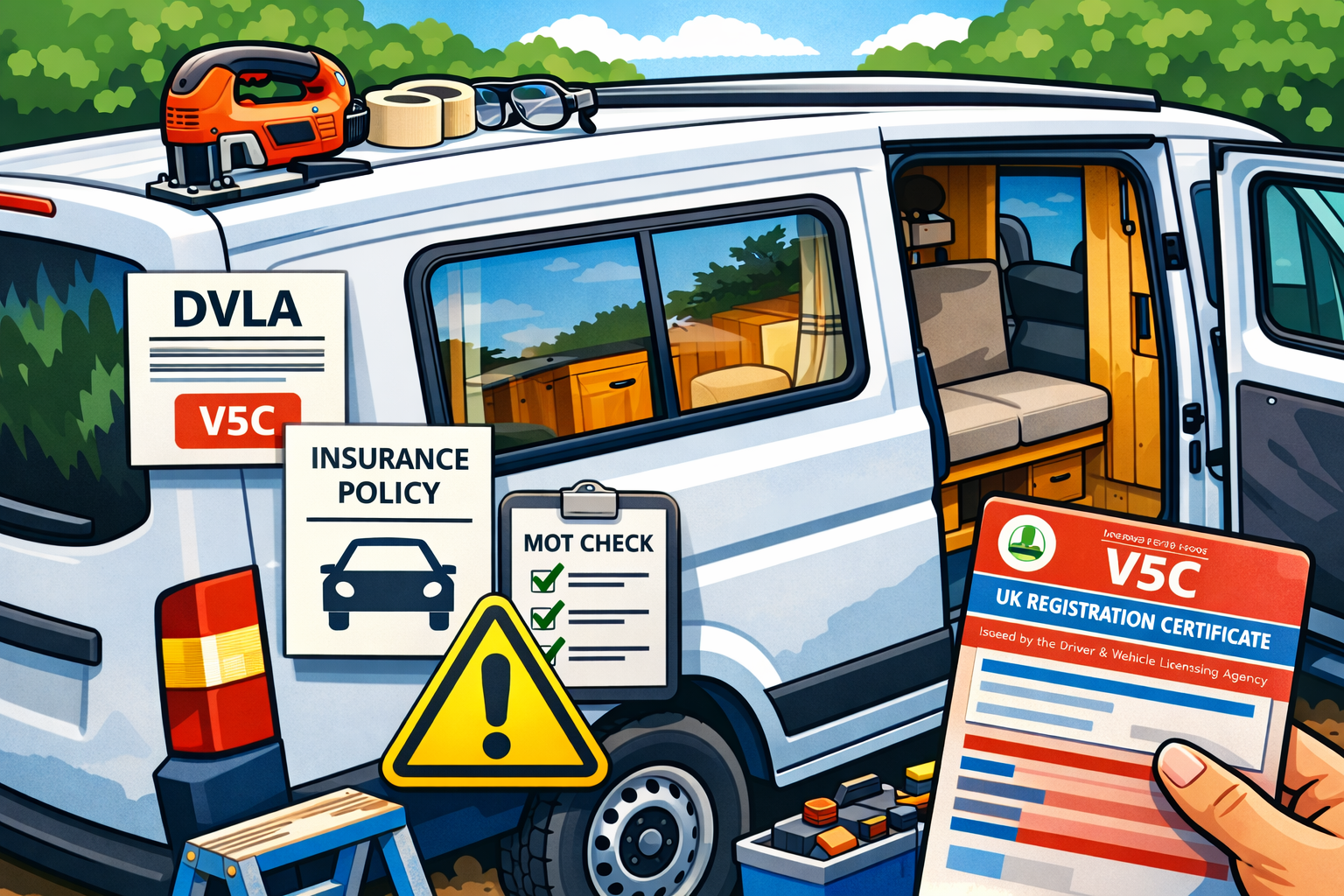
Fitting side windows to a van does not give you a simple automatic yes-or-no answer on DVLA notification. There is no standalone V5C category for “I’ve added windows”, but DVLA says you must update the V5C for most vehicle changes. The important question is whether the work has changed a recorded detail such as the body type, seating capacity, or the size or appearance of the vehicle’s structure.
Windows also often arrive as part of a bigger conversion rather than as an isolated job. Add camper fittings, passenger seats or more substantial structural work and the answer can change. That is where the grey areas begin.
What It Means in Practice
If you are cutting a side panel and fitting bonded or framed glazing in the rear load area, do not assume either that the windows automatically require a new body type or that they can always be ignored for DVLA purposes.
Instead, look at what has actually changed. DVLA specifically requires V5C updates for changes including seating capacity and body type. Structural modifications can also require an update if they alter the size or appearance of the chassis or monocoque bodyshell.
That distinction matters because a window can be one part of a much wider conversion. If the van is becoming a campervan, day van or passenger-carrying vehicle, check whether the details recorded on the V5C still accurately describe it.
DVLA, Insurance and MOT Are Different Questions
A lot of confusion comes from mixing together three related but separate issues:
- DVLA registration details and the V5C
- insurance disclosure
- MOT and roadworthiness requirements
Online discussions often roll all three into one answer, but they should be treated separately.
For DVLA purposes, the recorded body type is principally about what the vehicle looks like in traffic so it can be identified. DVLA makes clear that the body-type description itself does not determine the vehicle’s insurance category, speed limits or other legislative requirements.
Insurance is a separate matter. Adding windows changes the vehicle from its standard specification, so tell your insurer about the modification. What that means for your premium or cover depends on the insurer and the terms of your policy, rather than there being one universal outcome for every window conversion.
The MOT question is separate again. Relevant glazing needs to meet the applicable safety-glass or safety-glazing requirements, so the type and standard of glass still matter even if the V5C body type stays the same.
What If the Windows Are Part of a Camper Conversion?
Windows can matter to a motor-caravan application, but they are only one part of the test.
DVLA will only consider changing the body type to “motor caravan” where the existing body type qualifies and the converted vehicle meets its requirements for both permanent external features and internal living equipment. Two or more windows on at least one side of the main body are one of the external features considered, but fitting the windows alone does not make a van a motor caravan for registration purposes.
There is another useful distinction here: a van can be used as a motor caravan even if DVLA does not change the recorded body type to “motor caravan”, provided the keeper is satisfied that the conversion meets the required internal features. The body-type entry is about the vehicle’s external appearance and identification, not simply what you use it for.
Rear Seats Change the Answer
If fitting the windows is part of adding rear passenger seats, the paperwork becomes clearer. If the conversion changes the vehicle’s seating capacity, the V5C must be updated.
There are also separate practical questions around seatbelt mounts and passenger safety. In other words, once rear seats enter the conversion, this is no longer just a question about a piece of side glass.
What About Structural Work?
The main risks are practical rather than bureaucratic, but substantial bodywork should not be brushed aside.
DVLA requires an update where a structural modification changes the size or appearance of the chassis or monocoque bodyshell from its original form. That does not mean every normal window aperture automatically falls into this category. If the work has involved more significant alteration around structural sections, though, it deserves more attention than a straightforward bonded-glass installation.
If Your Change Is Not Listed on the V5C
If you decide that DVLA needs to know about a modification but the particular change is not listed in the relevant section of the V5C, there is still a route for notifying them. DVLA says you can add notes in the vehicle-details section and send the V5C with supporting evidence and a letter explaining the change.
That is more useful than trying to make a window conversion fit neatly into a category it does not belong in.
A Practical Way to Look at It
- Windows on their own: there is no separate “added windows” notification category, so check whether the work has changed another V5C detail rather than relying on a blanket rule.
- Windows plus a camper conversion: consider whether the recorded body type still accurately describes the vehicle. Windows are only one part of DVLA’s motor-caravan criteria.
- Windows plus rear seats: if the seating capacity changes, the V5C must be updated.
- More substantial structural alteration: check whether the work has changed the size or appearance of the chassis or monocoque bodyshell.
- Insurance: tell your insurer about the modification and check what it means for your particular policy.
- MOT: make sure the glazing itself meets the relevant requirements.
So the short answer remains more nuanced than a simple yes or no. Adding windows does not automatically mean changing the van’s body type, but neither is “windows never need reporting” a safe rule to work from. Check what the conversion has actually changed, make sure the V5C still reflects the details DVLA requires, and treat insurance and MOT requirements as separate questions.