
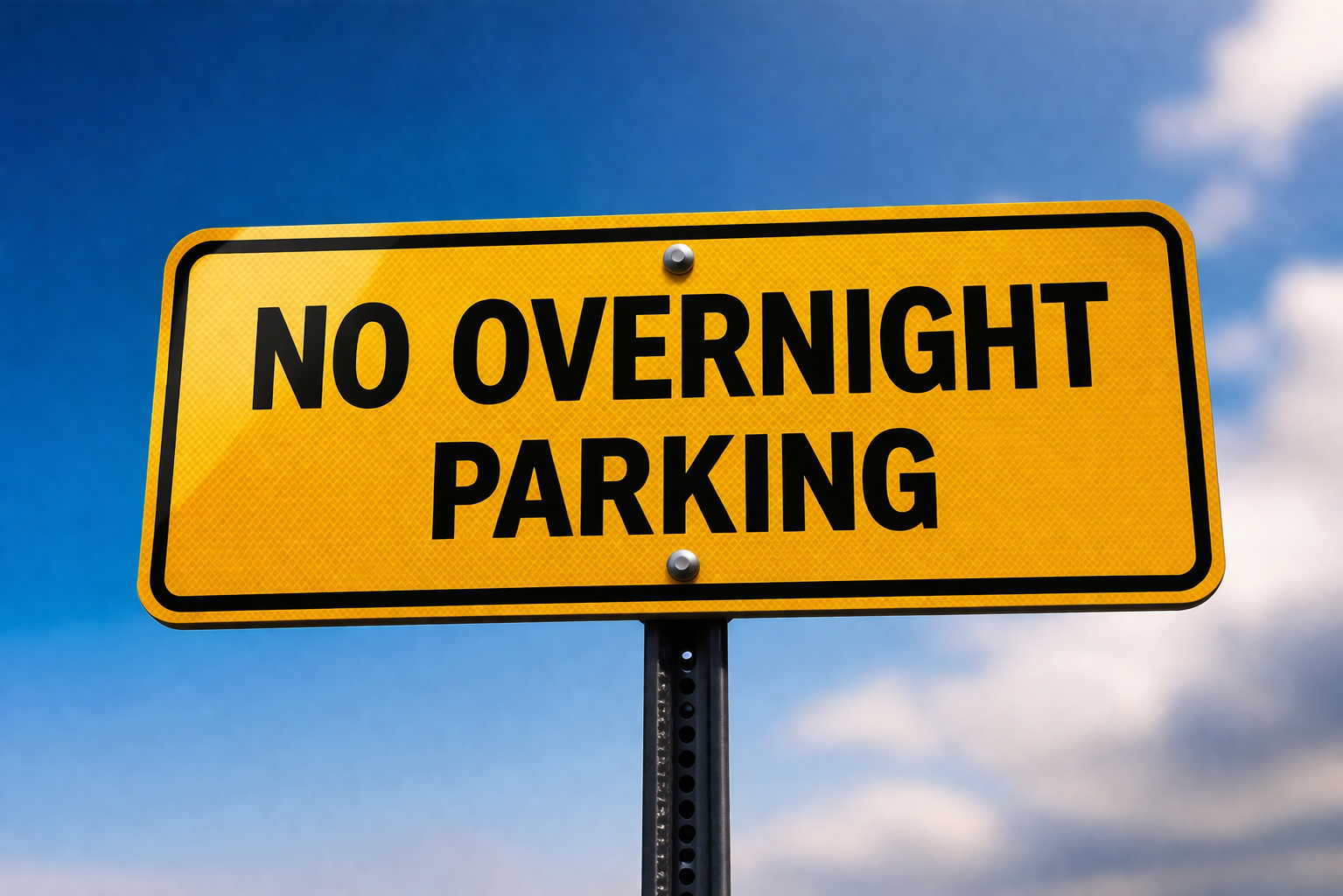
Overnight parking is one of the most persistent grey areas for anyone travelling by campervan in the UK. It is usually asked as a simple legal question: is it allowed or not? But once you are actually out on the road, the answer is rarely that straightforward.
In practice, overnight parking sits somewhere between written law, local authority rules, local interpretation, and how your stay appears to others. England, Scotland and Wales each handle this slightly differently, and even within the same council area, what happens on the ground can vary from one car park to the next.
What matters most is understanding the difference between what is formally restricted, what is commonly tolerated, and where travellers often make assumptions that do not hold up in real use.
Parking vs Camping: Why the Distinction Matters
One of the most common misunderstandings is the idea that sleeping inside a campervan automatically counts as camping. In most cases, it does not, but the distinction still matters.
Parking usually means leaving a vehicle legally parked within the rules of that space.
Camping, as councils and local authorities often interpret it, usually involves visible signs of occupation outside the vehicle. That might include chairs, tables, awnings, levelling ramps, cooking outside, or disposing of waste.
From experience, enforcement tends to focus less on whether someone is asleep inside the van and more on the practical impact of the stay. How long are you there? Are you visible? Is anyone likely to complain? Those factors usually matter more than the fact you are staying overnight.
England: Overnight Parking Is Usually Council-Controlled
There is no single national law in England that specifically bans sleeping in a campervan. Instead, most restrictions are applied locally.
What Usually Applies
- Sleeping in a vehicle is not illegal in itself
- Parking restrictions are commonly enforced through Traffic Regulation Orders (TROs)
- Restrictions may still apply even where signage is limited or unclear
How This Works in Practice
On the road, signage is always the first thing to check, but it should not be the only thing you rely on.
Some council car parks clearly state no overnight parking or specify closed hours overnight. Others say nothing at all, which is where uncertainty tends to begin.
Where there is no clear sign, what happens often depends on the location itself:
- whether it is a busy coastal or tourist area
- the time of year
- whether the site has had previous misuse
- local complaint history
In quieter inland areas, especially outside peak season, overnight stays are often left alone. In busier areas, places that appear unrestricted can still be informally monitored, and being asked to move on is not unusual.
How to Check Local TROs
If signage is unclear, the most reliable way to confirm whether overnight parking is restricted is to check the local Traffic Regulation Order, usually referred to as a TRO.
These are the legal orders councils use to control parking restrictions, including overnight bans, vehicle class restrictions, waiting limits and seasonal rules.
Where to Look
- the local council’s parking or highways page
- traffic regulation order maps or PDF schedules
- car park order documents linked from council parking pages
Searching for the council name followed by “overnight parking TRO” or “car park order” is often the quickest way to find the relevant page.
What to Check
- restricted hours, such as no parking between 10pm and 6am
- motorhome or campervan-specific restrictions
- seasonal changes in coastal or tourist areas
- vehicle height, length or weight limits
It is worth remembering that TRO documents are often written in formal legal language, so the practical restriction may not be immediately obvious at first glance.
If there is any uncertainty, it is usually safer to assume the location may be restricted and choose a designated overnight stop instead.
Wales: Similar Law, Often Firmer in Practice
Legally, Wales works much like England, with overnight parking largely controlled at local authority level. In practice, though, the messaging can feel firmer, particularly in sensitive areas.
National Parks and Coastal Areas
Popular coastal car parks and national park areas are much more likely to have clear restrictions in place.
- explicit overnight parking bans
- height barriers
- signage directing campervans to campsites or designated stops
Less visited inland areas can feel more tolerant, particularly midweek and outside holiday periods, but it is not something to treat as predictable. One quiet village car park may be fine, while the next council area takes a much stricter approach.
Scotland: More Tolerant, But Not Without Limits
Scotland is often spoken about as the easiest part of the UK for overnight campervan parking, but that reputation needs some context.
The Access Code
Scotland’s Outdoor Access Code applies to wild camping on foot. It does not automatically extend to campervans or motorhomes.
Vehicles still remain subject to land ownership, local authority controls, byelaws and specific permit zones.
What Feels Different on the Road
- fewer formal restrictions in some rural areas
- greater tolerance of short, low-impact stays
- stronger reliance on responsible behaviour
That said, pressure in well-known routes and hotspots has changed things noticeably. Parts of the NC500, Loch Lomond and other heavily visited areas now use permit schemes, designated overnight zones, and in some places outright restrictions.
What worked a year or two ago may no longer be current, which is why older online advice can be misleading.
What Actually Triggers Enforcement
Across England, Wales and Scotland, enforcement is rarely random. In practice, certain patterns tend to attract attention much more quickly.
- staying multiple nights in the same spot
- using external equipment
- blocking access, views or footpaths
- creating noise
- leaving waste behind
- parking in high-pressure tourist areas during peak season
Arriving later in the evening, keeping everything self-contained inside the van, and leaving early the next morning often attracts less attention, but it should be seen as a practical pattern rather than any kind of right.
Common Misunderstandings
“No sign means it’s allowed.”
Not necessarily. Some restrictions exist through TROs or local rules that are not always clearly displayed on site.
“You’re allowed one night anywhere.”
There is no formal one-night allowance in UK law. This is more of a social convention than a legal rule.
“Scotland allows campervans everywhere.”
No. While tolerance can be higher in some rural areas, permit zones, exclusions and enforcement areas absolutely exist.
Best Legal Overnight Alternatives
If a location feels uncertain, the easiest way to remove the guesswork is to use an overnight option that is clearly intended for campervans.
Across the UK, the most reliable legal alternatives usually fall into three broad categories.
Aires and Designated Motorhome Stops
Aires are dedicated overnight stopping places designed for self-contained motorhomes and campervans. While more common across mainland Europe, they are becoming easier to find in parts of the UK, particularly in Scotland and some coastal tourist areas.
Some provide only parking, while others include water, waste disposal and marked overnight bays. They are usually the most straightforward option where available because overnight stays are clearly expected.
Pub Stopovers
Many pubs, farm shops and rural inns now allow campervan stopovers, either informally or through dedicated stopover schemes.
These can be one of the best options when travelling through rural areas, but it is always worth checking directly with the venue before arriving. Some expect a booking, a meal purchase, or advance permission from the landlord.
Even where overnight parking is offered, it is still good practice to confirm arrival times, where to park, and whether motorhomes or larger vans are suitable.
CL and CS Sites
For a more formal overnight option, CL and CS sites are often the most reliable choice.
CL stands for Certified Location and CS stands for Certified Site. These are small, licensed sites, often on farms, pubs or private land, usually with limited pitches and a quieter feel than larger campsites.
They are especially useful when you want a legal overnight stay with basic facilities without the atmosphere of a full holiday park.
Practical Takeaways
- always check signage first
- be extra cautious in national parks and coastal hotspots
- keep your stay short and self-contained
- expect tolerance to change with season and visitor pressure
- be prepared to move on if a place does not feel appropriate
How to Think About Overnight Parking in the UK
Overnight campervan parking in the UK is not governed by one simple rulebook. It sits at the intersection of local authority powers, land ownership and social tolerance.
England and Wales tend to rely more heavily on council-level restrictions, while Scotland often allows a little more flexibility, although that flexibility is narrowing in busier areas.
The most reliable approach is not looking for a loophole. It is staying informed, keeping your impact low, and recognising when the better decision is simply to move on and find somewhere more suitable.
This was helpful, especially the section on TROs, but I’m still never quite sure how much weight to give a car park with no signs at all. We were in an unsigned council car park in England last autumn and had no issues, then got knocked on at 6am in a similar one a week later. Do you normally check council websites before every overnight stop or just in the busier tourist areas?