
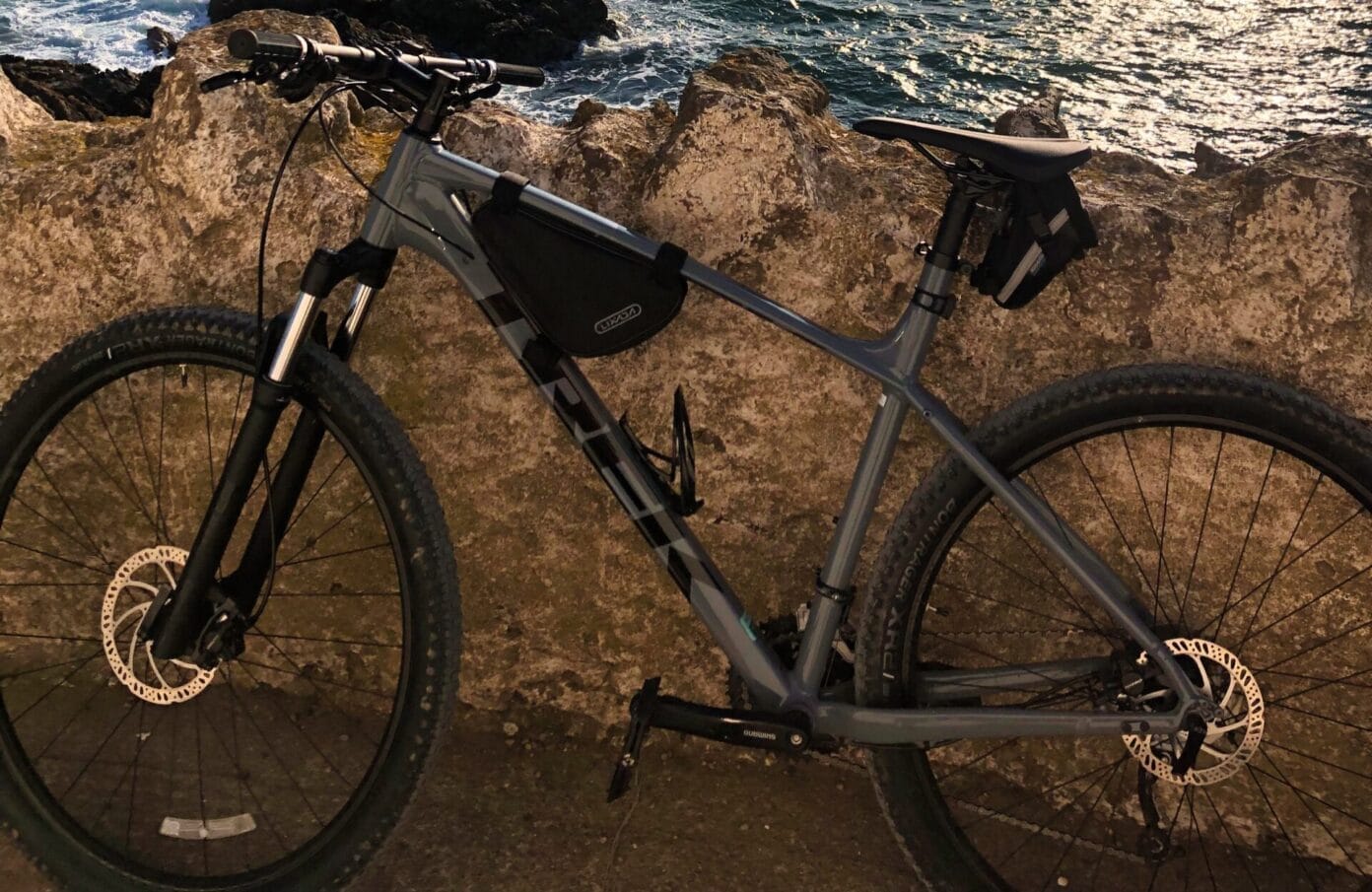
If you’re looking for a dependable mountain bike that balances trail performance with sensible value, the 2017 Trek Marlin 7 remains a bike worth considering. It has long been a popular choice for riders wanting something capable enough for proper off-road use without stepping into a much higher price bracket.
Originally purchased from Evans Cycles, the Marlin 7 built a strong reputation among riders for being a practical and versatile hardtail. It suits beginners moving beyond casual riding, while still offering enough capability for more experienced riders who want a reliable bike for mixed terrain.
Frame and ride feel
The frame uses Trek’s Alpha Silver Aluminium, which gives a good balance of low weight and durability. For a hardtail mountain bike in this category, that matters in everyday use. It feels light enough to climb comfortably but still solid enough to handle rougher sections of trail.
One of the stronger points of the Marlin 7 is its geometry. The riding position feels comfortable without being too upright, which makes it suitable for longer rides as well as shorter trail sessions. It works well for riders using the bike for a mix of woodland tracks, towpaths, gravel paths, and entry-level singletrack.
Suspension performance
The RockShox XC30 coil spring fork offers 100mm of travel, which is well suited to this type of bike. It takes the edge off roots, loose stone, and uneven ground, helping the front end stay controlled on rougher terrain.
The ability to adjust the fork is particularly useful in practice. Riders can fine-tune the feel depending on weight, terrain, and riding style, which makes a noticeable difference to comfort and front-wheel control.
Gearing and drivetrain
The 27-speed Shimano drivetrain gives the Marlin 7 a broad range of gears, which makes it a practical choice for varied terrain. Whether you’re climbing steeper hills or building speed on flatter sections, there is enough range here for most riders.
The Shimano Altus M370 shifters paired with the Acera M3000 derailleur provide reliable and predictable gear changes. For riders using this as an everyday trail bike, that consistency is often more important than outright performance claims.
Braking confidence
The Tektro M285 hydraulic disc brakes are one of the more practical strengths of the bike. They offer consistent stopping power in wet and dry conditions, which is especially important for UK riding where mud, damp trails, and changeable weather are part of normal use.
Hydraulic brakes also tend to require less effort at the lever than mechanical alternatives, which helps reduce hand fatigue on longer rides and gives better control on descents.
Wheels and tyres
The 29-inch Bontrager XR2 Comp tyres help the bike roll efficiently over rough ground. Larger wheels can make trail riding feel smoother, particularly over roots and loose rock, and they hold speed well on longer sections of track.
The tyres offer a solid balance of grip and rolling speed, making them suitable for mixed use rather than one specific terrain type. That versatility is part of what makes the Marlin 7 appealing as an all-rounder.
Comfort and finishing kit
Trek’s Bontrager finishing kit adds to the bike’s practical appeal. The Evoke 1.5 saddle provides decent support for longer rides, while the SSR handlebar and stem give the steering a direct and stable feel.
These details often matter more over time than they do on a quick shop-floor test ride, especially if you plan to use the bike regularly for weekend trails or longer countryside routes.
Final thoughts on the 2017 Trek Marlin 7
The 2017 Trek Marlin 7 remains a well-rounded hardtail mountain bike that offers genuine value. It combines a solid frame, dependable components, and a ride feel that works across a wide range of conditions.
For newer riders, it offers enough confidence and capability to grow with. For more experienced riders, it remains a sensible option for general trail use and mixed off-road riding.
If you’re considering one, it’s still worth visiting your local Evans Cycles store to test ride the current equivalent or compare against used examples. A short ride often reveals more about fit and comfort than the specification sheet alone.
Overall, the Trek Marlin 7 stands out as a reliable and practical mountain bike that continues to make sense for riders who want capability without unnecessary complexity.
We may earn a small commission if you make a purchase – at no extra cost to you.