
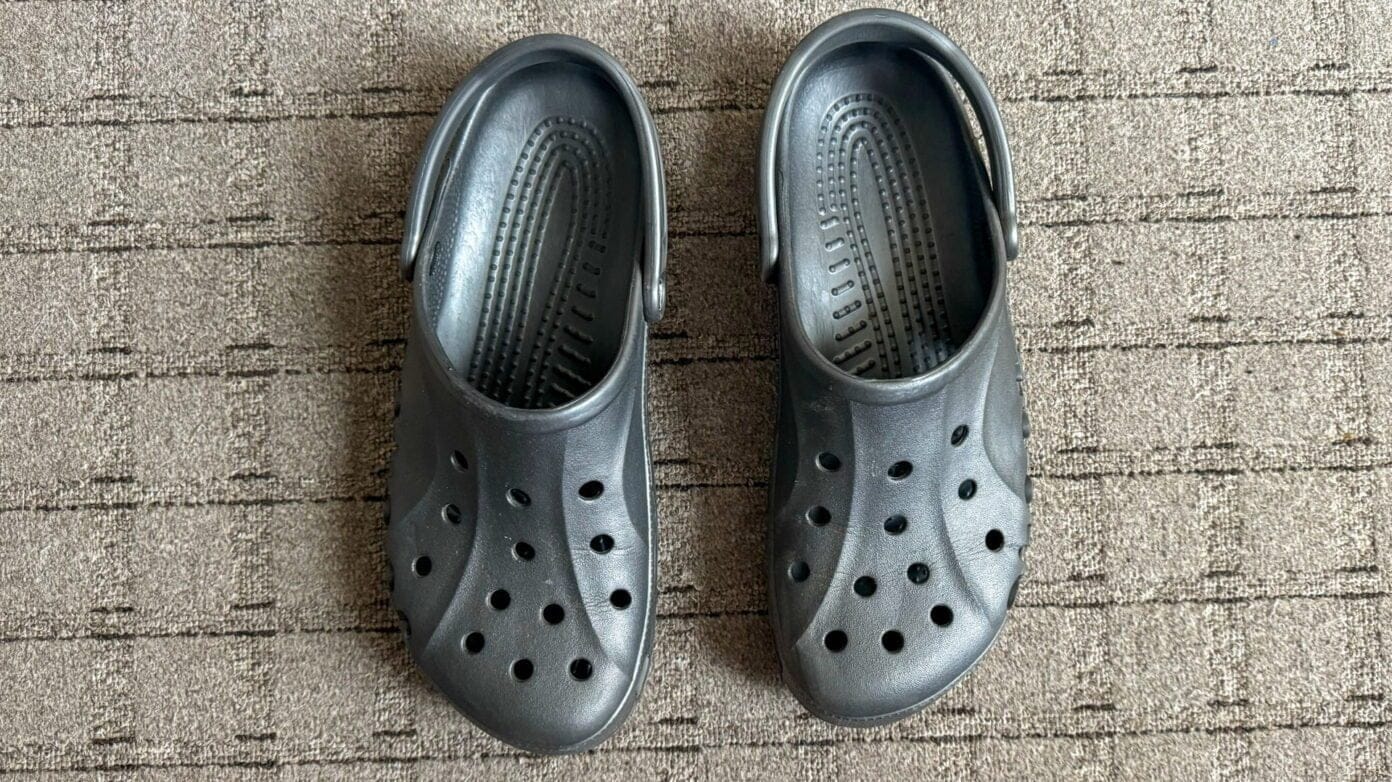
Crocs have always had a slightly complicated relationship with the public. I’ll admit, I was initially sceptical and, if I’m honest, a bit snobby about them myself. Going from quiet disdain to genuine loyalty was not something I expected.
That changed after trying a pair of knock-off Crocs and realising, rather reluctantly, that they were far more comfortable than I’d assumed. That experience was enough to make me try the real thing. Since then, I’ve become a convert. In this review, I’m looking at the Crocs Baya in practical terms: what works well, where they fall short, and whether they’re worth buying.
Crocs Baya Overview
The Crocs Baya sits within the brand’s classic clog range, keeping the familiar slip-on design but with a slightly cleaner, more modern look. It still feels unmistakably like a Croc, but the shape is a little more streamlined than the original Classic Clog.
Made from Crocs’ proprietary Croslite™ material, the Baya is built around comfort, easy cleaning, and everyday durability. Large ventilation ports across the upper and sides improve airflow and help water drain quickly, which makes them especially practical for wet conditions, campsites, beach stops, and general day-to-day wear.
Key Features and Specifications
- Material: Made from Croslite™, a closed-cell resin that provides cushioning, support, and long-term durability.
- Ventilation: Large cut-out holes allow strong airflow and fast drainage.
- Design: Slightly sleeker profile than the Classic Clog, with Crocs branding built into the side.
- Comfort: Textured footbed with circulation nubs for a gentle massage-like feel.
- Versatility: Suitable for both indoor and outdoor use.
- Maintenance: Easy to wash with soap and water.
- Durability: Resistant to odour and staining.
- Colours: Available in a wide range of colours.
The Advantages
Exceptional Comfort
The main reason the Crocs Baya remains so popular is simple: they are genuinely comfortable. The Croslite™ material feels soft underfoot and offers more cushioning than you might expect from something so lightweight.
For longer periods of wear, whether that’s around the house, on a campsite, or during repeated short walks throughout the day, they do a good job of reducing foot fatigue. The ergonomic shape supports the natural shape of the foot, and the textured footbed adds a subtle massaging effect as you walk.
Versatile and Practical
This is where the Baya really makes sense from a vanlife and slow travel point of view. They work well as easy slip-ons for stepping out of the van, walking across gravel pitches, heading to campsite facilities, or quick runs into shops.
The ventilation ports help keep your feet cool, and just as importantly, they let water, sand, and small bits of debris pass through easily. For beach days, wet grass, or muddy stops, that practicality matters far more than looks.
Easy Maintenance
One of the most useful things about the Crocs Baya is how little effort they require. A quick rinse with soap and water is usually enough to clean them, which makes them ideal for travel, especially when storage space and cleaning options are limited.
They also dry quickly, so they’re easy to throw back on after washing.
Durability
In practical use, they hold up well. Whether it’s rocky beaches, campsite paths, muddy verges, or everyday use at home, the Baya tends to cope without showing much wear too quickly.
For footwear that often ends up being used as a default “just slip these on” option, that durability adds real value.
Long-Term Wear Over Several Months
After several months of regular use, the Crocs Baya continues to hold up well. This is the sort of footwear that often becomes part of your daily routine without much thought, whether that’s slipping them on at home, using them around campsites, or keeping them by the van door for quick stops.
Over time, the Croslite™ material tends to retain its cushioning better than cheaper alternatives. While some slight smoothing of the footbed texture is to be expected with frequent wear, the overall comfort remains largely consistent. The shape also tends to hold well, without collapsing or losing structure too quickly.
That longer-term durability is where the price starts to make more sense. They feel less like a novelty purchase and more like dependable everyday footwear.
Comparison with Classic Clog Fit
Compared with the original Classic Clog, the Crocs Baya has a slightly neater and more streamlined fit. The overall feel is still roomy, but the profile sits a little closer to the foot, which some people may prefer.
The Classic Clog tends to feel a bit more open and relaxed, whereas the Baya gives a slightly tidier silhouette without sacrificing the easy slip-on design. In practical use, the difference is subtle rather than dramatic, but it can make the Baya feel a touch more secure when walking on uneven ground.
If you already like the Classic Clog but want something that looks marginally less bulky, the Baya is a sensible middle ground.
Potential Drawbacks
Aesthetic Controversy
There’s no getting around it: Crocs are still divisive when it comes to appearance. The design is built for function first, and not everyone likes the look.
If style is a major factor in your buying decision, this may still be the biggest drawback. That said, once comfort and practicality enter the equation, appearance tends to matter a bit less in real-world use.
Fit and Sizing
Sizing can be slightly inconsistent depending on foot shape and how you like them to fit. Some people prefer a looser fit for easy slip-on use, while others may find them a little roomy.
If you’re ordering online, it’s worth checking the sizing guide carefully before buying.
Price Point
Compared with supermarket or generic alternatives, authentic Crocs Baya clogs do cost more. For some, that may be difficult to justify at first glance.
That said, the added comfort, durability, and ease of use do make the price easier to justify if you expect to wear them regularly.