



I remember turning south out of Dumfries and feeling like the road was taking me somewhere quieter, less insistent. The land unfurls towards the Solway Firth, the air carries a faint salty note, and after a while the tarmac gives up altogether. At that point you’ll find Castle Corner Campsite, tucked just off the lane at the very edge of Caerlaverock’s wetlands. It does not announce itself. It just exists, quiet and simple, and that’s exactly how it feels to arrive there.
The first time I stayed here the weather couldn’t settle on anything — sun one minute, drizzle the next. It felt fitting for the place, which hardly pretends to be more than what it is. You don’t come here for neat lawns or electric hook-ups. You come to pull up close to water, birds and one of Scotland’s older stone castles with marshland all around.
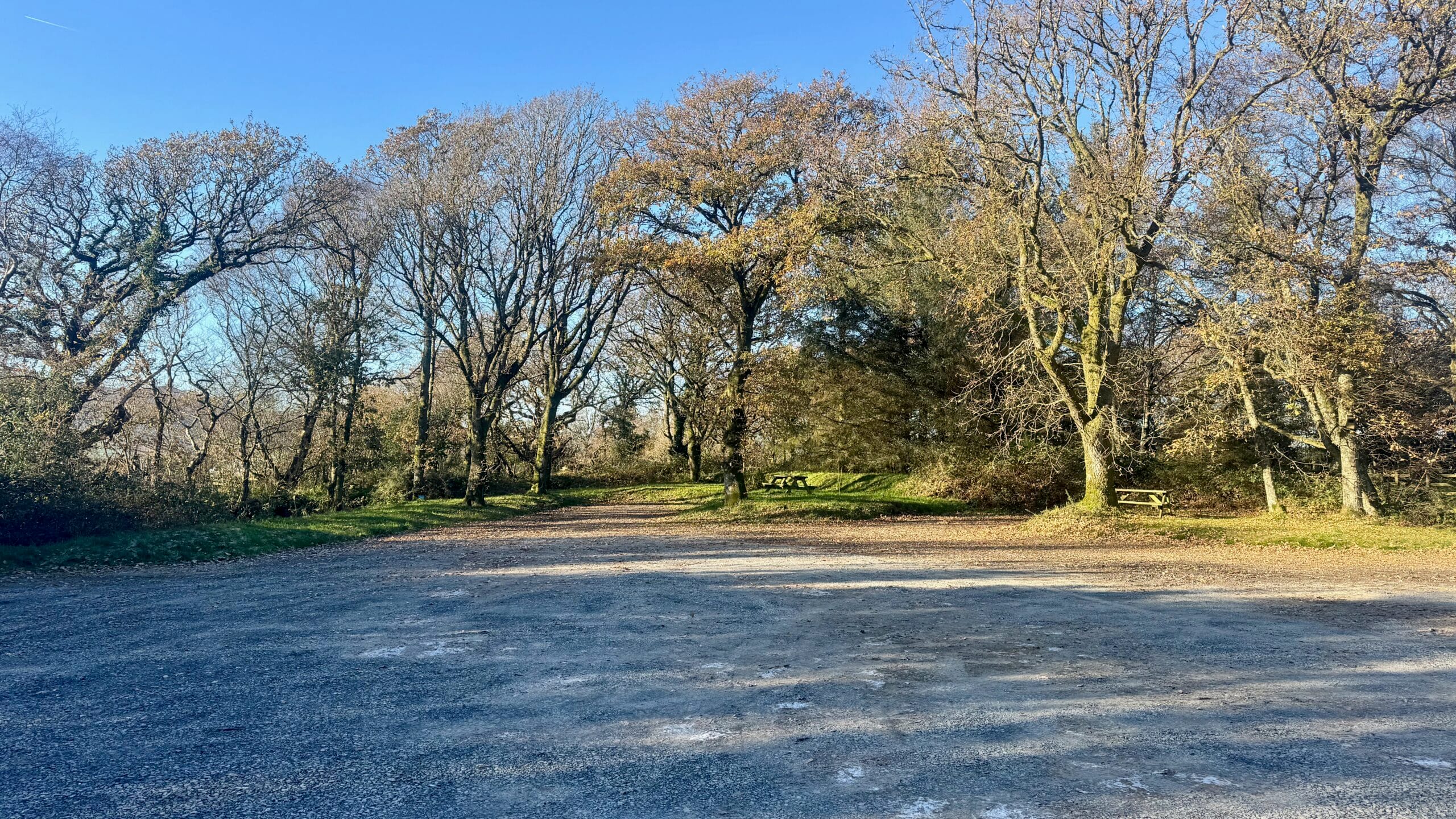
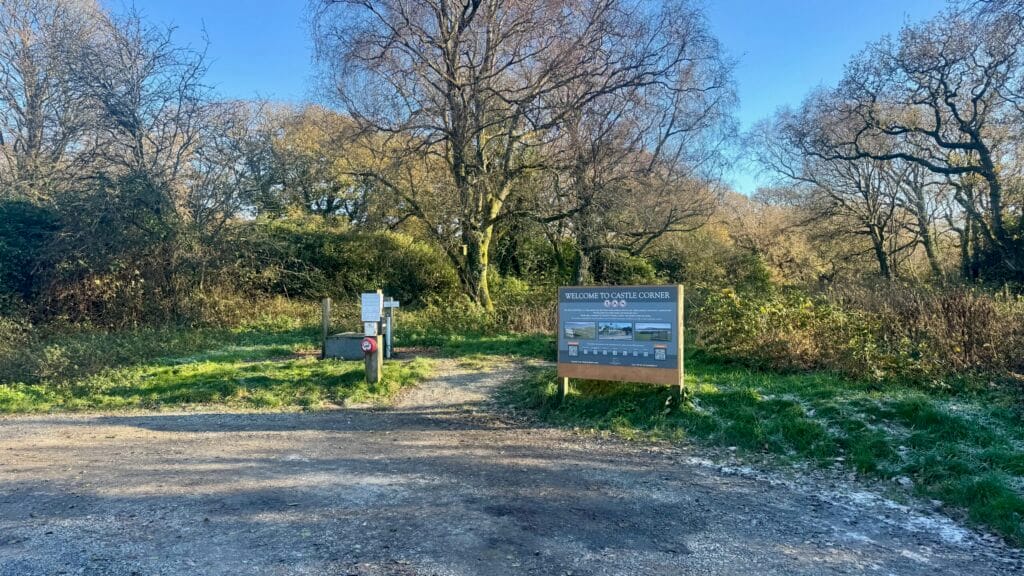
The lane from Dumfries takes about twenty minutes, but by the time you reach the hamlet it already feels like a quiet corner of its own. The road narrows, hedges squeeze in, and then you see salt marsh spreading out towards the Firth. The entrance to the campsite is easy to overlook on first glance — a simple break in the roadside, a bit of hardcore to park on. There’s no big sign or greeting. You just ease in, pick a reasonably flat spot and settle for the night.
After rain the ground around the edges gets soft and muddy, and you accept that as part of being here. The base under the vans is coarse hardcore that mostly keeps wheels out of trouble, but boots and tyres still pick up mud and grit. There’s no reception desk, no reserved plots, no traffic of vans pulling in with white lines and directions. Just a handful of vans, some patches of hard standing, a few puddles where the wet ground softened, and that’s it.
It’s run by the local community and people pay a minimum donation — I put ten pounds in the honesty box on arrival. There’s nothing formal about it. Nobody comes around with clipboards or rules. Part of the mood here comes from that absence of structure. You look after your own rubbish, take it with you, and try to leave the place the same as you found it. It feels right in a spot so close to the reserve.
There are just a few basics you need and expect when you’re self-contained. A tap with drinking water worked well, and there’s a simple point to empty grey water or chemical toilets. Nothing fancy, but adequate for what most people here need.
The thing that strikes you most is how alive the place feels once you step out of the van. The wetlands are busy with birds — waders probing the mudflats, herons standing quietly in shallow water, distant calls of geese cutting through the stillness. Light moves fast across this wide flat land. In the evening it can turn the shallow pools a soft peach colour. In the morning the world might be muted and grey under low cloud. Both moods suit the place.
There’s a woodland path that leaves from near the park-up and takes you on foot towards Caerlaverock Castle. It threads through trees with occasional glimpses of water between branches. From where you start it’s somewhere around half a mile to a mile, depending on the route you take and how often you stop for birds or light or quiet views.
Coming on foot makes the castle feel different from most historic sites you visit straight from a car park. Through the trees the moat appears suddenly, reflecting the tower shapes and sky more than anything else. It has a simple solidity that doesn’t shout about itself, but it sits very much in its landscape. You can wander around, listen to birds on the water, and breathe in that patch of marshy air.
Evenings back at the site are quiet. The lane sees only the occasional car, and the calls of birds settle into something softer as light fades. Other vans that were there during my stay carried the same relaxed rhythm. People spoke quietly, shut their doors without a clang, and the pace of the place felt slow and unpressured. I cooked a basic meal on my stove, left the back doors open and watched light drain away across the marshes. It’s the sort of quiet that stays with you for a bit.
There are a few small practical notes to bear in mind. Parking close to the softer grass edges after rain can be awkward, so ground mats helped keep feet cleaner. With no bins on site a decent waste bag felt important. There’s no electric, no showers, no structured pitches. It’s essentially a managed wild park-up run on trust, but it has a gentle order that most people here seem to respect.
For me this campsite felt like slowing down in a place that doesn’t rush you. It isn’t about comfort or convenience. It’s about quiet evenings by water, woods to walk through, birds to watch, and an old castle at the end of a short path. That’s why I would go back.
This stop suits people travelling in self-contained vans who don’t need a lot of infrastructure. If you like minimal fuss, open skies, and the kind of slow rhythm that comes with wetlands and long light, you’ll find it fitting. Families after playgrounds and showers will likely want something more developed. But if you want somewhere quiet to pause near the Solway’s edge, this place does exactly that.
Caerlaverock, Dumfries and Galloway, Scotland, DG1 4RU, United Kingdom
https://www.caerlaverock.org.uk/motorhomes-in-caerlaverock
Looked nice on paper — until you admit there are no showers or electric hook-ups. For 10 pounds I expect a little more comfort, to be honest. I know it’s part of the charm, but after a long drive a shower and a plug-in would be welcome. I might pass.