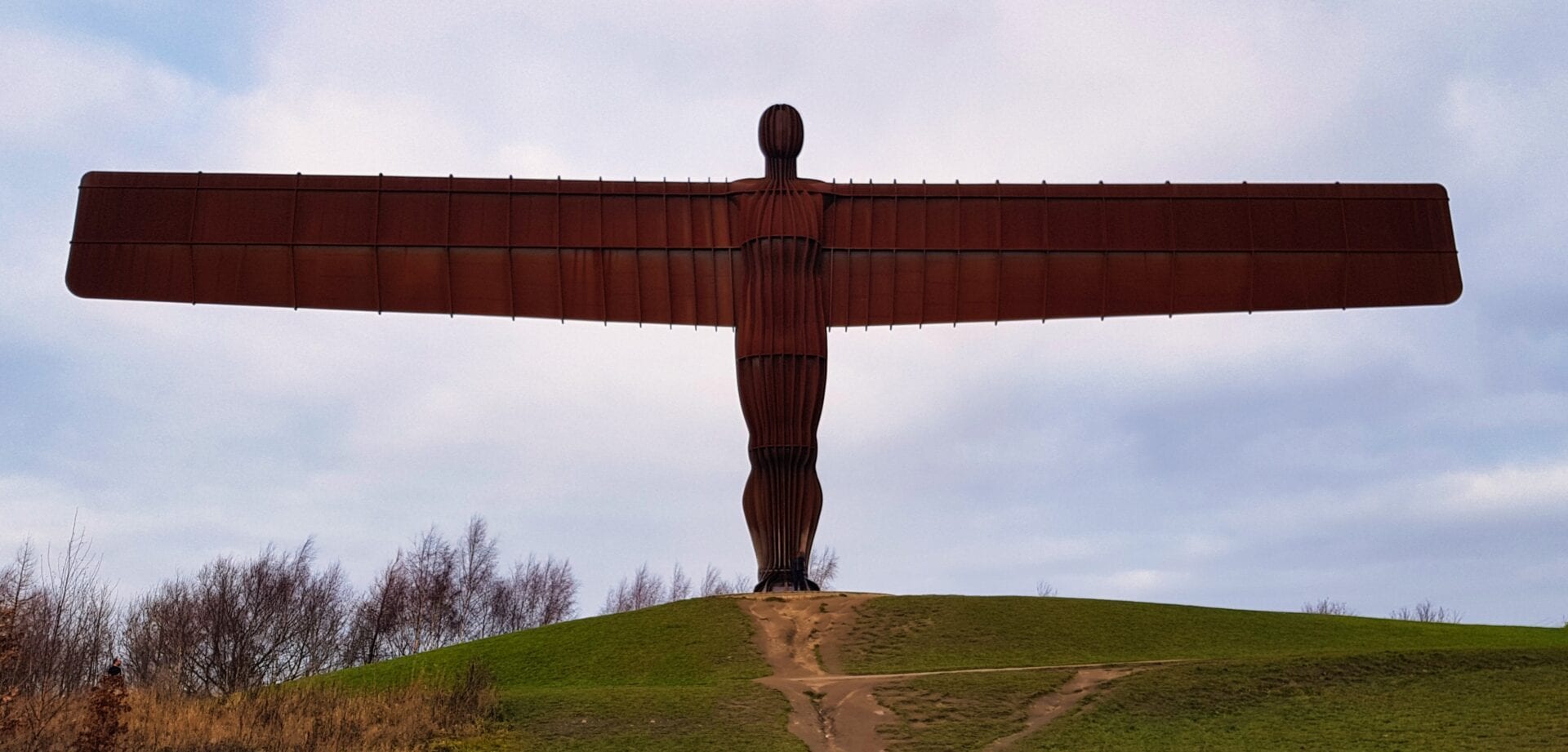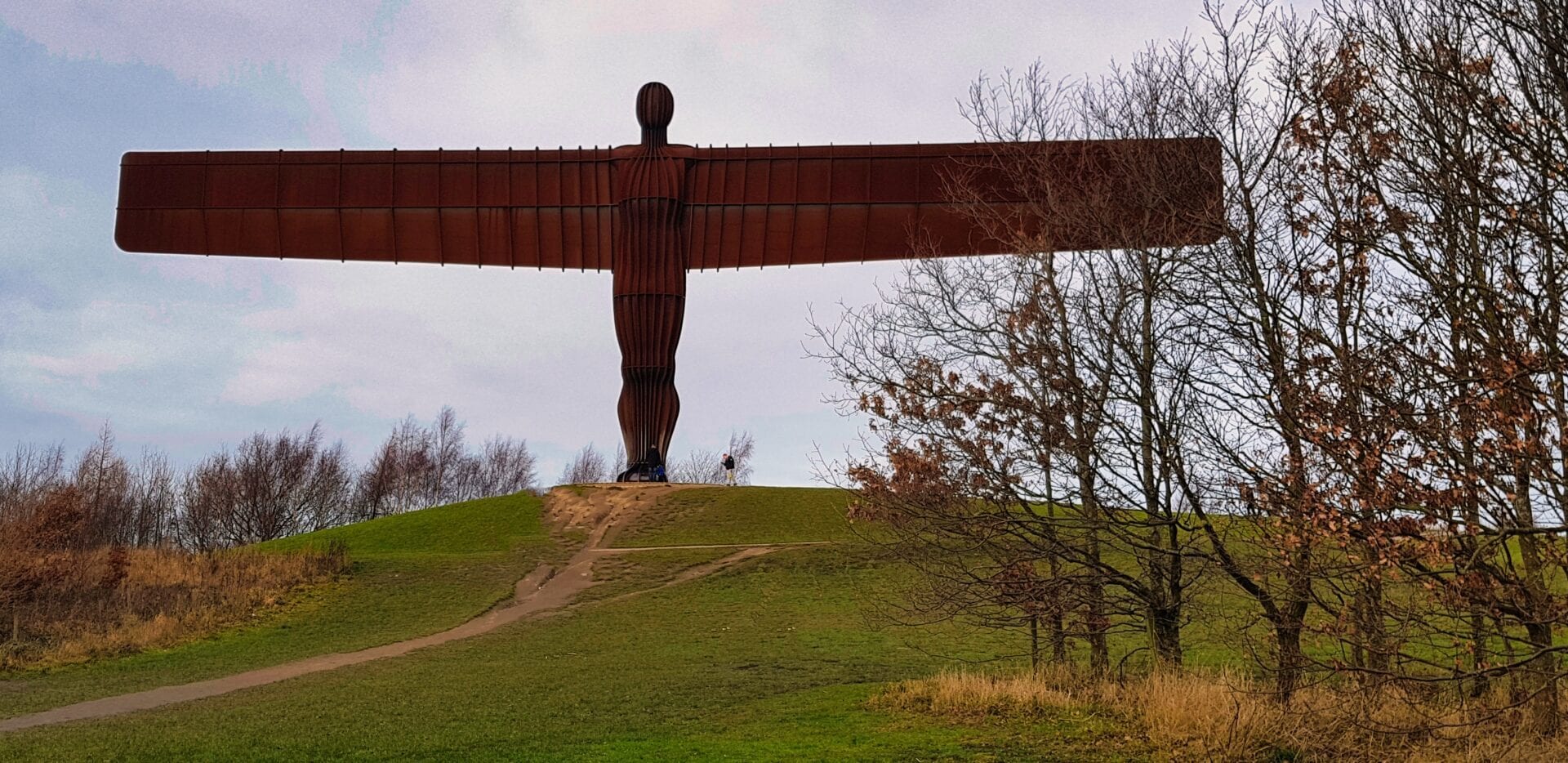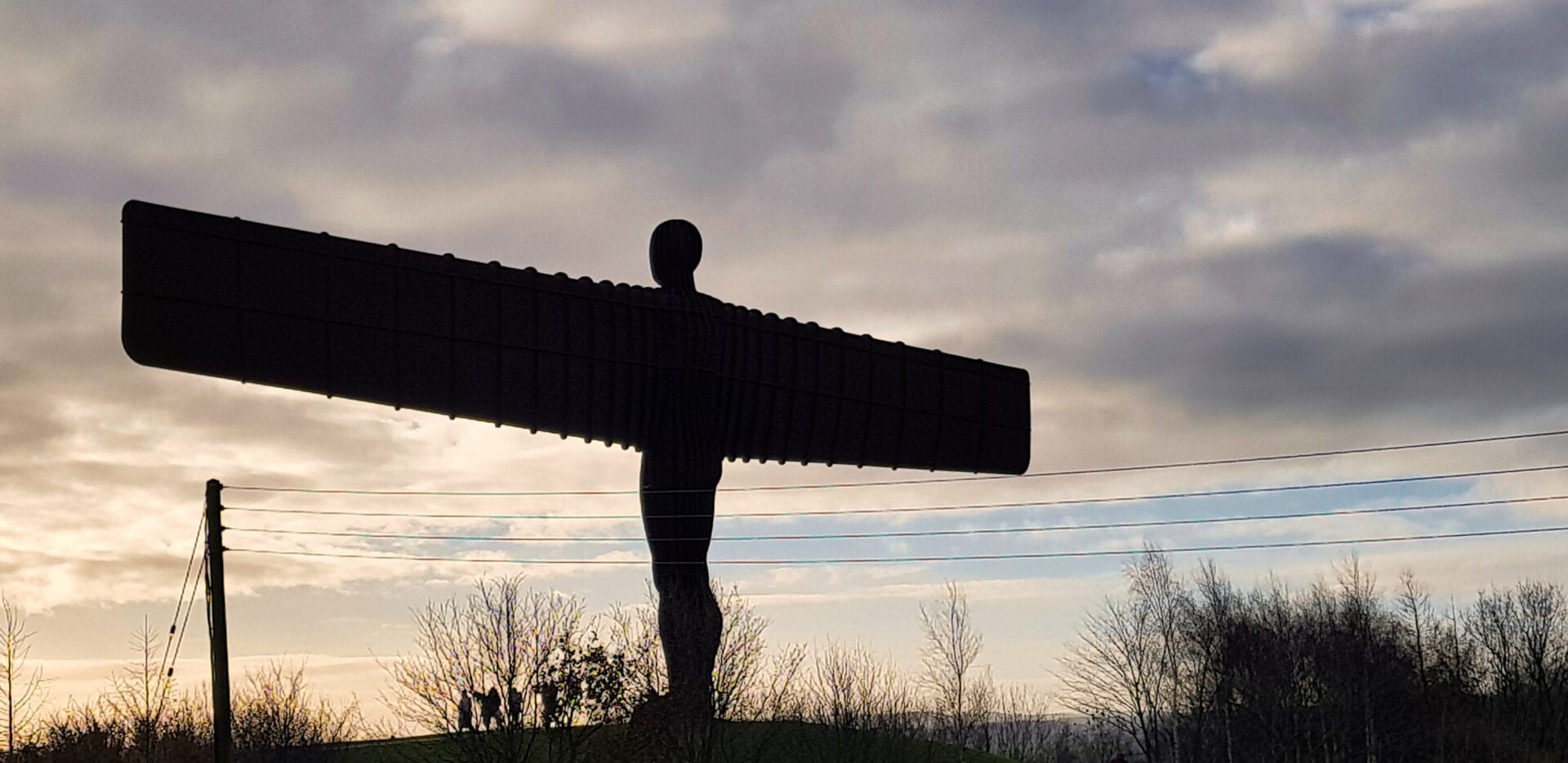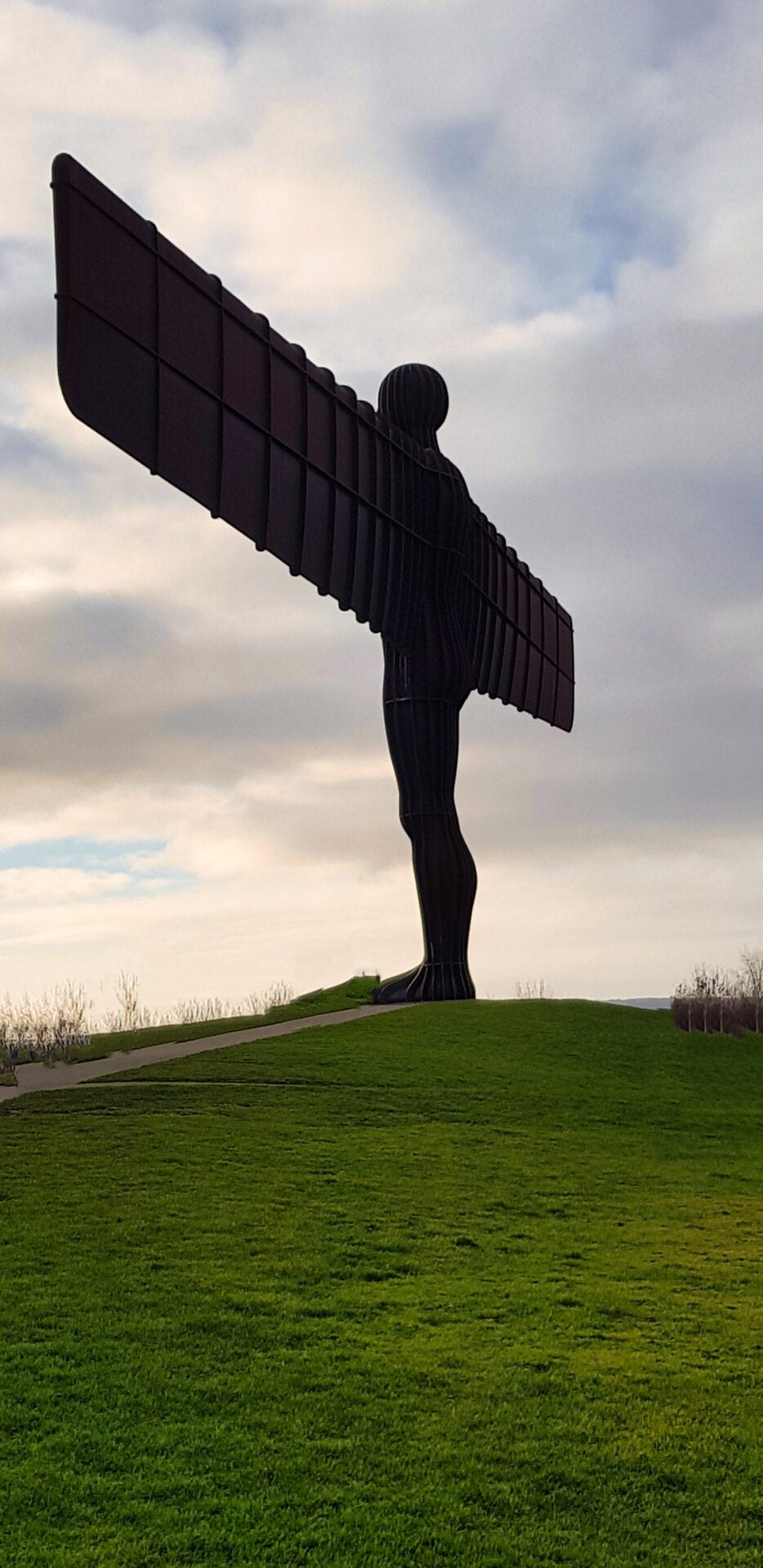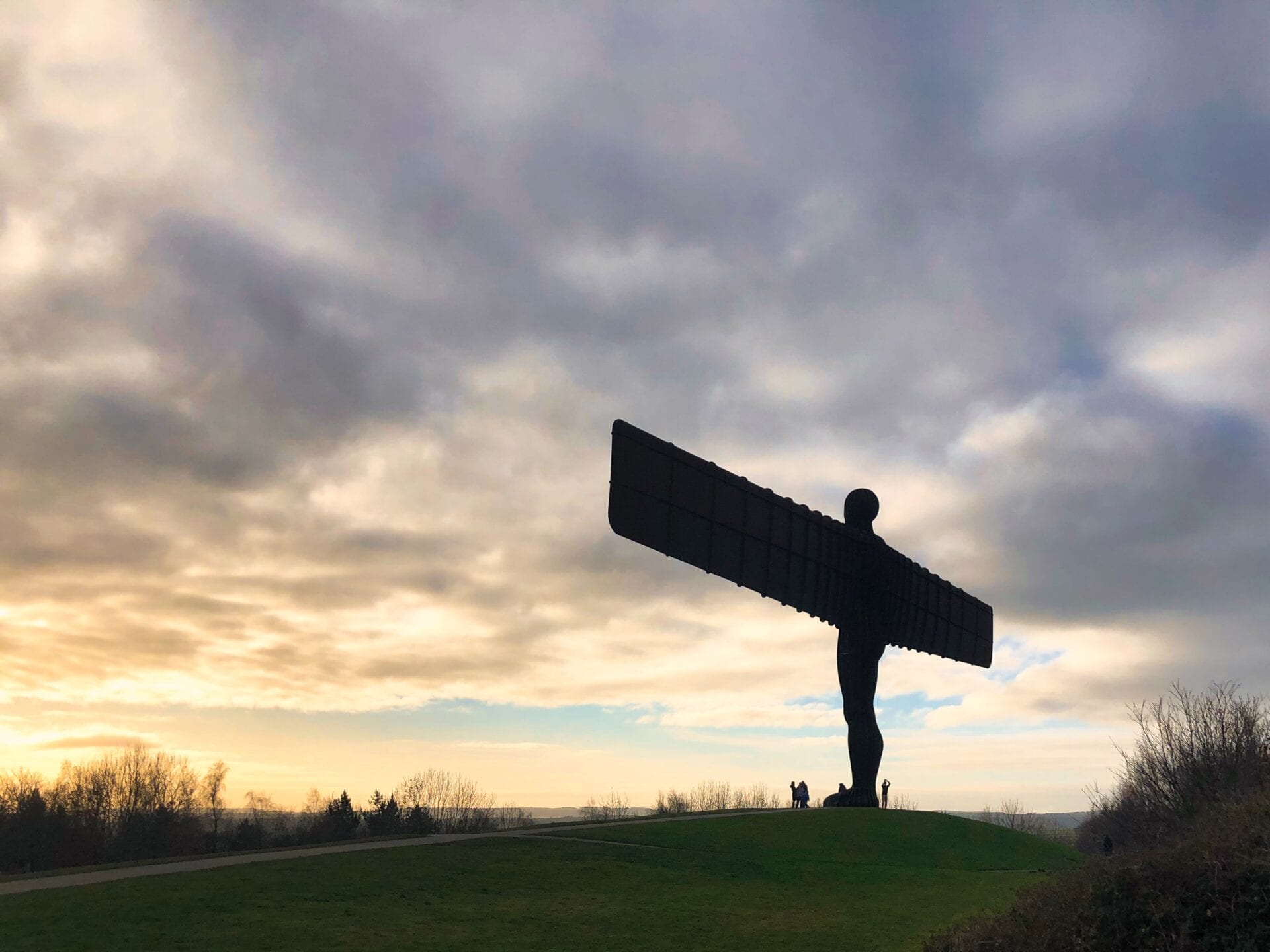
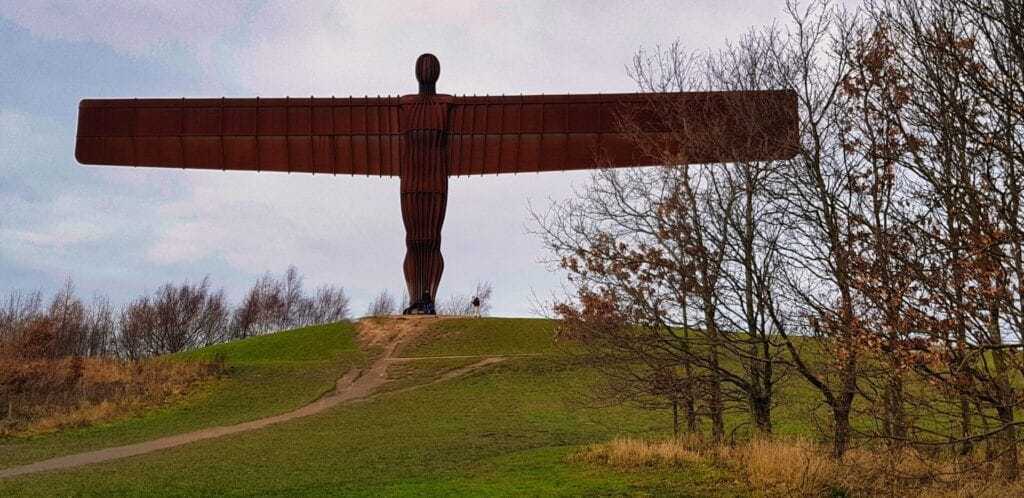
The Angel of the North sits just outside Gateshead, a short distance south of Newcastle upon Tyne. If you’re travelling along the A1, you’ll usually see it before you reach it, standing above the slope beside the road.
It’s one of the North East’s most familiar landmarks, but it is still worth knowing how the visit works in practice. This is not a complicated stop. It is open, easy to reach, and best treated as a short pause rather than a full-day destination.
Getting there and what to expect
If you’re travelling by van or car, access is straightforward. There’s a dedicated car park just off Durham Road, with a short paved path leading up towards the sculpture. From the car park, it only takes a few minutes on foot.
The site itself is open and unfenced, so there is no ticket office, entrance gate, or set visiting route. You can walk up to the Angel, spend a bit of time around it, and head back when you’re ready.
Public transport is possible, although it is less direct than arriving by road. You can reach Newcastle or Gateshead by train, then continue by local bus. There will still be a short walk at the end, so it is worth allowing for that rather than expecting a door-to-door stop.
The setting is simple. Open grass, wide sky, and the steady movement of traffic in the distance. It does not feel remote, but it does give you a bit of space. You are on the edge of the city without quite feeling inside it.
The sculpture itself
The Angel of the North was designed by Antony Gormley and completed in 1998. It stands 20 metres high, with a wingspan of 54 metres. Those figures are often repeated, but they make more sense once you are standing underneath it.
The weathered steel has settled into a deep rust colour, which changes with the light. On a grey day it can feel heavy and industrial. In low sun, it softens a little. Either way, the scale is what holds your attention.
There is no barrier around it, and that makes the visit feel quite direct. Most people walk straight up to the sculpture, look up for a while, take a few photos, then slowly drift back towards the car park. It is not somewhere you are likely to stay for hours, but it does leave an impression.
Walking and time on foot
If you want to turn the stop into more of a walk, there are a few ways to extend your time on foot. One of the more straightforward options is the Low Fell Circular, roughly six miles, which loops out through woodland and open countryside towards Lamesley before returning.
It is not a demanding route, but it gives you a better sense of the landscape around the Angel. The walk moves through fields, hedgerows, and small pockets of woodland, which makes the sculpture feel less like an isolated roadside landmark and more like part of the wider area.
In Lamesley, The Ravensworth Arms usually works as a quiet pub stop before heading back. That makes the route a useful option if you want something more than a quick photo stop, without committing to a long or difficult walk.
Nearby stops
Close by, Saltwell Park is worth considering if you want a more traditional green space. It is landscaped, maintained, and very different in feel from the open ground around the Angel.
For more local history, the Bowes Railway Museum gives a glimpse into the region’s industrial past. It is a quieter stop, but it adds useful context. The Angel stands on former colliery land, and that history is still part of how the place feels.
If you are continuing into Newcastle, it is only a short drive or bus ride away. The quayside, the bridges, and places like the BALTIC Centre for Contemporary Art can all work as an easy extension to the day.
A bit of context
It is easy to assume the Angel of the North was always accepted, but that was not the case. When it was first proposed, there was local resistance. Concerns about cost and appearance came up often.
Over time, that changed. The sculpture is now one of the most recognised landmarks in the North East. For many people, especially those returning by road, it has become a sign of arriving home.
Is it worth stopping?
On its own, the Angel of the North will not fill a full day. That is not really the point of visiting. It works best as a pause: somewhere to stop, stretch your legs, and take in something that has become part of the landscape.
If you are already travelling along the A1, it is an easy detour. If you are staying nearby, it pairs well with a longer walk or a short trip into Newcastle. It is simple, open, and accessible, which is a large part of why it works.
Information
Address: Durham Road, Low Eighton, Gateshead NE9 7TY
Latitude: 54.9142
Longitude: -1.5890
What3Words: ///radiates.ramble.cube
Directions: From the A1 south of Gateshead, follow signs for the Angel of the North and turn onto Durham Road. The site is clearly signposted with a nearby car park.
Note: Open grassland site with a paved path leading from the car park to the sculpture.