
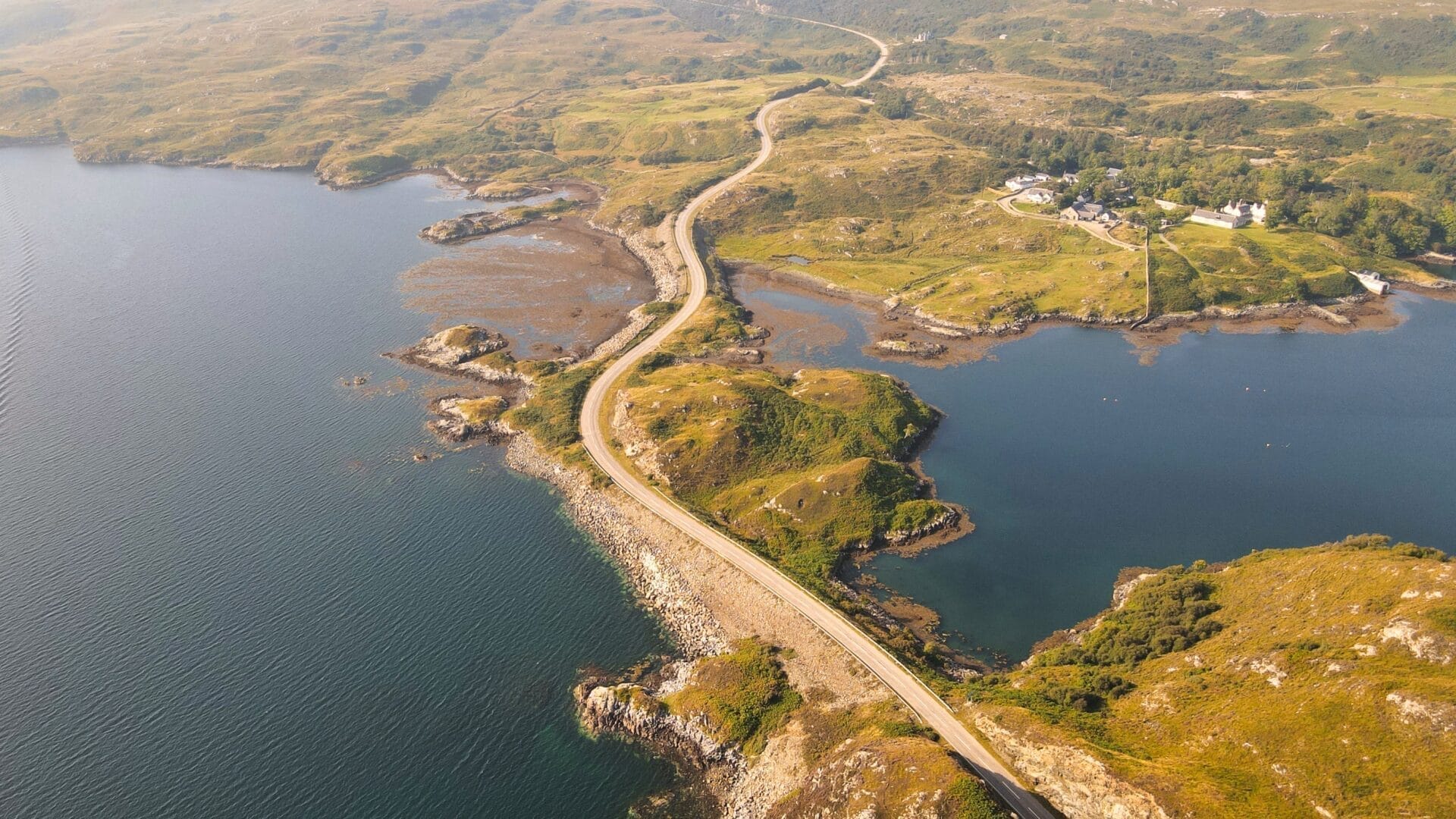
The North Coast 500, or NC500, is a 516-mile circular route that starts and finishes in Inverness, taking in a huge sweep of the northern Scottish Highlands. For anyone travelling by van, campervan or car, it promises remote landscapes, small coastal communities and a road trip where the scenery seems to change almost constantly.
It is also a route that asks a little more of you than an ordinary drive. There are narrow roads, unpredictable weather, long stretches between everyday facilities and plenty of reasons to slow down rather than race around it. We found that giving the NC500 several days made a real difference. Trying to rush it would have taken away much of what makes the journey enjoyable in the first place.
For us, the NC500 was a mixture of challenges and triumphs. Some parts needed patience and preparation, while others were simply a reminder of why road trips like this are worth doing.
1. Navigating the Route
One of the first things to understand about the NC500 is its scale. At 516 miles, it is not a route that needs to be completed as quickly as possible. Current NC500 guidance recommends allowing at least five to seven days, and that makes sense if you want time to stop, explore and actually enjoy where you are rather than spend most of the trip looking through the windscreen.
The route starts and finishes in Inverness and includes sections of narrow, single-track road. These can be a test of both driving and patience, particularly if you are new to a larger van or campervan. Meeting oncoming traffic may mean using passing places or reversing back to one, which can feel daunting at first.
It became less intimidating with practice. Staying alert, taking things slowly and accepting that you will occasionally need to wait or reverse makes the whole experience easier. The NC500 is not a road where being in a hurry helps.
Mobile coverage can also be patchy in some of the more remote areas, so it is sensible not to rely entirely on a live phone connection for navigation. Having your route available offline, or carrying a map as a backup, removes one unnecessary worry.
2. Weather Woes and Wins
Scottish weather has a habit of changing the mood of a journey very quickly. Rain can arrive without much warning, clear views can disappear into grey cloud and a cold wind can make a summer stop feel decidedly less summery.
Warm and waterproof clothing is worth keeping easy to reach rather than buried somewhere in the van. The weather changed the feel of our own journey more than once, and being prepared meant it did not have to change our plans quite as dramatically.
It is not all a battle against the forecast, though. The shifting conditions are part of what makes the Highlands feel so changeable. A landscape can look completely different once a shower moves through or the light breaks beneath the clouds. We found that variety became part of the experience rather than simply an inconvenience.
If you are travelling between May and October, particularly around midsummer, midges are another seasonal consideration. They tend to be most noticeable around dawn and dusk and during still, damp conditions, especially in the western Highlands. For walkers, campers, dog walkers and anyone planning to spend evenings outside, that is worth factoring into what you pack.
3. The Call of the Wild(erness)
One point that is worth getting right is the difference between wild camping and sleeping overnight in a vehicle. Scotland’s outdoor access rights allow responsible lightweight camping, but they do not give a right to take a motor vehicle onto land or to stay overnight in a campervan wherever you choose.
If you are travelling the NC500 by van or campervan, an overnight stop therefore depends on whether you can legally park there and whether any local restrictions allow it. Signs and restrictions should always take priority, and not every place that looks appealing is suitable or permitted for an overnight vehicle stop.
Whatever type of camping or overnight stop you choose, leaving the place as you found it matters. The appeal of travelling through this part of Scotland is closely tied to the landscape itself, so responsible behaviour is not an optional extra.
For van travellers, some of the best moments are often the simple ones anyway: slowing down, finding somewhere appropriate to stop and having time to appreciate where you are rather than constantly chasing the next point on the route.
4. Essential Facilities
The more remote sections of the NC500 require a little forward planning. Petrol stations, shops and sanitation facilities are not always as frequent as they are on a typical road trip through more populated parts of the UK.
We noticed that finding food and ordinary supplies sometimes needed more thought than expected. It was not a major problem, but it was enough to make us appreciate the value of stocking up when there was a convenient opportunity rather than assuming another shop would appear around the next bend.
That applies whether you are travelling in a campervan, motorhome or car. Keeping an eye on fuel, food and anything else you genuinely need makes the remote sections far more relaxed.
There is also a positive side to relying on the small communities along the route. Using local shops and services can make the journey easier while putting money directly into the places you are travelling through.
If you are travelling during the busier spring and summer months and intend to use campsites or other accommodation, booking ahead is sensible. The route attracts plenty of visitors during peak periods, and leaving every night’s stop until the last minute can add unnecessary pressure to what should be an enjoyable road trip.
5. The Sheer Magnitude of Beauty
The NC500’s real strength is the variety packed into the journey. Mountains give way to lochs, open moorland leads towards the coast and waterfalls, beaches and small settlements continually change what you are looking at.
We found that the scenery changed often enough that the route rarely felt repetitive. That does create what might be called a problem of plenty: there is always another reason to stop, another view to look at and another stretch of road that deserves more time than you expected to give it.
That is another reason not to treat the NC500 as a mileage challenge. Allowing several days meant we could take breaks, stop when something caught our attention and avoid feeling as though every pause was putting us behind schedule.
Is Vanlife on the North Coast 500 Worth It?
Vanlife on the North Coast 500 is not always smooth sailing. Narrow roads demand concentration, the weather can change quickly and everyday supplies sometimes require more planning than you might expect.
Those challenges did not spoil the journey for us. If anything, they encouraged us to slow down and approach the route on its own terms. The changing scenery kept things interesting, the unpredictable weather became part of the character of the trip and giving ourselves enough time made the whole experience far more enjoyable.
You do not need to be a committed vanlifer to enjoy the NC500. It works just as well as a wider road trip for couples, families and car travellers, while walkers and dog walkers will find plenty of reasons to break up the driving and spend time outside.
For van and campervan travellers, the practical side matters a little more. Plan your supplies, know how you will navigate if your phone loses signal, treat single-track roads with patience and make sure any overnight stop is genuinely permitted rather than assuming Scotland’s wild-camping rights apply to vehicles.
Do that, give the journey the time it deserves and the bumps become part of the story rather than the thing you remember most.