
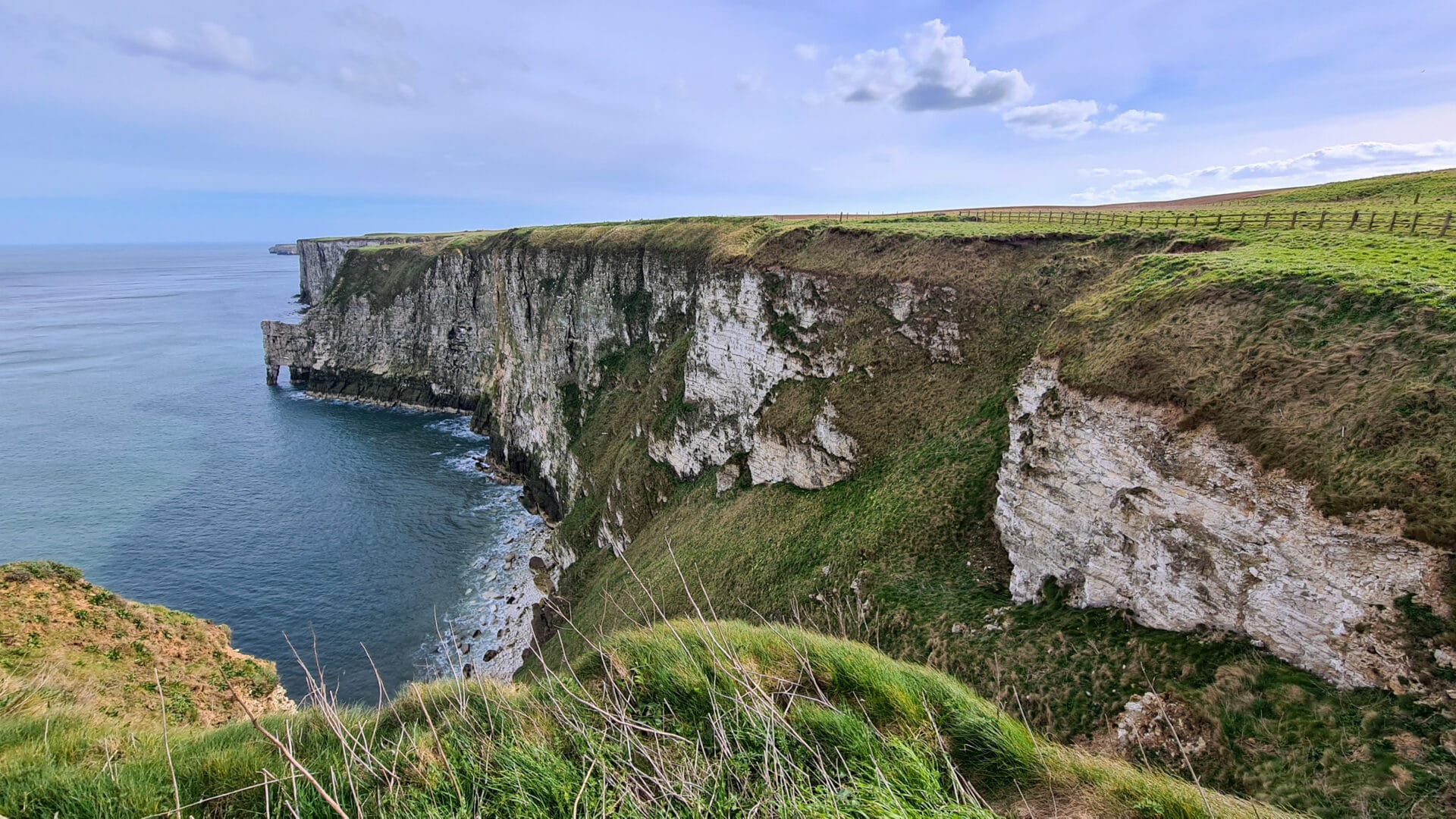
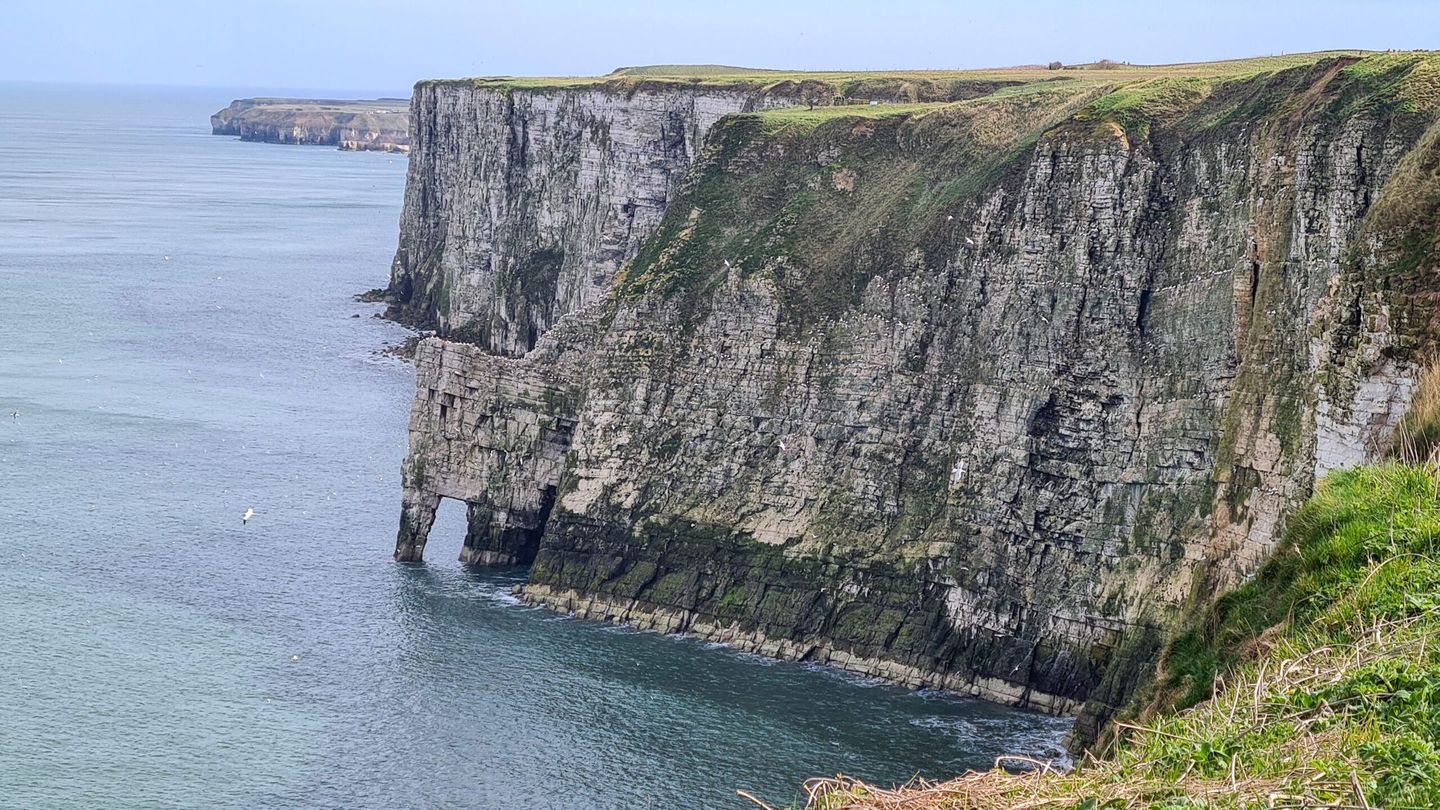
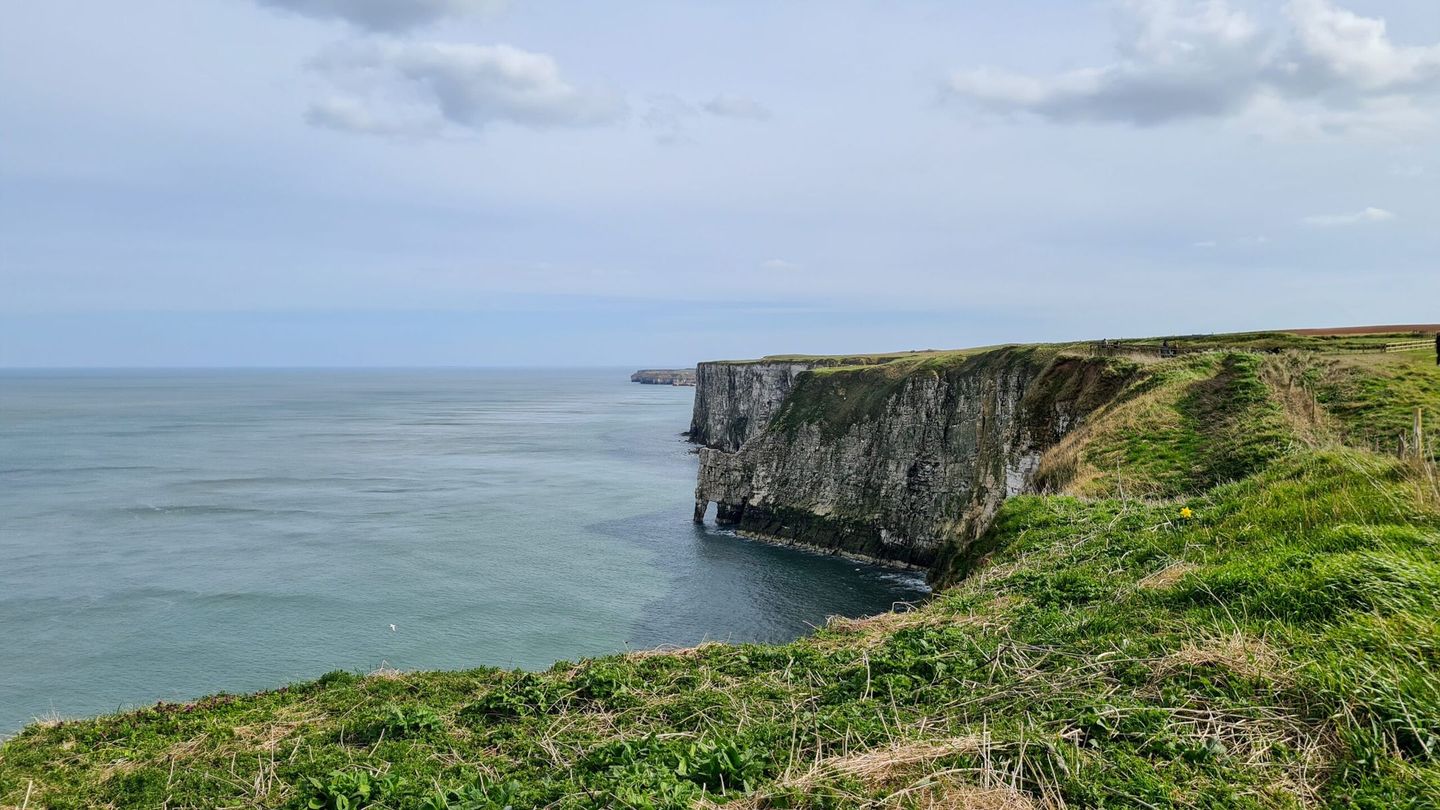
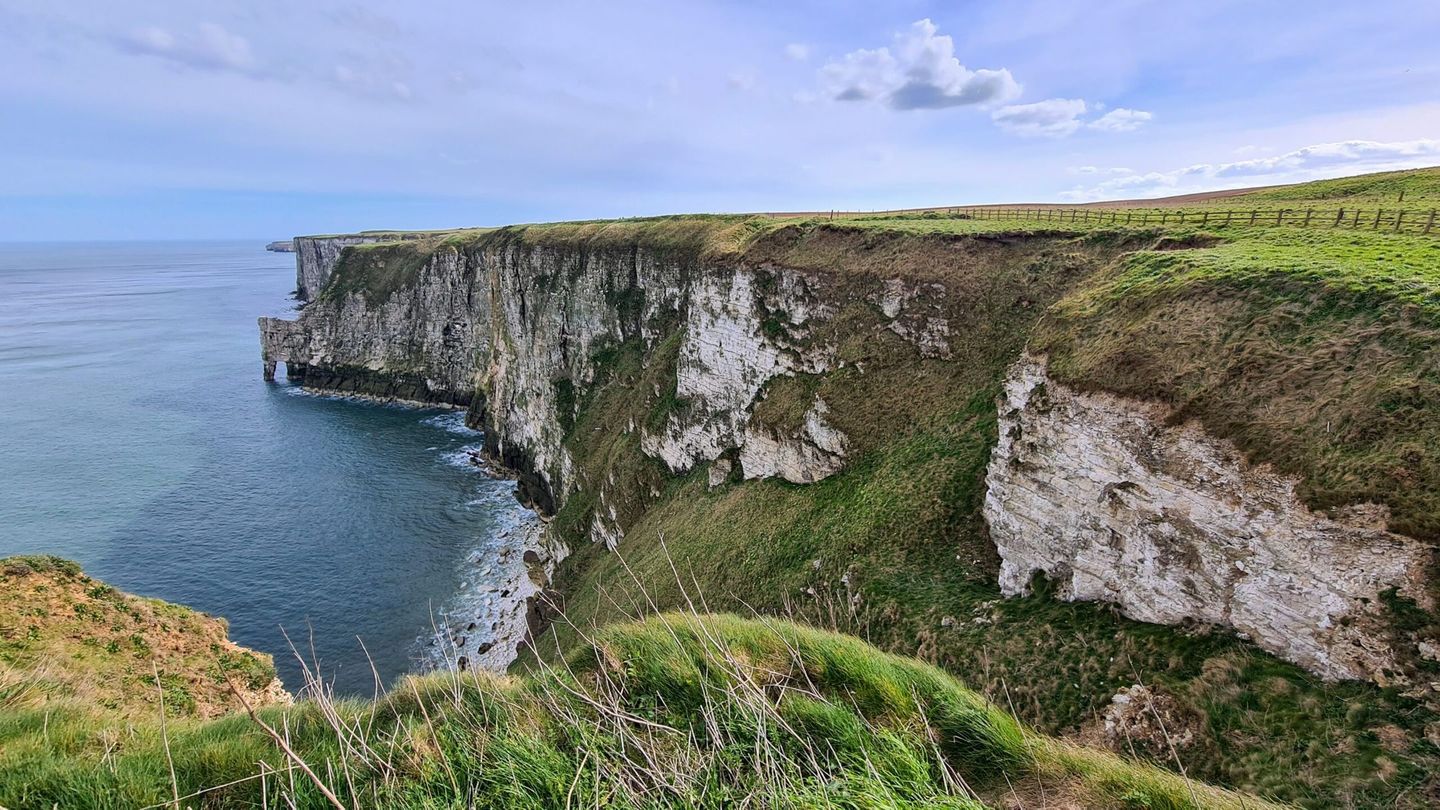
RSPB Bempton Cliffs sits on the East Riding of Yorkshire coast, around 6 miles north of Bridlington. The reserve follows a line of high chalk cliffs overlooking the North Sea and forms one of the most significant seabird sites in England.
Most people come for the birds, but Bempton Cliffs works equally well as a coastal walk. Rather than relying on one viewpoint, the reserve opens up gradually as you follow the cliff edge, stopping at the viewing platforms or continuing further along the coast.
Getting there and access
If you are driving, head towards the village of Bempton and then follow the signs to the reserve. Parking is available on site, with the final approach following Cliff Lane directly to the visitor centre.
Access is via a single rural road. That is the main practical point to keep in mind when arriving in a campervan or another larger vehicle, although the original visitor information does not give any specific vehicle restrictions.
Bempton railway station is within walking distance of the cliffs, with regular services connecting the village to Hull and Bridlington. The final section is on foot along quiet roads towards the reserve.
Cyclists can approach using the surrounding country lanes, which are generally quiet and easy to follow. Bike racks are available when you arrive.
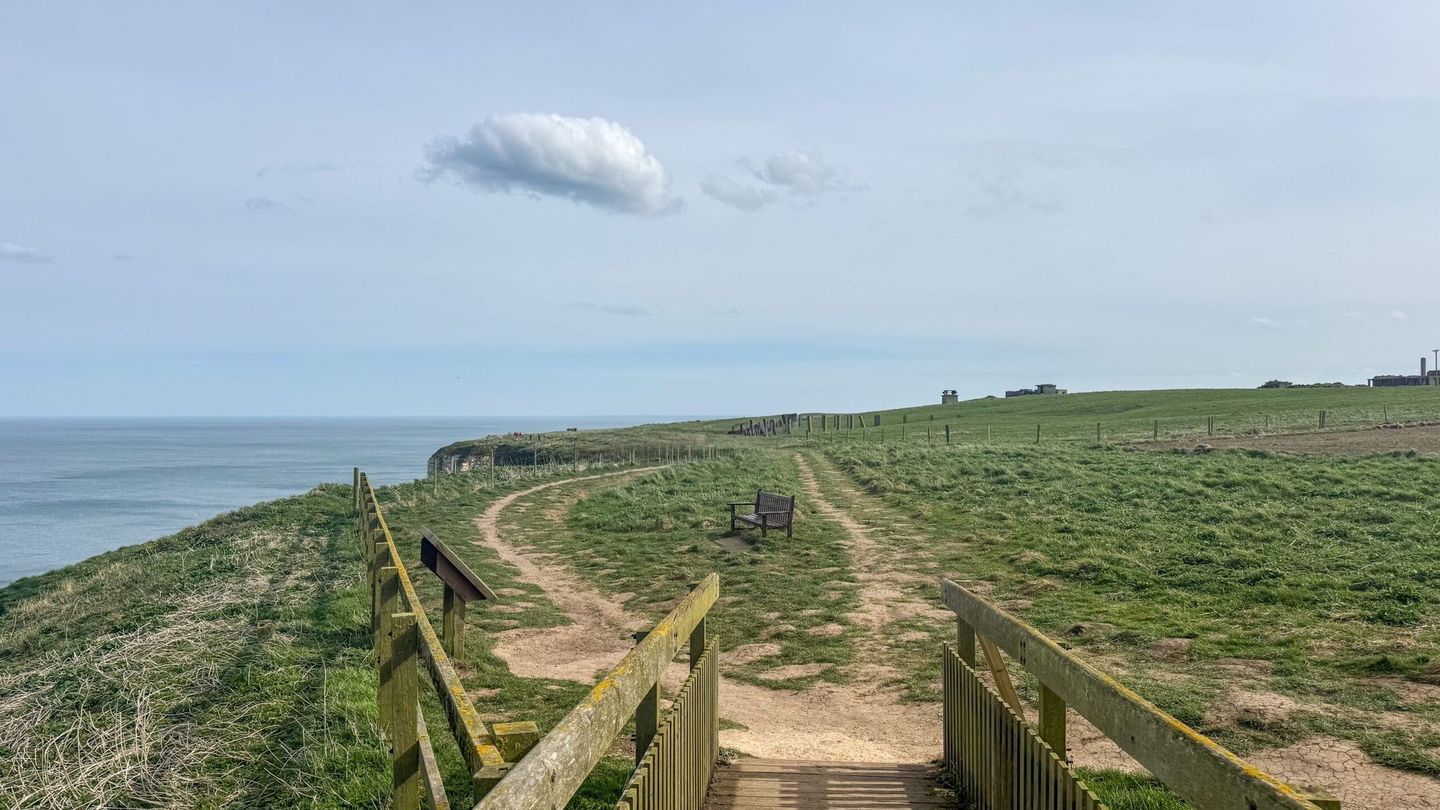
The reserve itself is straightforward to navigate. Paths lead away from the visitor centre towards a series of viewing platforms spaced along the cliff edge, so it is easy to choose between a short visit and a longer walk.
The cliffs and birdlife
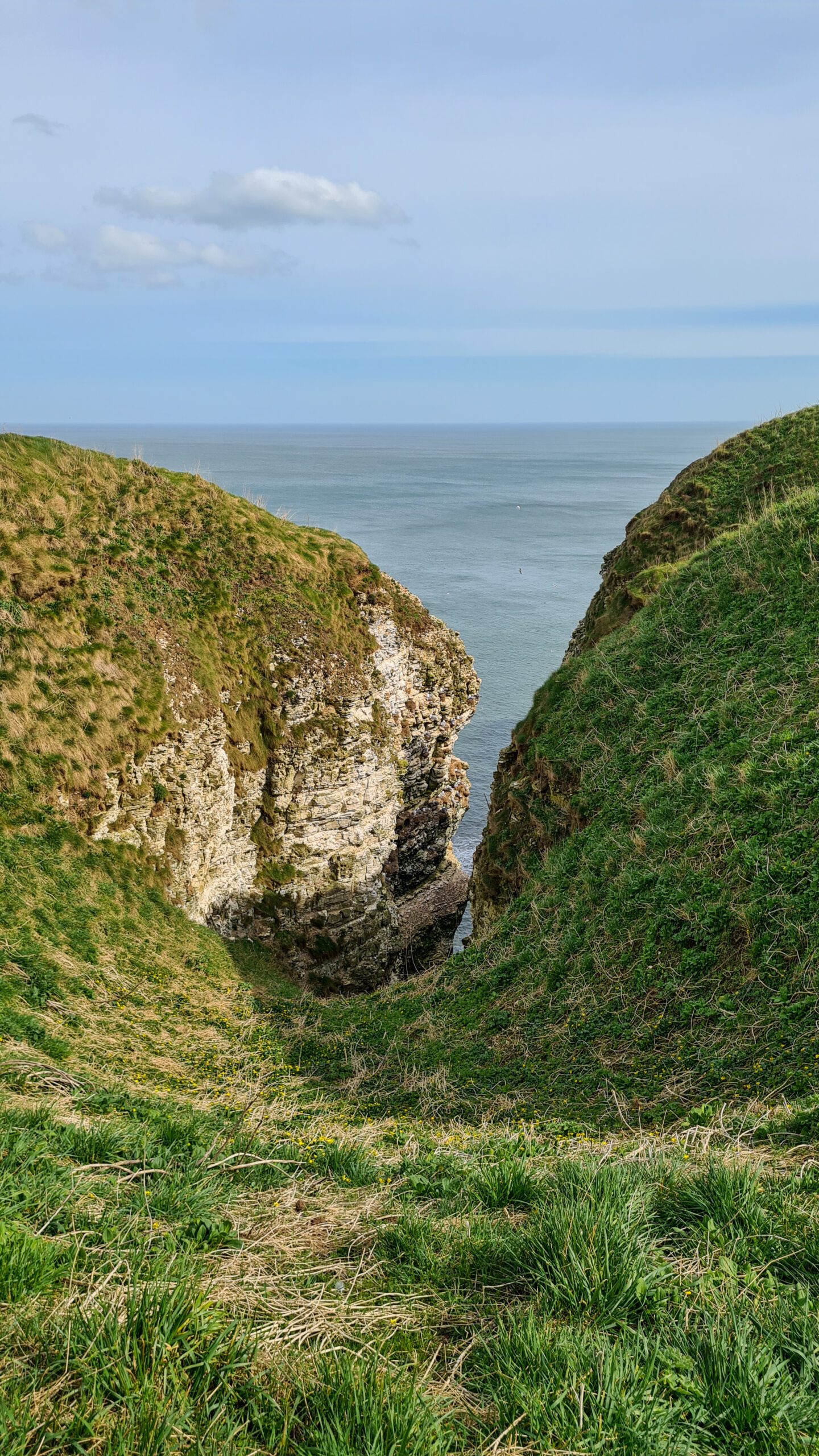
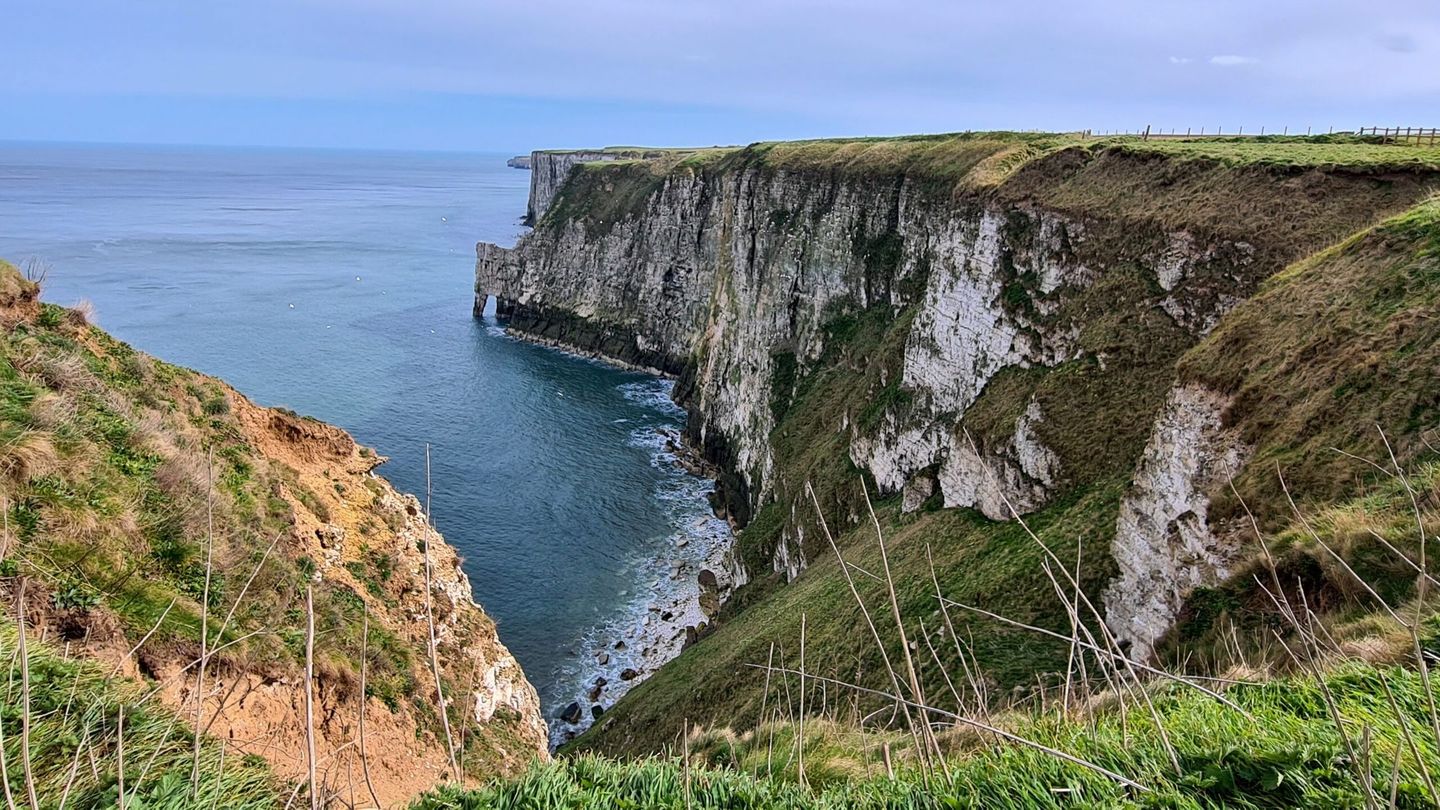
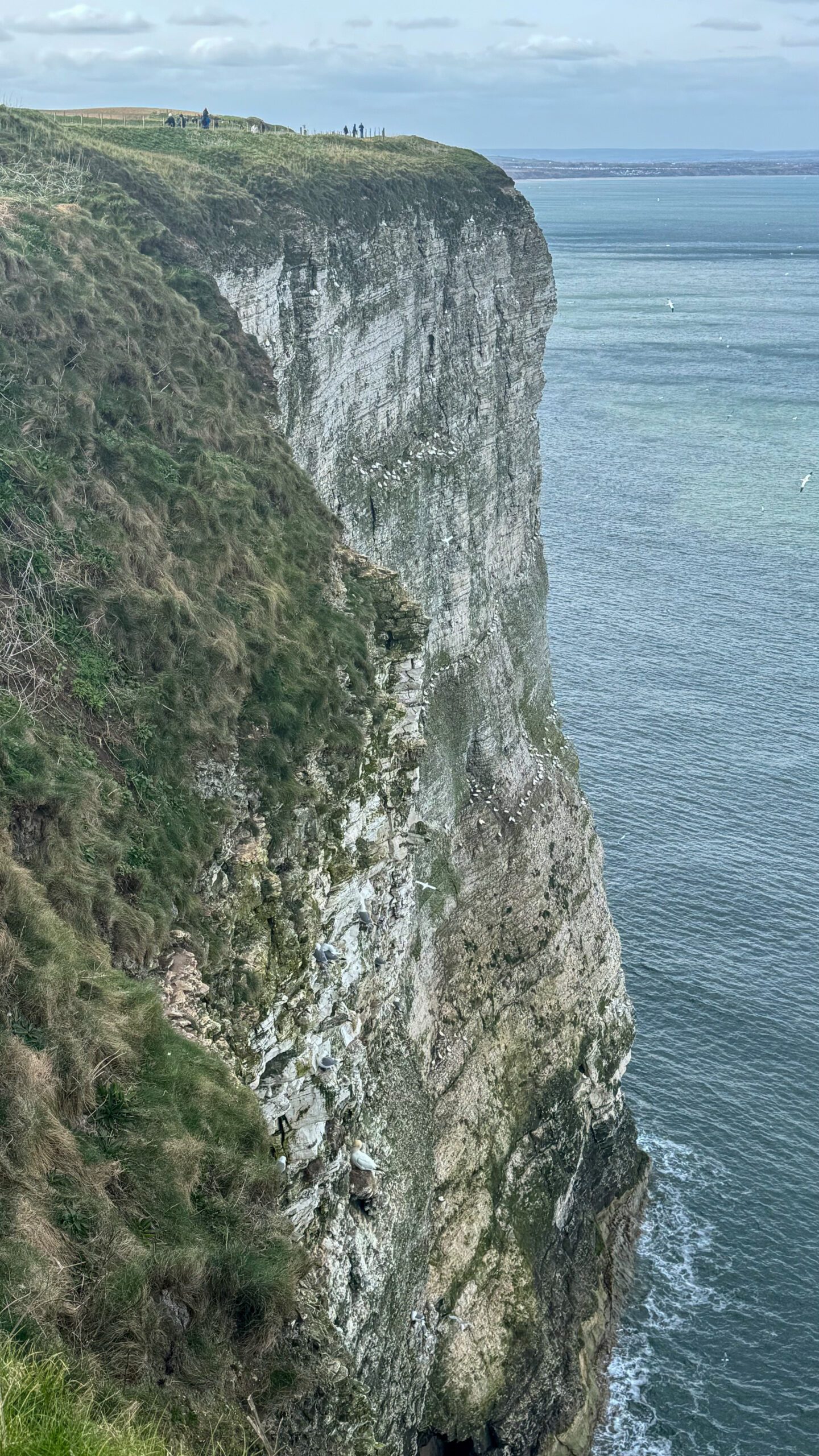
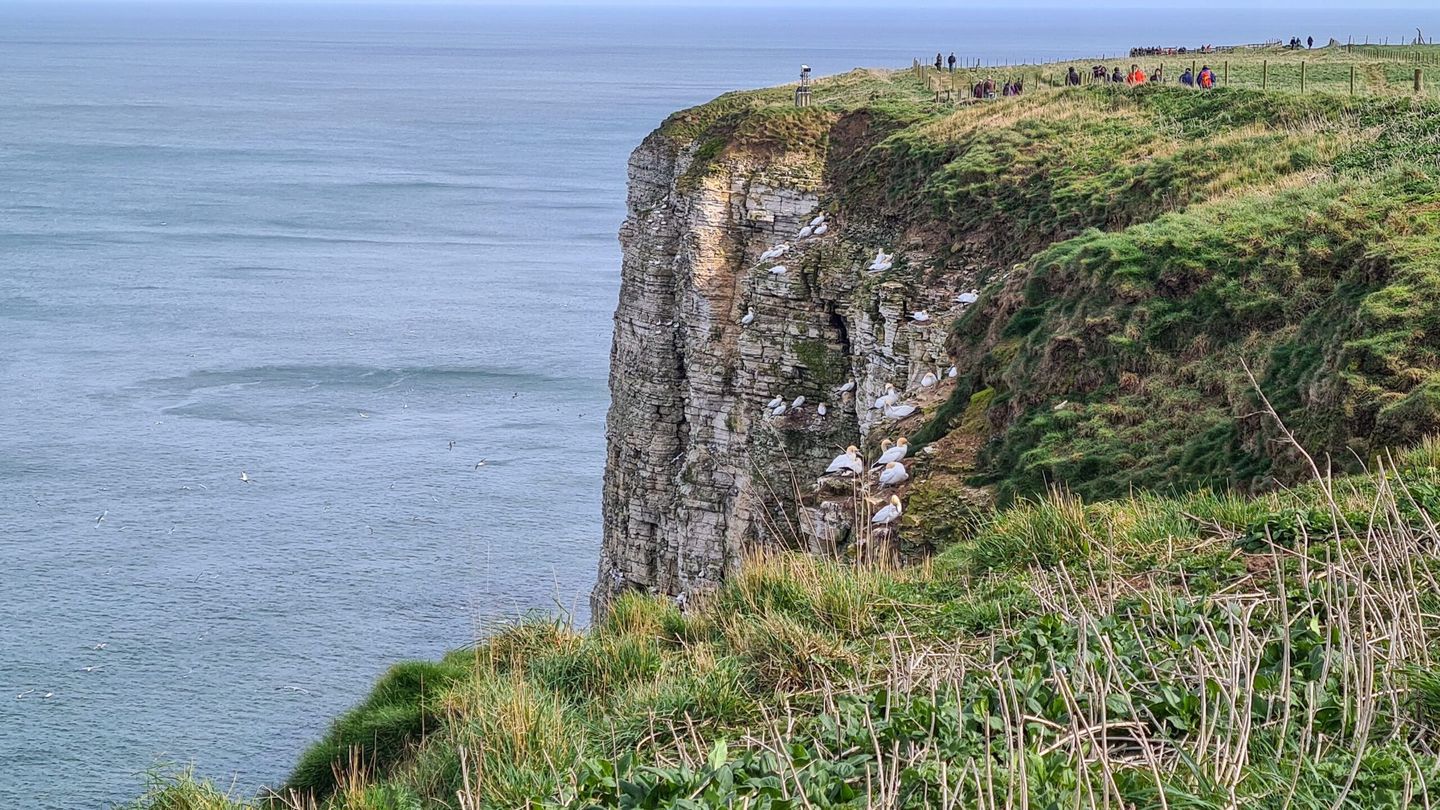
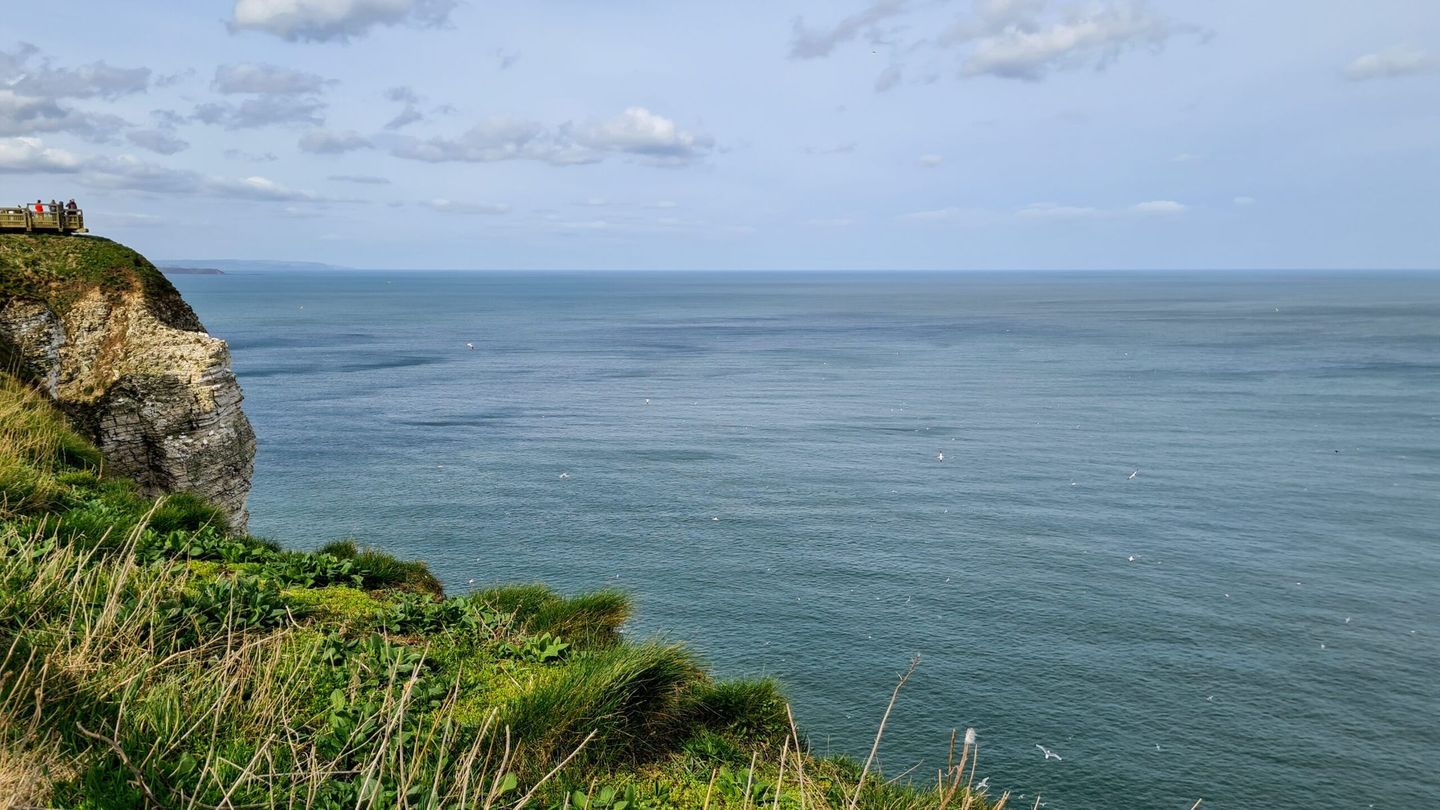
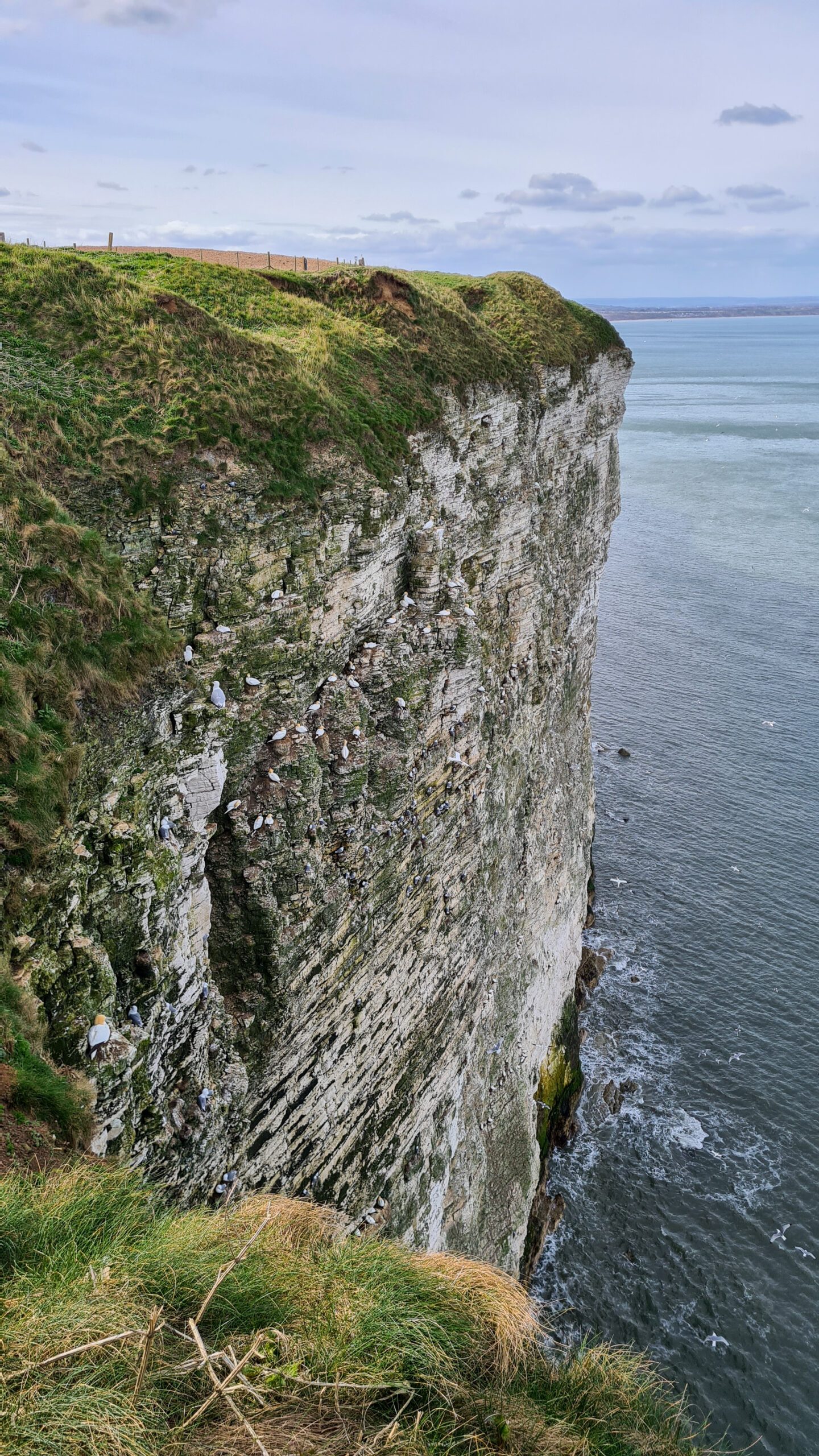
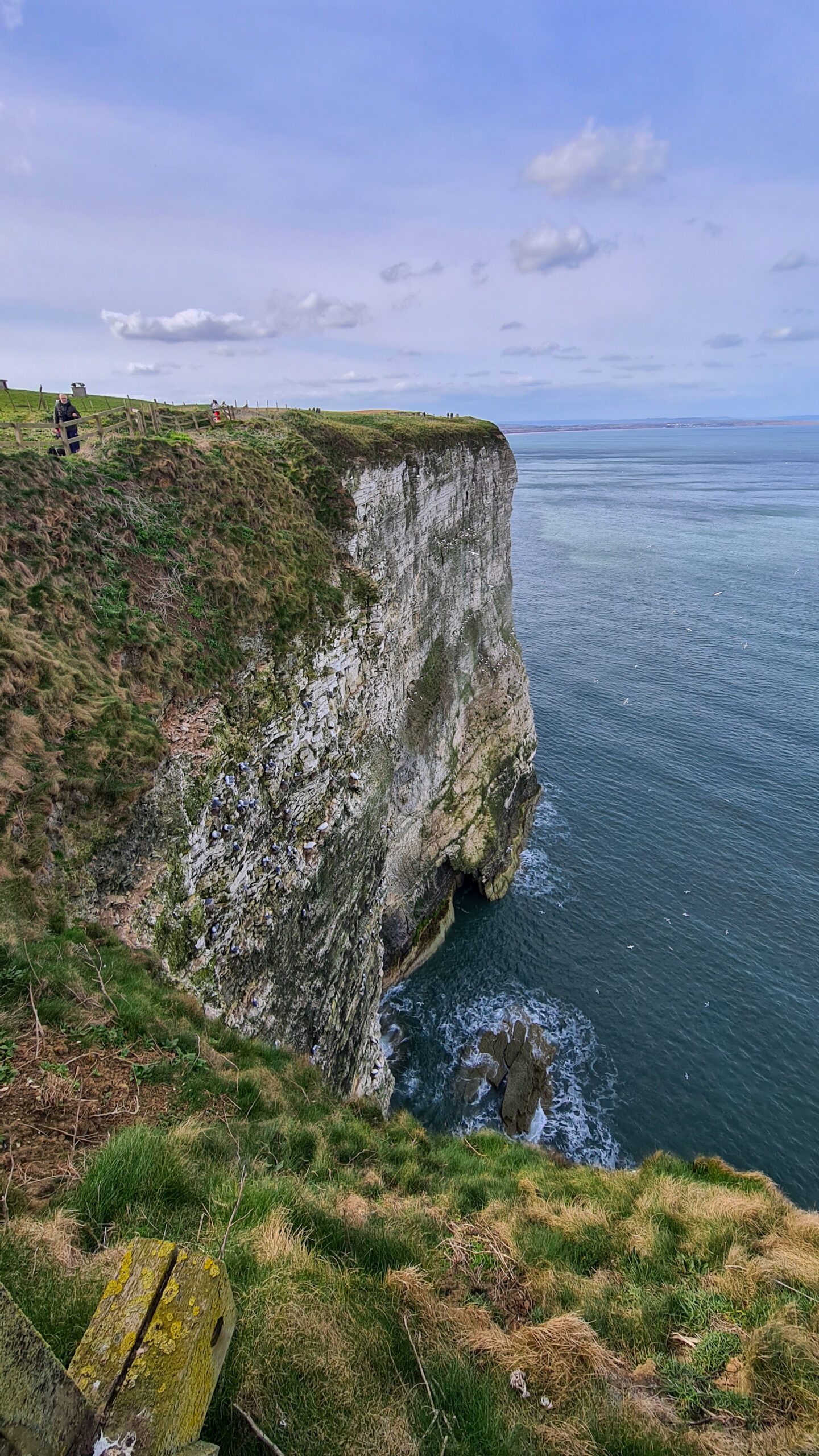
The cliffs rise to more than 100 metres above the sea, creating a long, exposed edge where seabirds gather in large numbers during the breeding season.
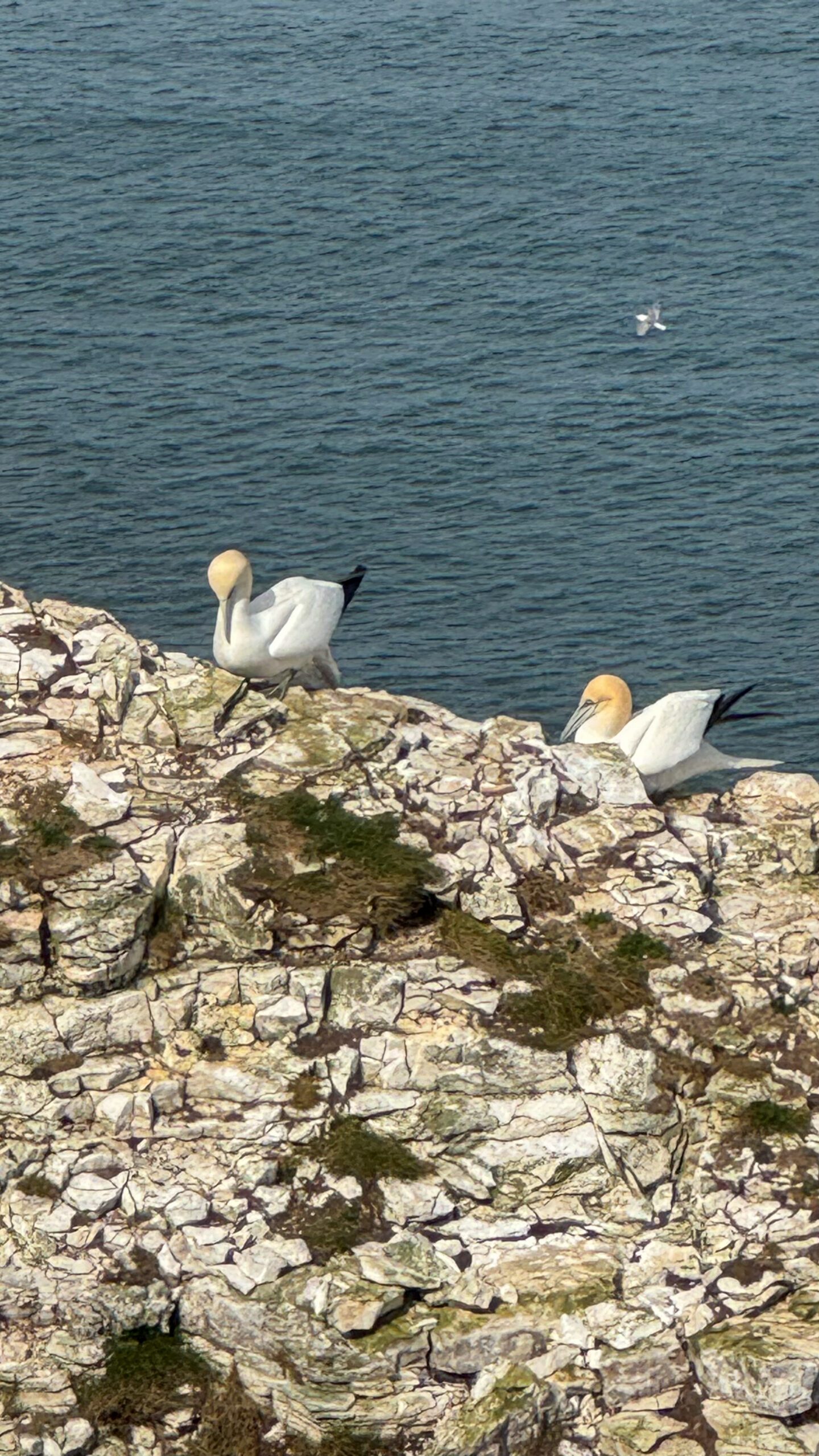
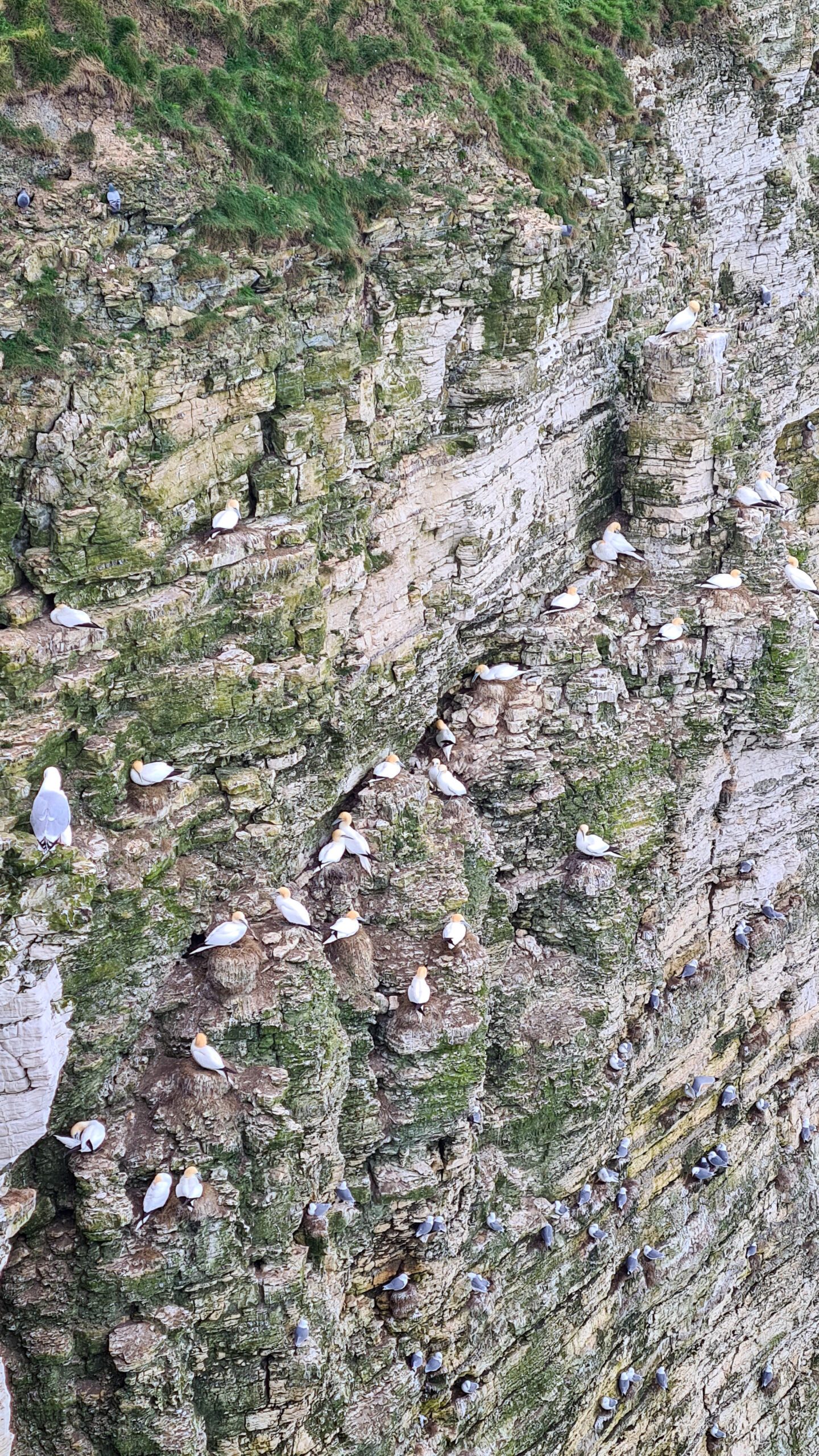
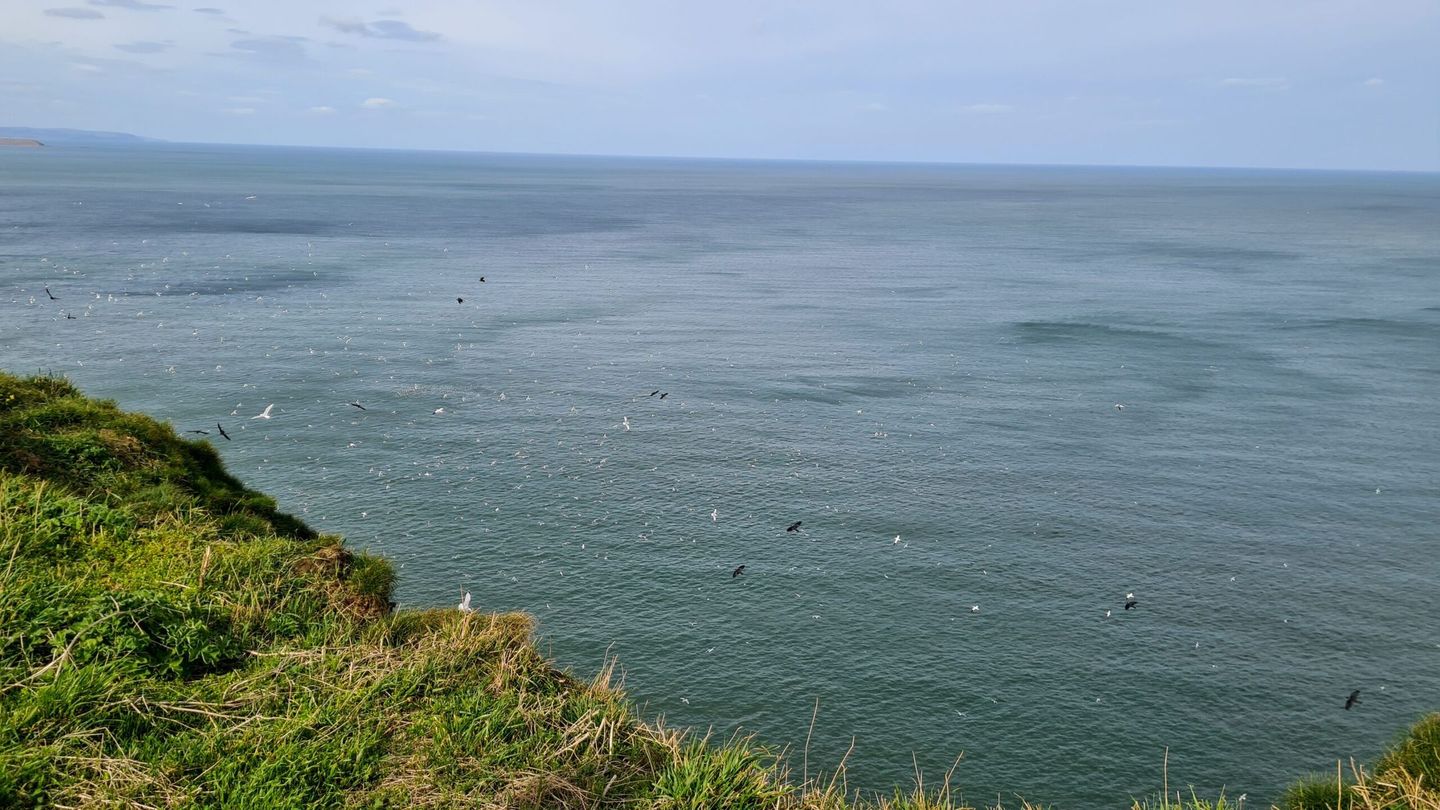
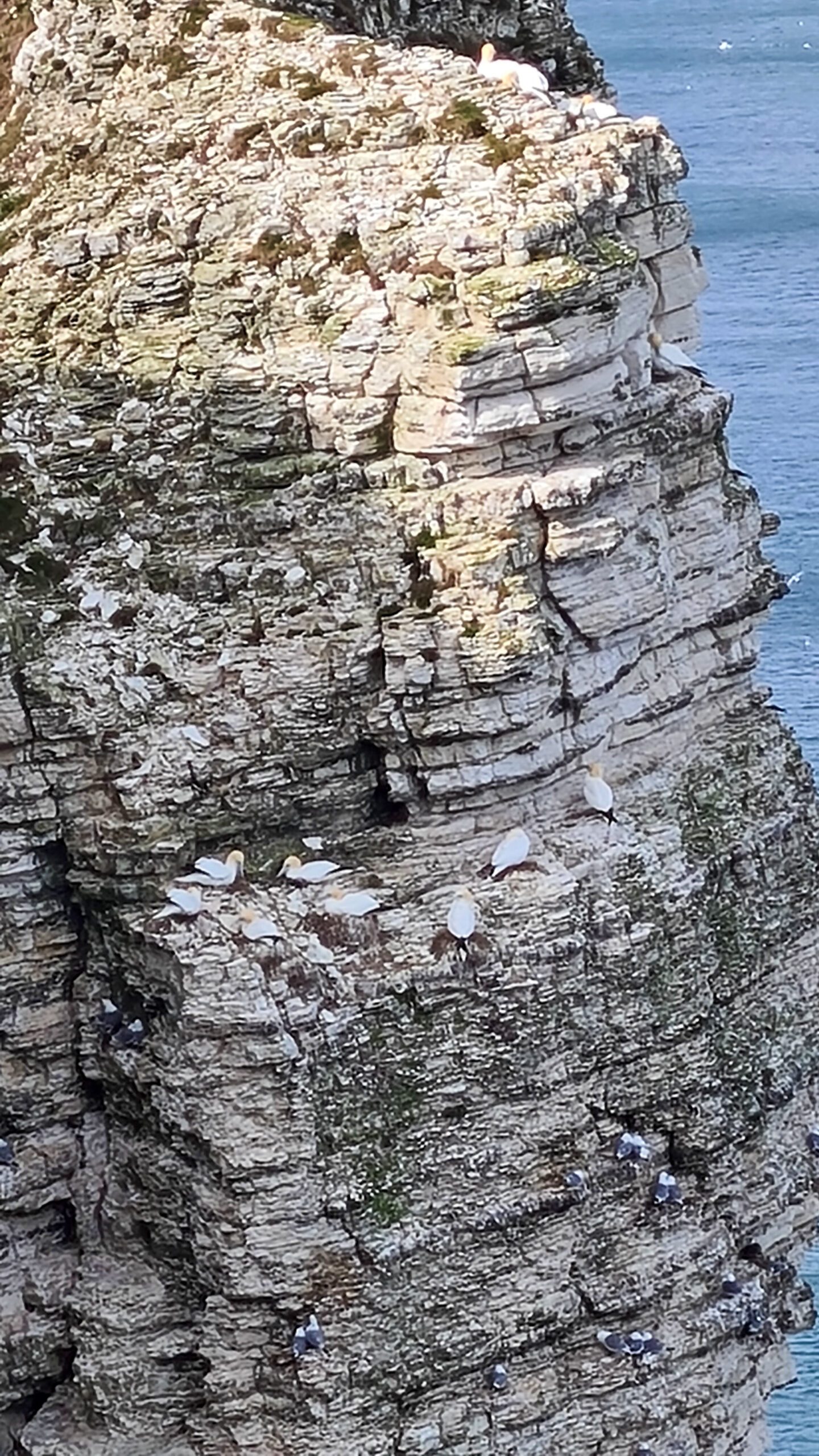
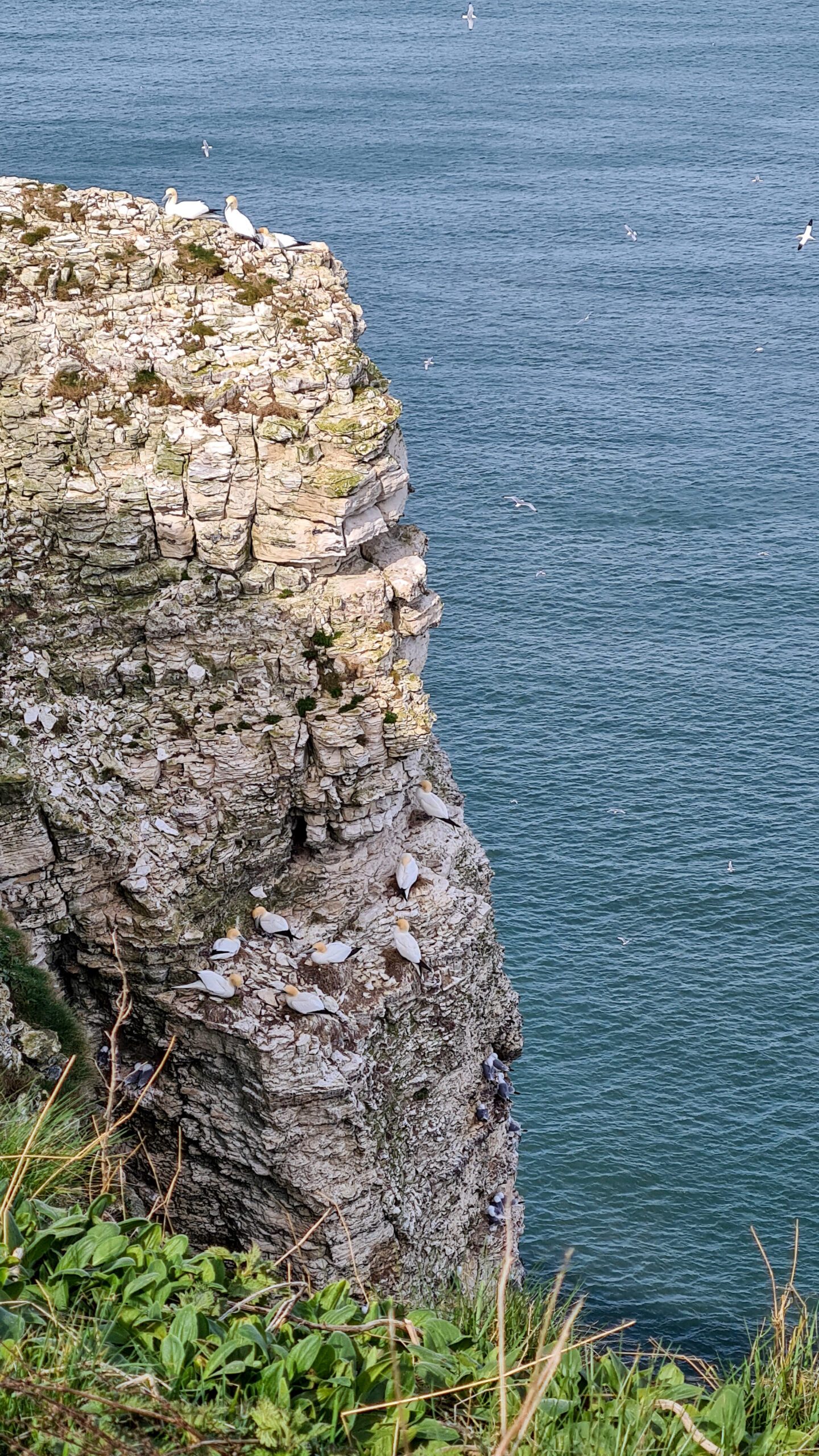
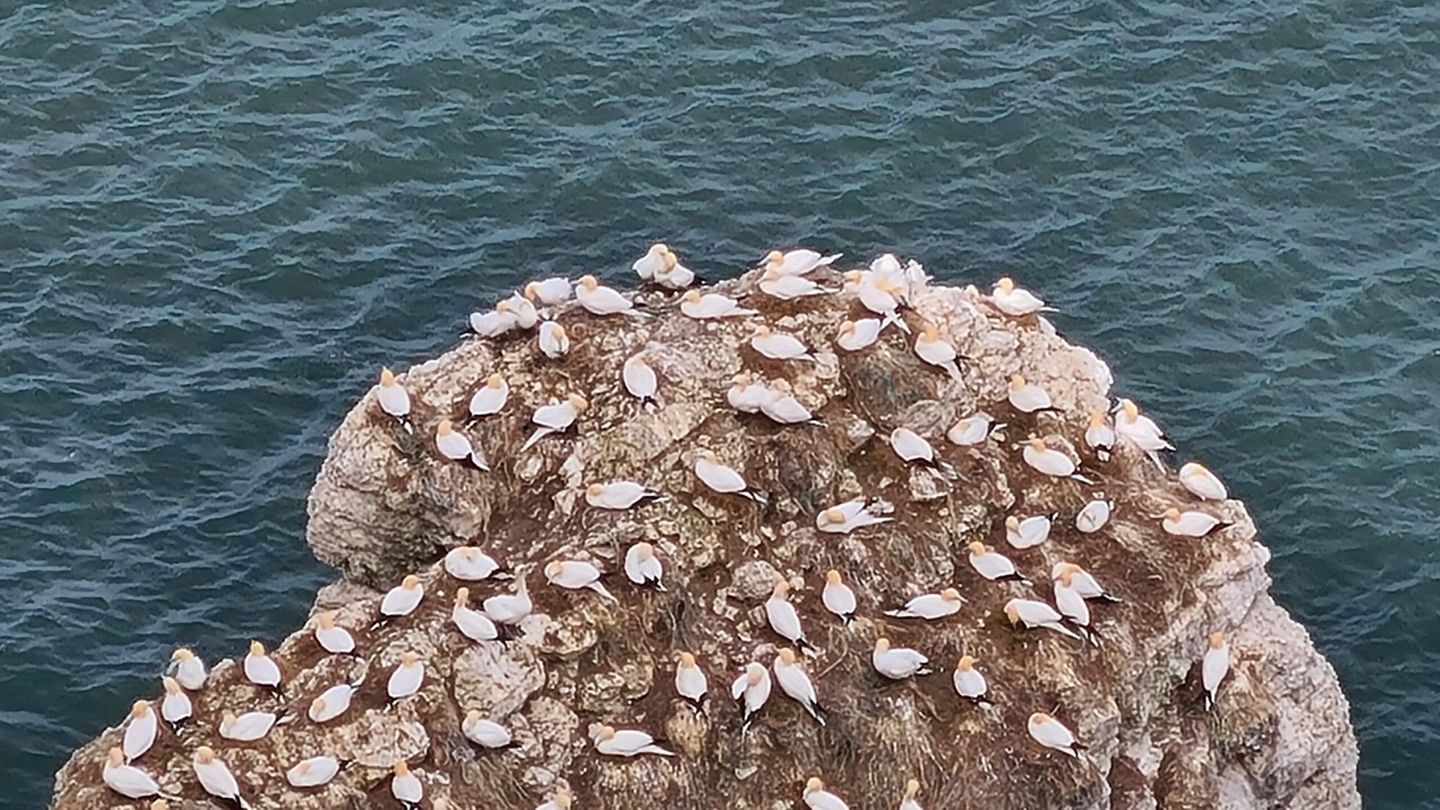
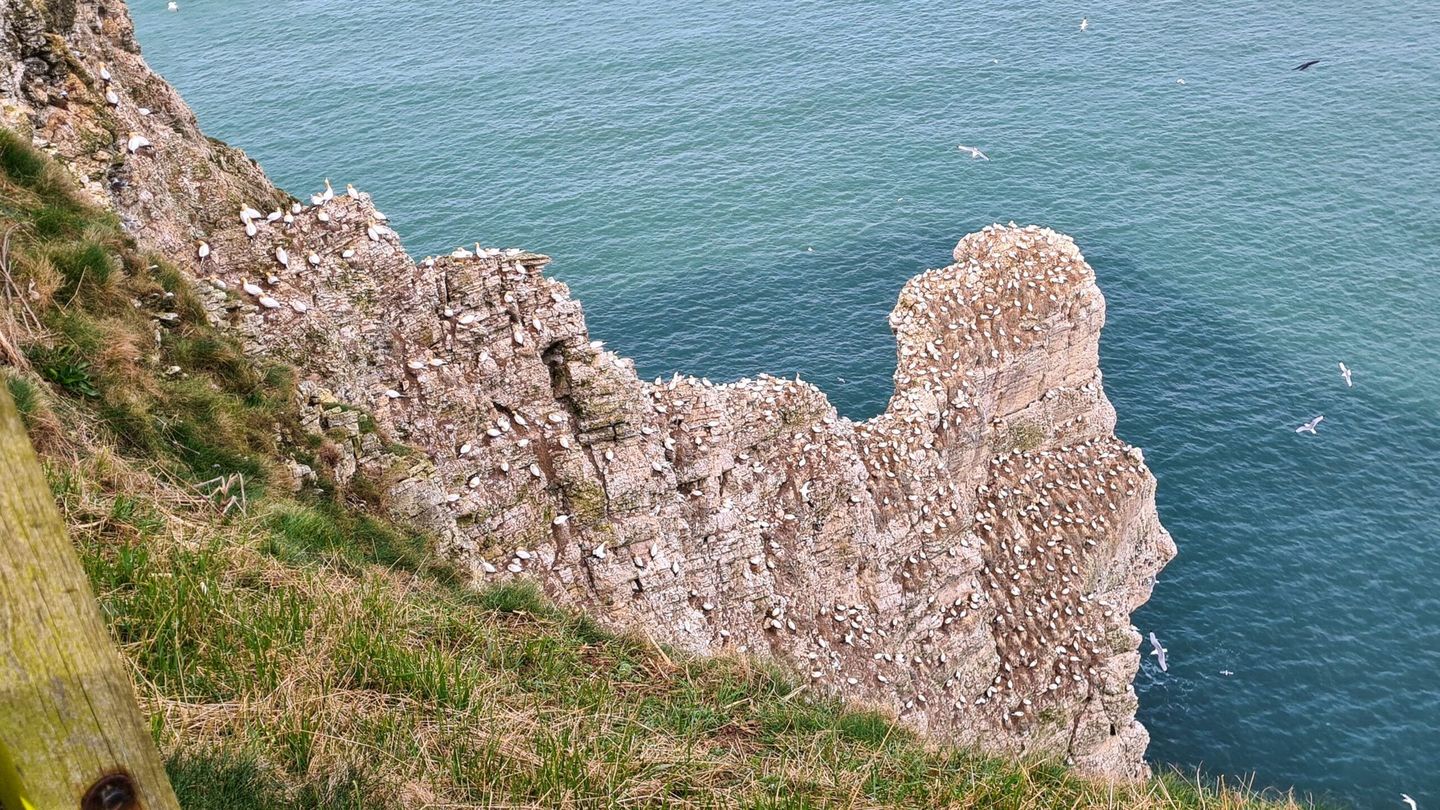
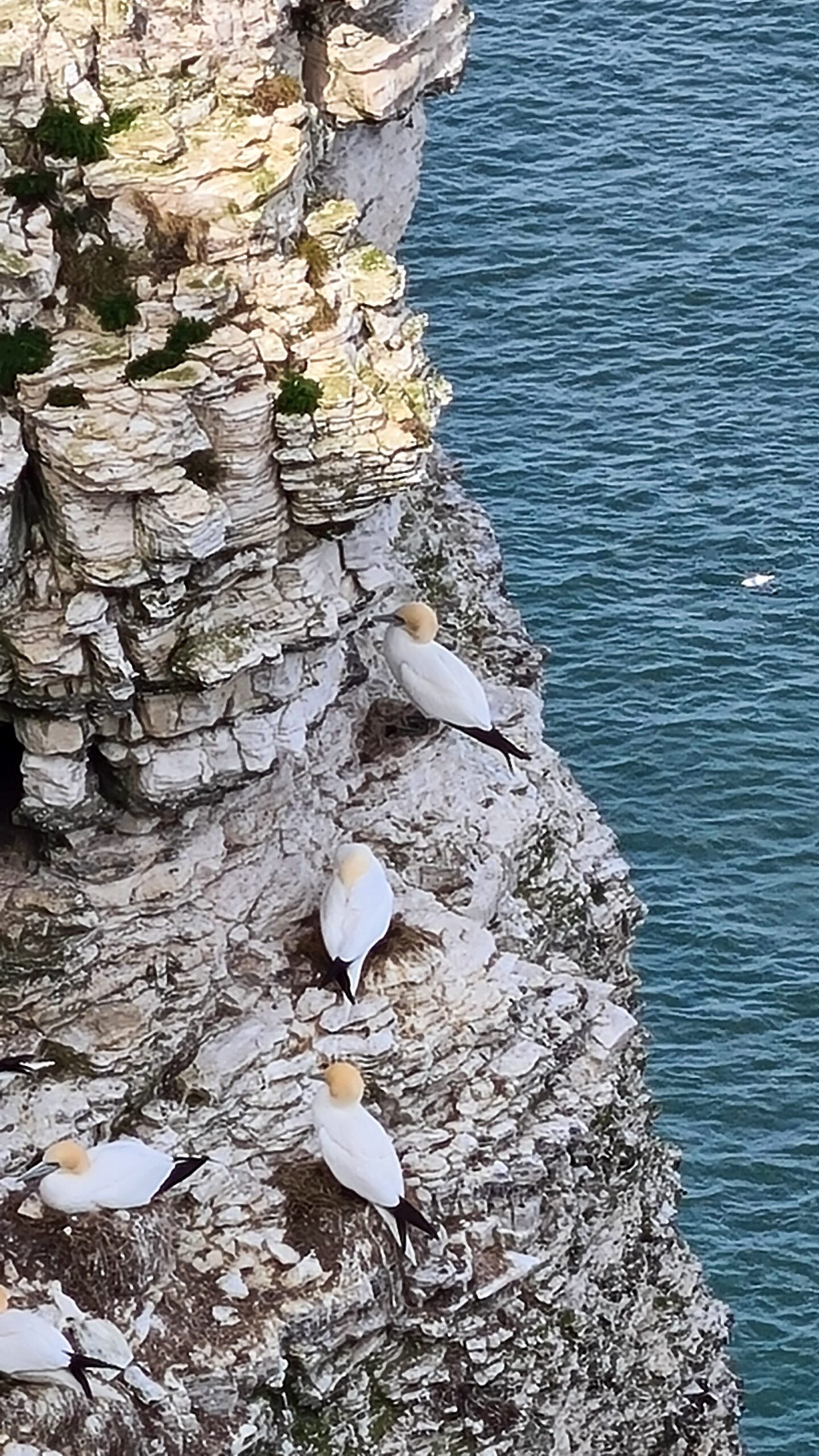
Between spring and summer, more than half a million birds settle on the chalk ledges. The scale becomes noticeable as soon as you reach the viewing areas. Noise carries along the cliffs, while birds move constantly through the air and across the rock faces.
Puffins are the main draw for many visitors, particularly between May and July. They nest in burrows within the softer chalk and can often be seen flying in short, direct lines between the cliffs and the sea.
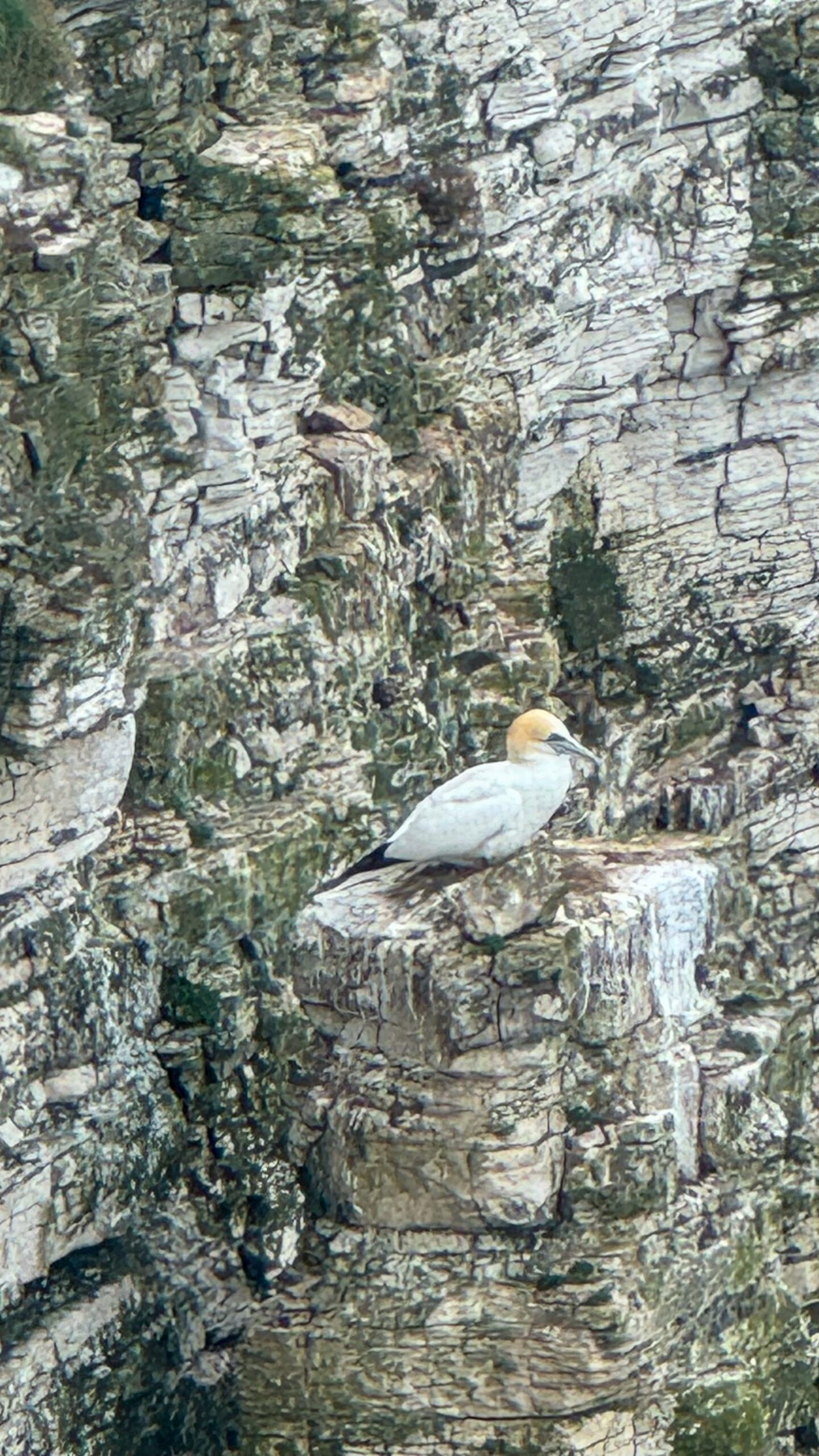
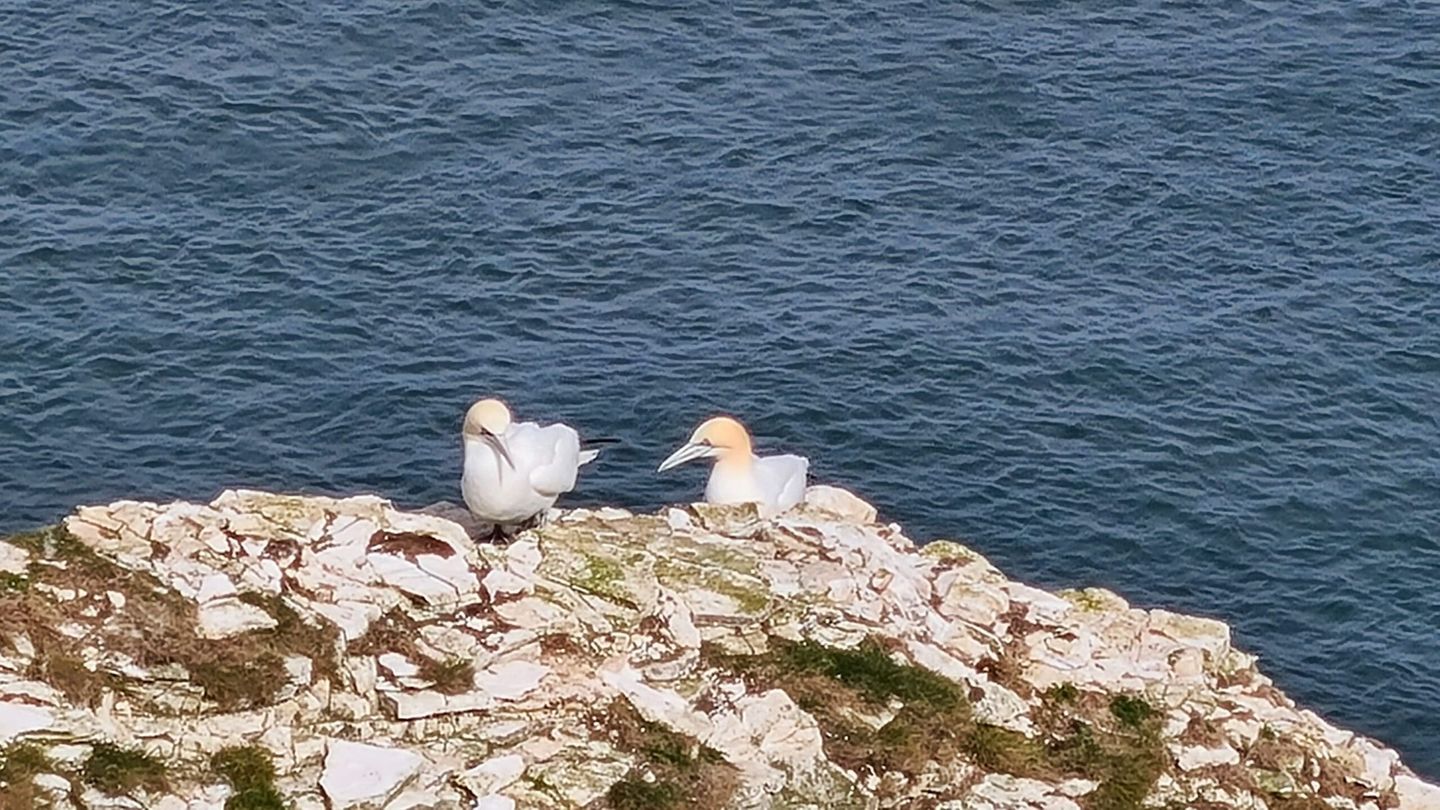
Gannets use the height of the cliffs to launch and return from feeding trips. Kittiwakes, razorbills, guillemots and fulmars also fill the ledges, with each species holding its own space along the rock.
Several viewing platforms have been installed along the cliff edge. These give visitors a safe place to stop, with clear sightlines across the colony. Interpretation boards provide more context, and staff or volunteers are often nearby to help.
Walking the coast
RSPB Bempton Cliffs forms part of the England Coast Path, and walking is one of the simplest ways to experience the reserve and the surrounding coastline.
A longer route runs from Bempton to Flamborough Head, covering around 6 miles (9.5 km). It follows the cliff line for much of the distance, with open views across the sea and down towards the rocks below.
Here, wildlife feels like part of the walk rather than a separate attraction. Seabirds pass overhead, and grey seals are occasionally seen along the shoreline.
For a shorter visit, several paths branch away from the visitor centre. The Cliff Top Trail is the most accessible option, with a well-maintained surface suitable for wheelchairs and pushchairs. It connects several viewing points within a relatively short walking distance.
Nearby landmarks
A few miles to the south, Flamborough Head reaches out into the sea as a chalk headland. It is known for its lighthouse and the walking routes that follow the cliff edge. Small pebble beaches sit below the cliffs in sheltered gaps.
Closer to Bridlington, Sewerby Hall and Gardens stands within a 50-acre estate. The site includes a Georgian house, landscaped grounds, woodland walks and a small zoo.
Remains of RAF Bempton can also be seen along parts of the coastline. The former radar station is no longer active, but fragments of the site remain as a reminder of the area’s role during the Second World War.
Visitor centre and facilities
The visitor centre is the main starting point for most visits. Inside are displays explaining the birdlife and the wider coastal environment, along with guides to help visitors identify the different species.
There is a café serving hot drinks, sandwiches and cakes. The shop sells books, gifts and birdwatching equipment.
Binocular hire is available, which is useful if you have not brought your own. During the breeding season, live camera feeds also show activity from the nesting sites.
Seasonal events take place throughout the year, including guided walks and activities aimed at families.
When to visit Bempton Cliffs
The busiest period runs from April to August, when seabirds are present in the greatest numbers. Puffins are most reliably seen between May and July.
Outside this period, the cliffs become quieter. Autumn and winter bring fewer birds, although migrating species and marine life may still be seen.
The coastline remains open and exposed throughout the year, and conditions on the clifftops can change quickly. Even when the sky is clear, wind arriving from the North Sea can make it feel cooler than expected, so it is sensible to account for that before setting out.
A place that works over time
Bempton Cliffs is not somewhere that depends on a single viewpoint or a quick stop. It is a place that opens up as you move along it.
You can spend your time moving between the viewing platforms or continue further along the coast and let the landscape change gradually. The birdlife is central, but the setting matters just as much.
For many visitors, that makes it somewhere to return to. Not necessarily because every visit needs to offer something new, but because of the consistency of the place itself.
Information
Address: Bempton Cliffs, Cliff Lane, Bridlington, East Riding of Yorkshire, YO15 1JF
Phone: 01262 422212
Website: https://www.rspb.org.uk/days-out/reserves/bempton-cliffs
Latitude: 54.1474
Longitude: -0.1687
What3Words: ///trickster.makeovers.figure
Directions: Follow the brown signs from the main roads to the reserve on Cliff Lane.
Note: No height restriction barrier. No overnight parking or camping.