Tucked into the Derbyshire Peak District, the Millennium Walkway is one of those places that feels both engineered and natural at the same time. It sits above the River Goyt in the town of New Mills, following the edge of a steep gorge and linking paths that were once cut off from each other.
It’s not a long walk, but it’s memorable. The combination of exposed rock, moving water below, and the structure itself makes it stand out from most short routes in the area.
Getting There
New Mills is in the north-west of Derbyshire and is straightforward to reach from across the North West and Midlands. By car, follow the A6 towards the Peak District and head for New Mills. From both Manchester and Sheffield, the drive is usually around 45 minutes depending on traffic.
There is parking in the town centre, including near New Mills Central railway station. From there, you can walk to the start of the walkway in around 5 to 10 minutes.
Public transport is just as practical. Trains run regularly to New Mills Central and New Mills Newtown from Manchester, Sheffield, and Buxton. Once you arrive, the route down into the gorge is short but noticeable, with a steady descent towards the river.
What Is the Millennium Walkway?
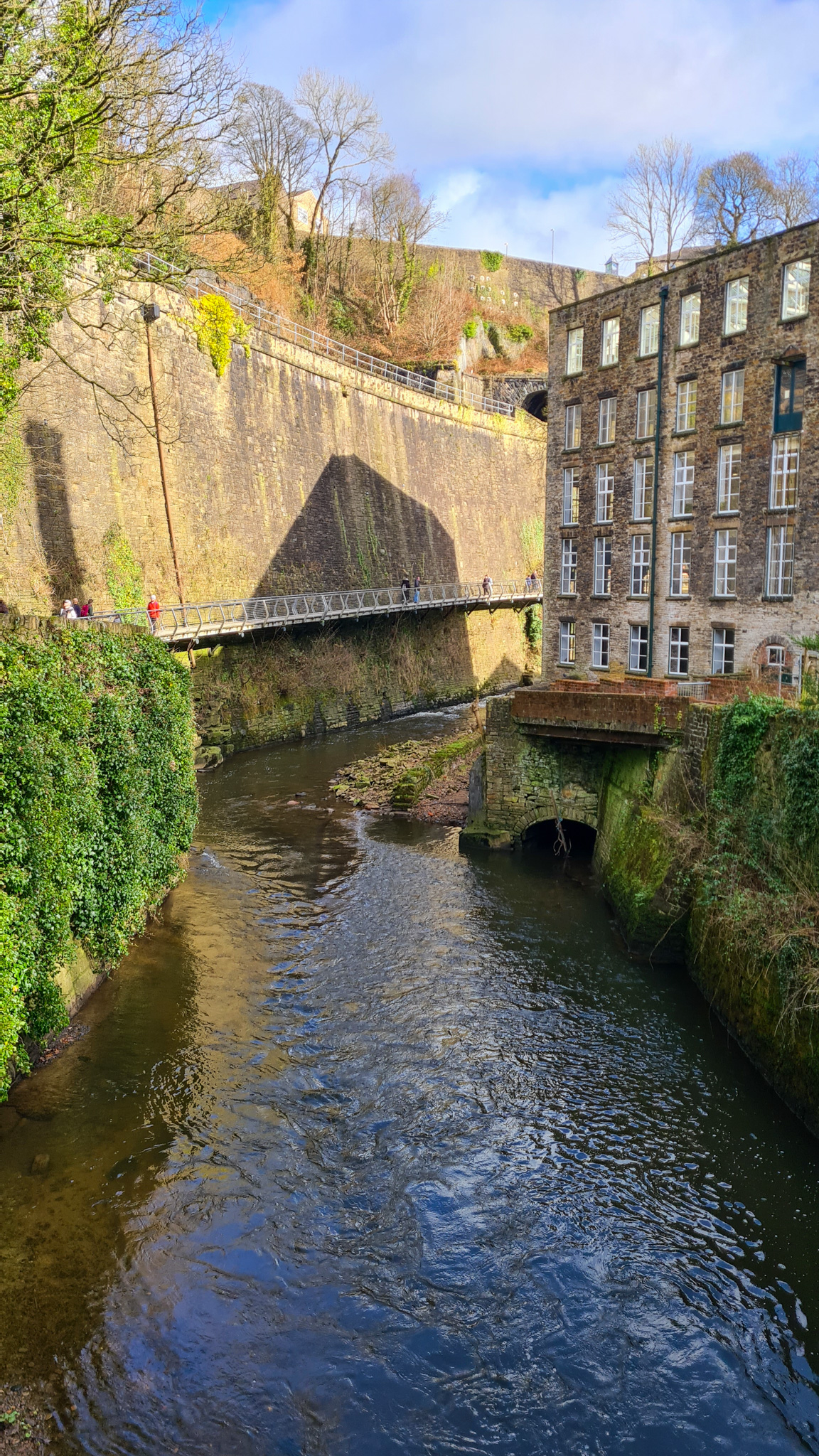
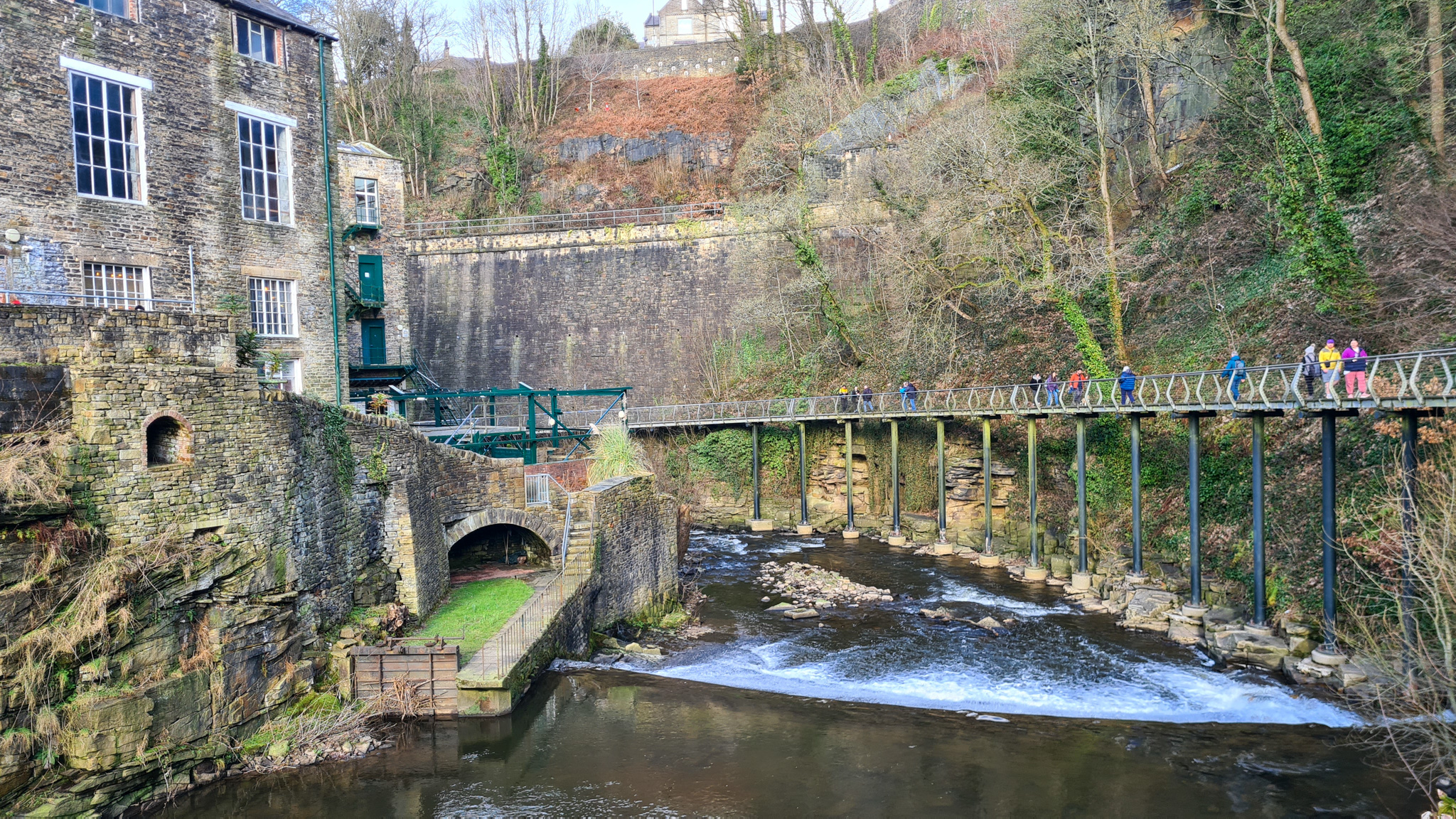
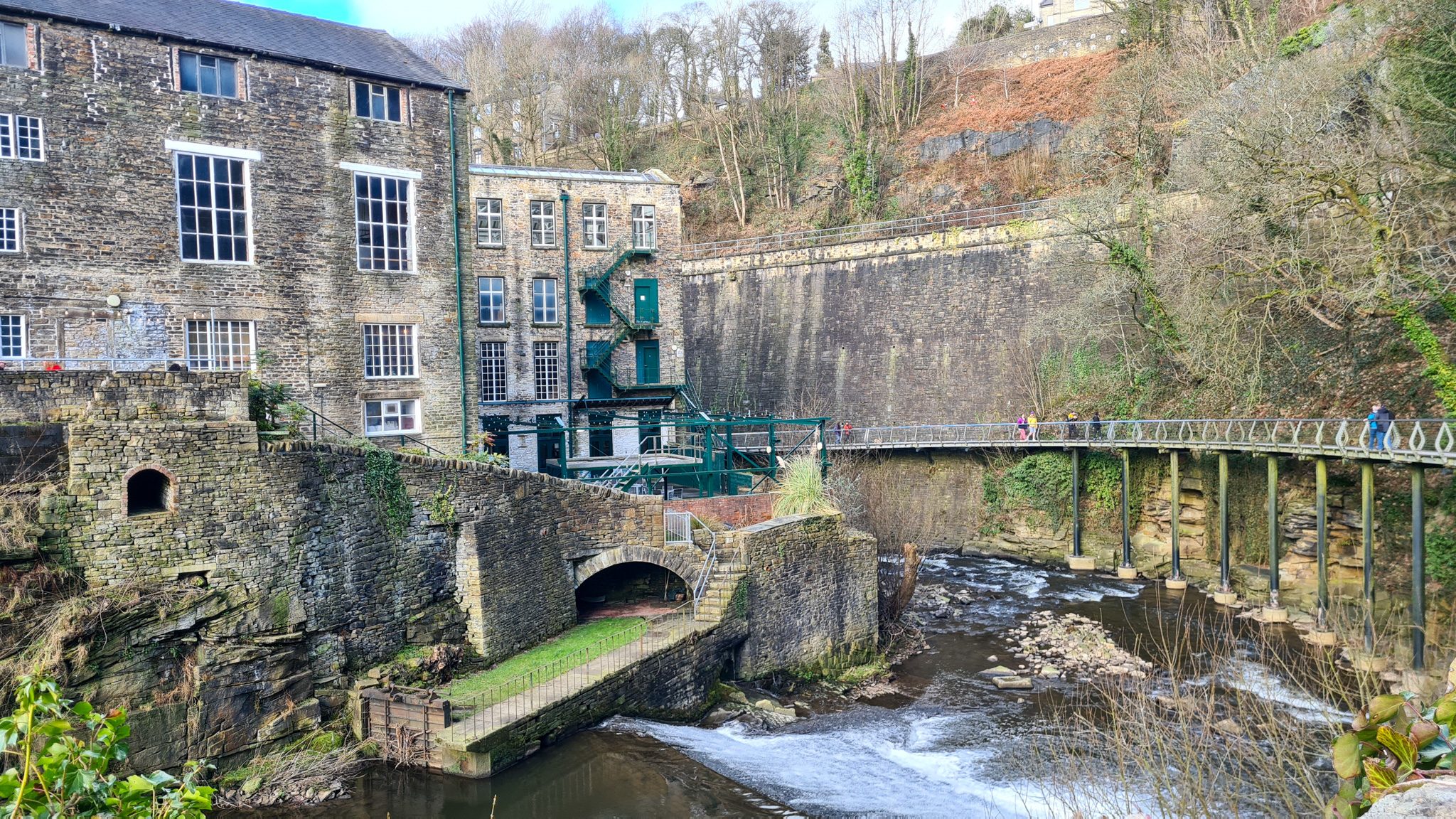
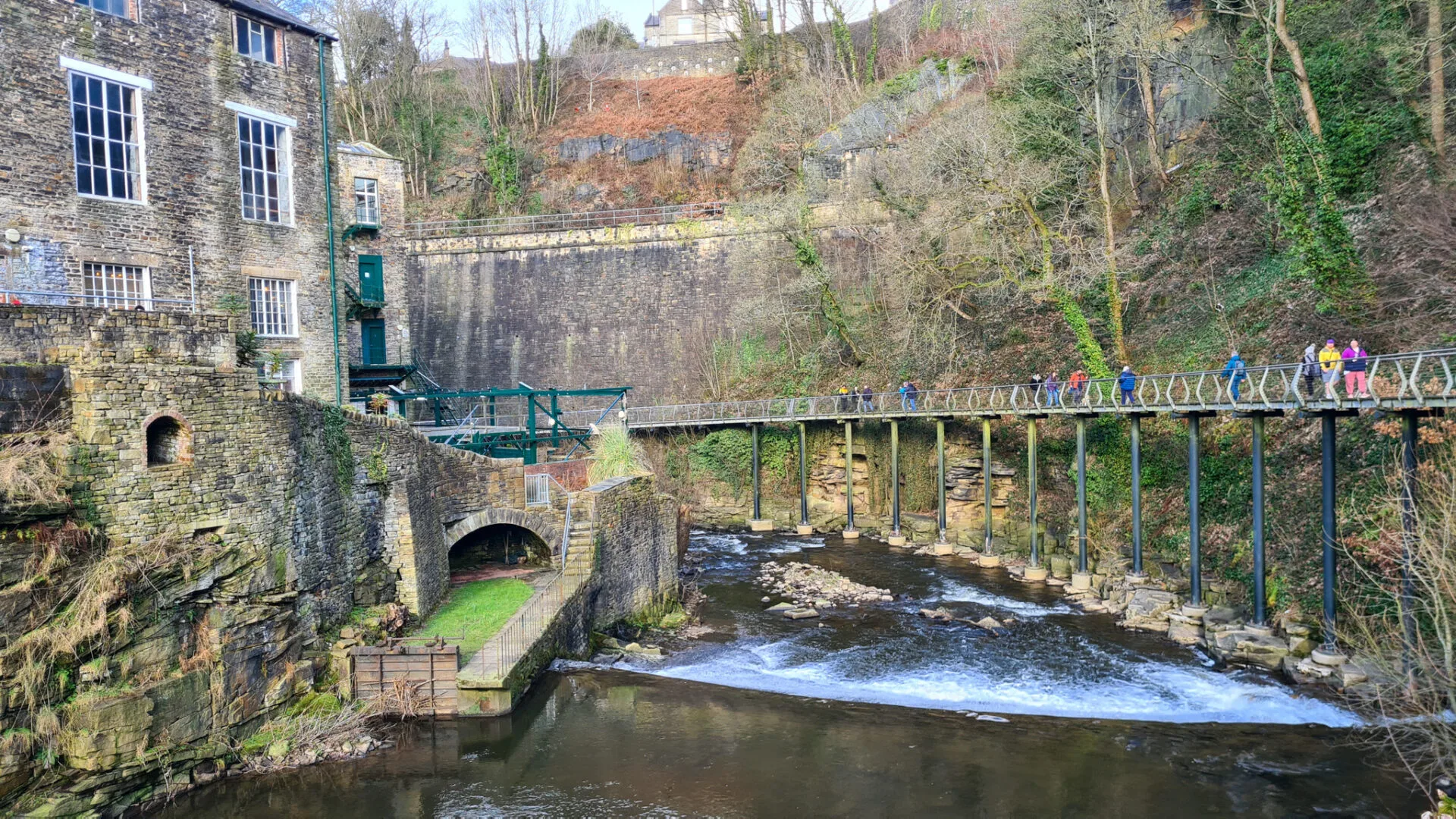
Completed in 1999, the Millennium Walkway is a 160-metre cantilevered path fixed directly to the rock face of the Torrs gorge. It runs above the River Goyt, following the natural curve of the valley and giving the feeling of walking slightly out from the cliff itself.
The structure was built to connect footpaths that were previously separated by an impassable section of the gorge. Before it existed, this stretch was blocked by water, rock, and old industrial remains.
From a practical point of view, it’s a straightforward path to walk. The surface is metal mesh, and the route is narrow in places but secure. You’re always aware of the drop to the river below, which is part of what makes it feel different from a standard riverside walk.
Building it wasn’t simple. The gorge is tight and steep, so engineers had limited space to work in. The final design uses curved steel supports anchored into the rock, balancing durability with a relatively light footprint on the landscape.
Since opening, the walkway has received several design and civic awards, though it still feels relatively under the radar compared to other Peak District spots.
Landmarks to Explore
The walkway itself is only part of what’s here. The surrounding area adds context, especially if you take time to explore beyond the main path.
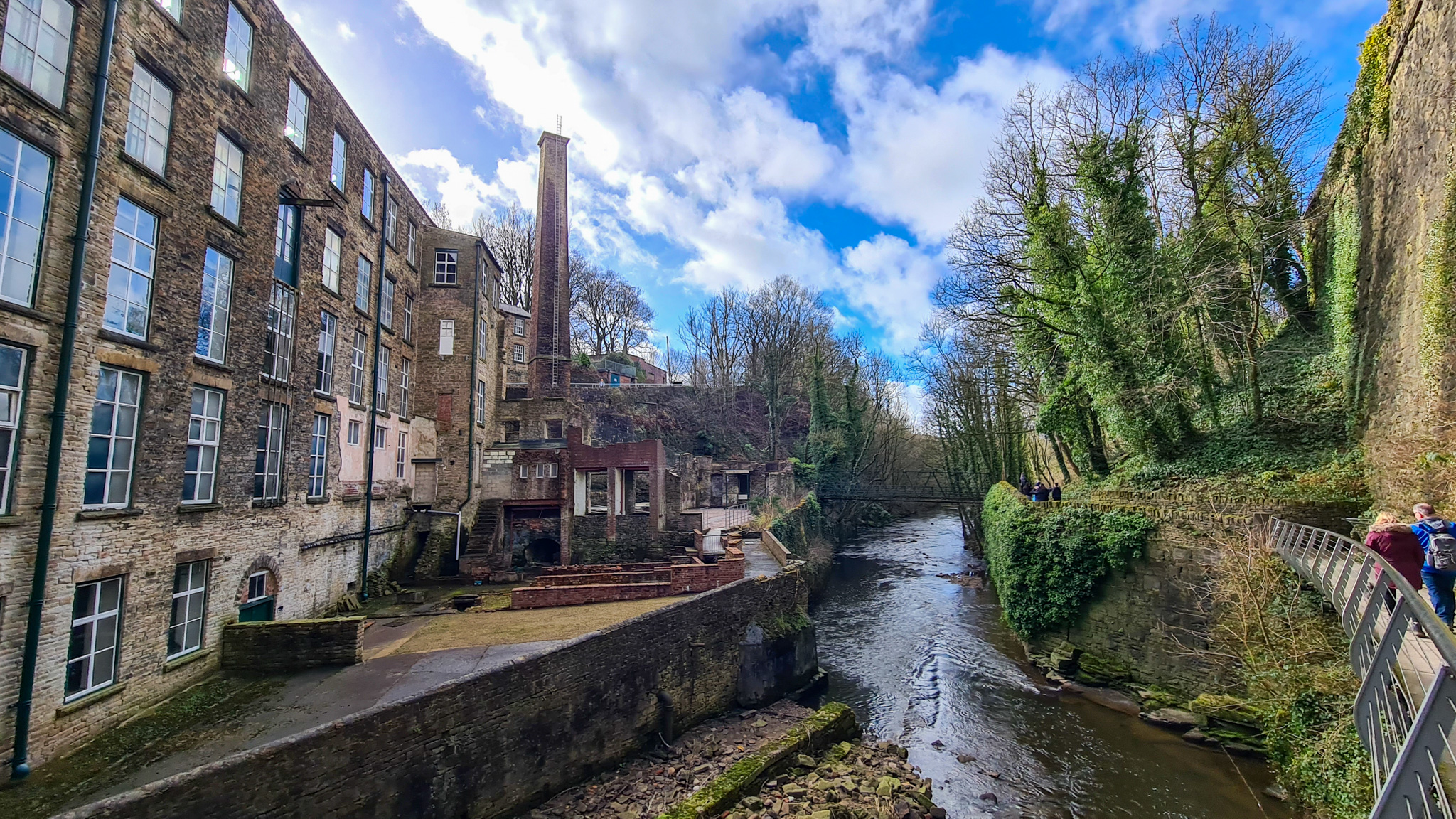
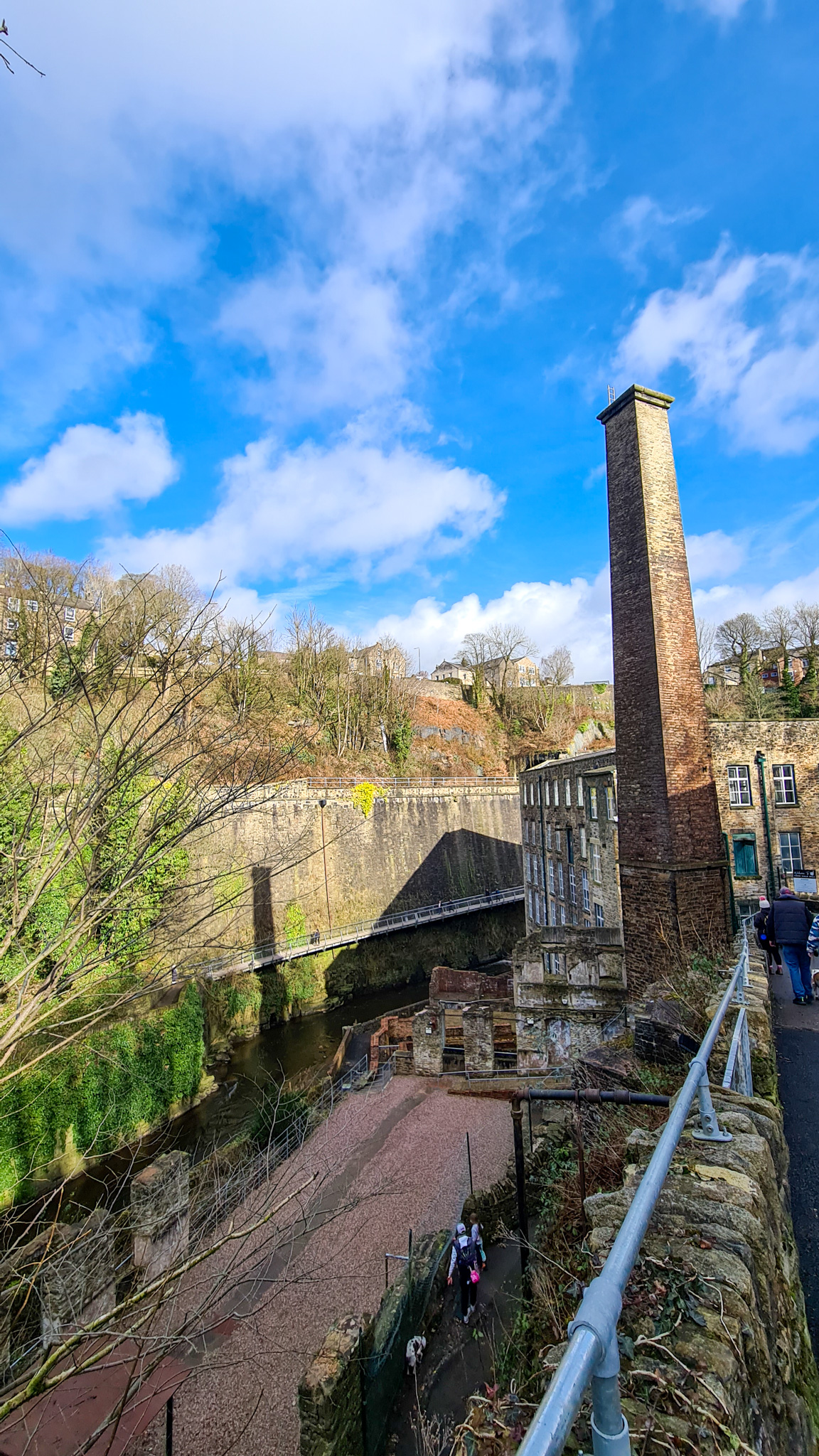
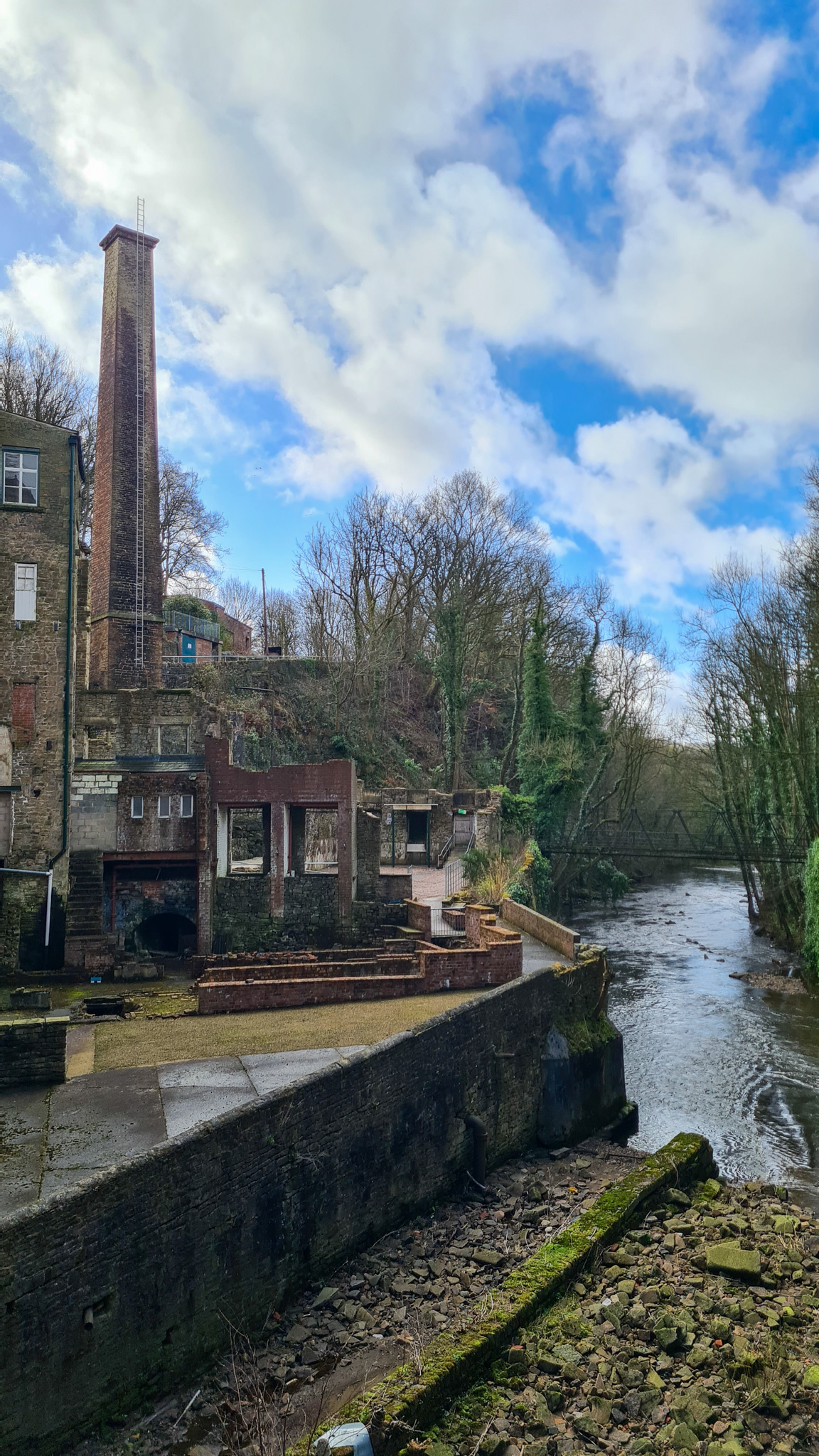
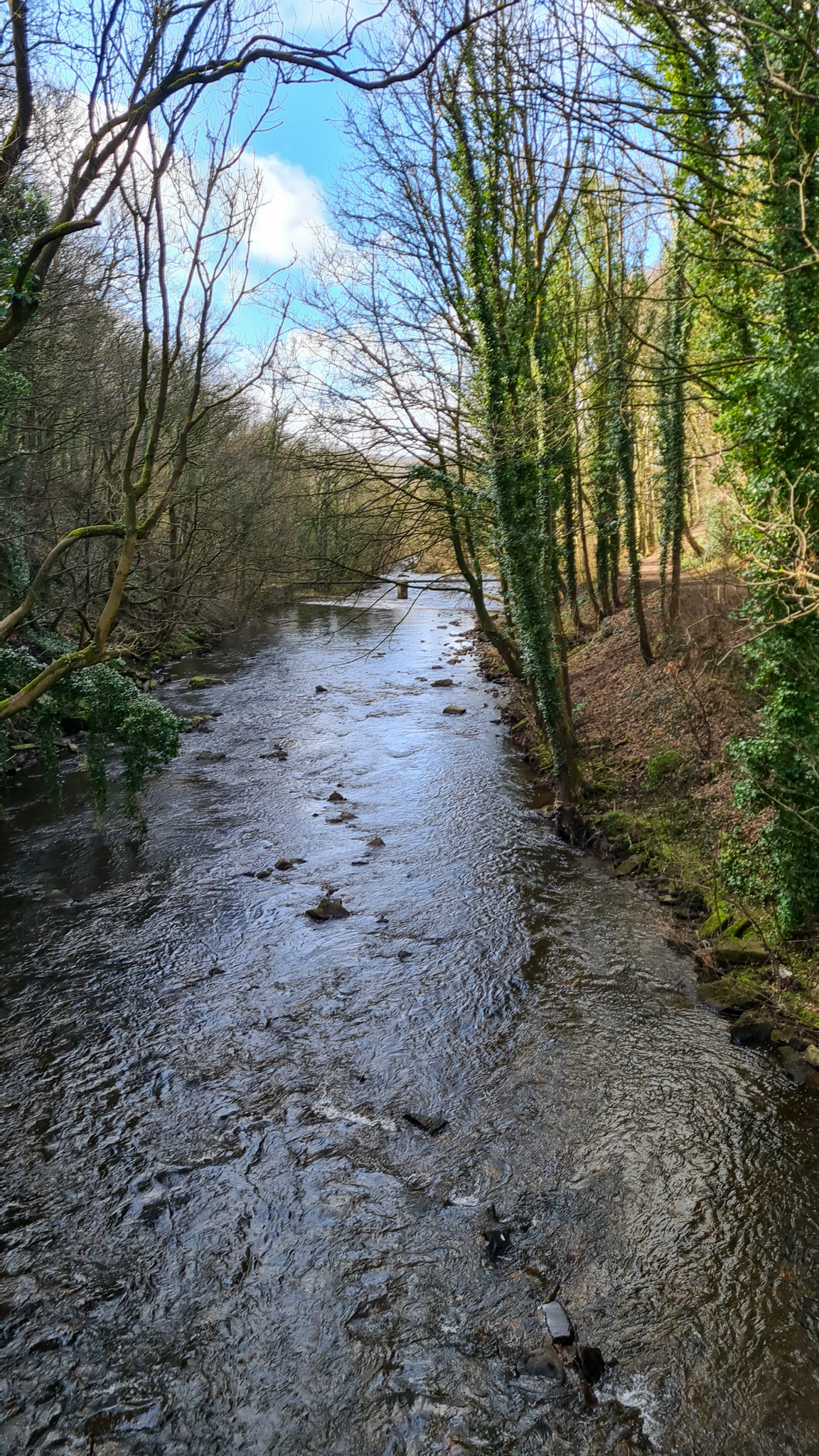
Above the gorge is Torrs Riverside Park, a steep-sided valley that has been reclaimed from its industrial past. You’ll still see remnants of that history in the form of old mills, stone walls, and weirs along the river.
One of the most noticeable buildings is Torr Vale Mill, a Grade II-listed structure that operated for over 200 years. It’s no longer used for textile production, but its size and position in the valley make it hard to miss.
Nearby, there’s also the Archimedes Screw, installed in 2008 as part of a local hydroelectric project. It uses the flow of the river to generate power for nearby homes. It’s a working piece of infrastructure, not just a display, and ties in well with the area’s long history of using water for industry.
Walks in the Area
If you want to turn the visit into something longer, New Mills works well as a base for short and mid-length walks.
The Sett Valley Trail is one of the easiest options. It runs for around 2.5 miles between New Mills and Hayfield, following a disused railway line. The surface is generally smooth and the gradient is gentle, so it suits most abilities.
For a slightly longer route, you can link the Millennium Walkway with sections of the Goyt Way, which forms part of the Midshires Way. This takes you through woodland, across stone bridges, and alongside quieter stretches of the river.
If you’re looking for something more demanding, Kinder Scout sits a few miles to the east. It’s the highest point in the Peak District and a very different kind of walk, with open moorland and more exposure. It’s not a direct extension of the walkway, but it’s close enough to combine into a longer day if planned properly.
Interesting Facts
- The Millennium Walkway cost around £525,000 to build, funded through public grants, local investment, and European funding.
- New Mills has a long history of innovation and was one of the early adopters of hydropower during the Industrial Revolution.
- Before the walkway was built, this section of the gorge was effectively inaccessible due to water, rock, and derelict structures.
- The area forms part of the Sett Valley Heritage Trail, which includes information boards and guided walks throughout the year.
Final Thoughts
The Millennium Walkway is quick to walk, but it changes how you experience this part of New Mills. Without it, the gorge is something you look into. With it, you move through it.
It’s best treated as part of a longer wander rather than a destination on its own. Link it with the riverside paths or head out along the Sett Valley Trail and it starts to feel like a proper outing.
If you’re already passing through, it’s an easy detour that adds something a bit different to a standard Peak District walk.
Information
Address: Millennium Walkway, Torrs Riverside Park, New Mills, High Peak, Derbyshire, SK22 4PN, United Kingdom
Latitude: 53.3645
Longitude: -2.0107
What3Words: ///inventors.standing.emulating
Directions: From New Mills town centre, walk towards Torrs Riverside Park. Follow signs down into the gorge and continue along the riverside path to reach the walkway.
Note: The walkway is a narrow metal mesh path fixed to the rock face above the River Goyt.