
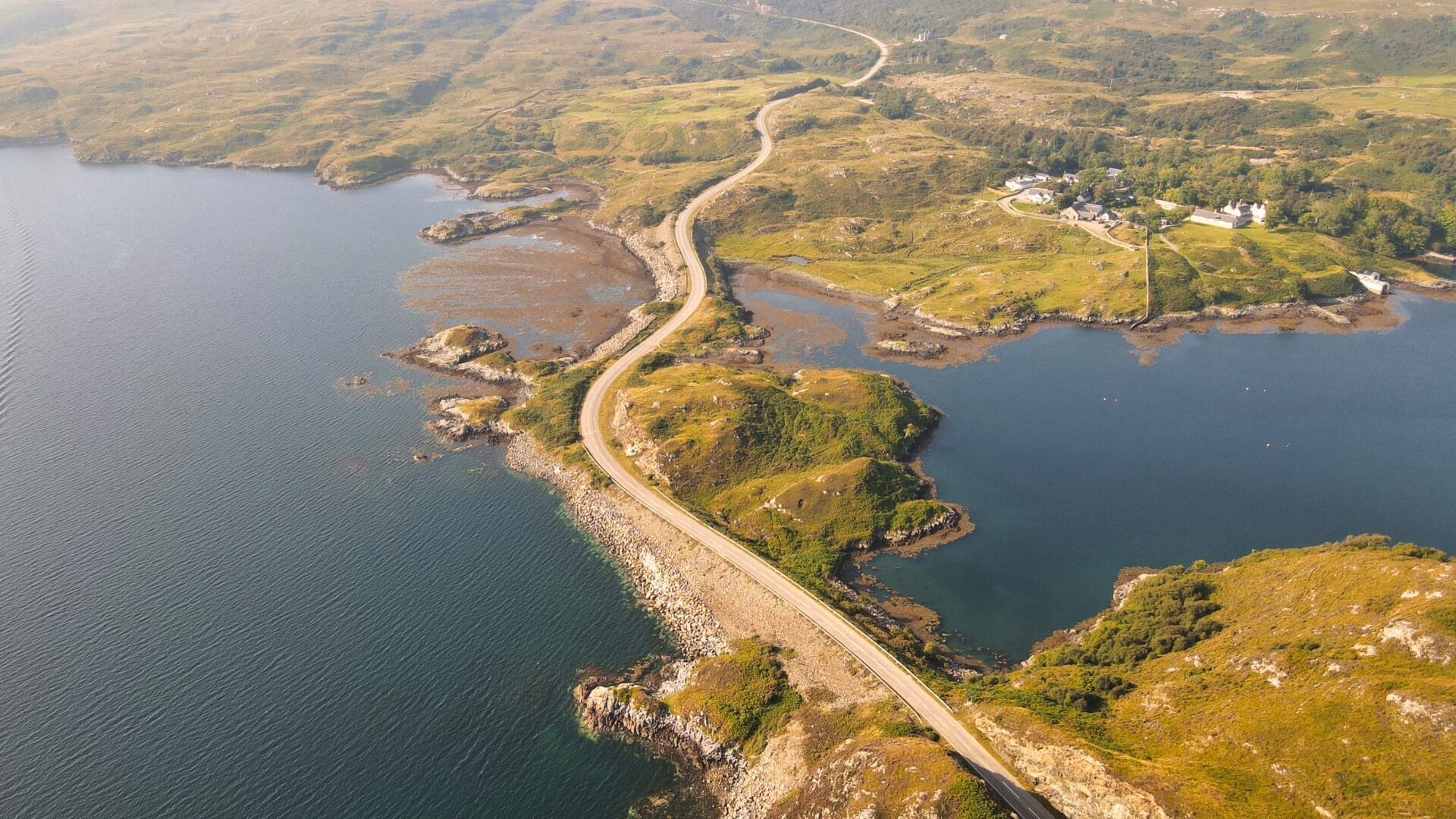
The North Coast 500 is one of those journeys that changes character completely depending on when you go. The route covers around 516 miles through the far north of Scotland, looping past sea cliffs, mountain passes, fishing villages and long empty stretches of road where it can feel as though you have the Highlands to yourself.
Because of that, there is no single “best” time to drive it. What works best really depends on the kind of trip you want. Some people want long bright days and busy villages, while others would rather trade comfort for quiet roads and a more reflective pace. Each season brings its own rhythm, and understanding that makes planning much easier.
Spring on the NC500 (March to May)
Spring is often one of the most balanced times to travel the route. After winter, the landscape starts to soften and brighten. Roadside verges begin to fill with colour, with primroses and bluebells appearing in many areas, and the hills gradually lose their harsher winter look.
The weather can still be changeable, and that is worth planning for. It is not unusual to experience sunshine, low cloud and drizzle all in the same day. Temperatures are generally mild enough for walking and time outdoors, but mornings and evenings can still feel cold, particularly on the west coast or in exposed areas.
For a van trip, spring works well because the roads are usually much quieter than in peak summer. Popular stops such as coastal viewpoints, beaches and villages tend to feel less pressured, which makes it easier to travel at a slower pace and stop when something catches your eye.
It is also one of the better times for wildlife. Red deer are often easier to spot in quieter glens and woodland edges, and birdlife becomes more active as the season progresses. For anyone interested in photography, the softer light and greener landscapes can make this a particularly rewarding time to visit.
Summer on the NC500 (June to August)
Summer brings the longest days and the greatest sense of freedom on the route. In the Highlands, daylight can stretch from around 4 in the morning until nearly 11 at night, which gives you a huge amount of time to explore without feeling rushed.
This is the easiest season for long driving days, scenic detours and late evening stops. It also gives you more flexibility if you are travelling by van and prefer to keep plans loose.
Temperatures are usually at their warmest, though “warm” in the Highlands often means somewhere around 15 to 20 degrees. It is generally comfortable for walking, swimming and spending time outside, but conditions can still shift quickly, especially on the coast.
The trade-off is that summer is by far the busiest season. Roads around well-known sections can become noticeably busier, and accommodation, campsites and popular stopovers often need booking well in advance. If you are travelling in a larger van or motorhome, some of the single-track roads can feel slower during peak periods.
Midges are also something to plan around. They can be particularly frustrating around dawn and dusk, especially near still water and sheltered wooded areas. A decent repellent and some flexibility around where and when you park up can make a real difference.
Autumn on the NC500 (September to November)
Autumn is arguably one of the most rewarding times to drive the NC500 if you value atmosphere and quieter travel. The Highlands take on a completely different look, with hillsides turning gold, amber and deep russet, particularly in wooded inland stretches.
The roads are often noticeably quieter once the summer rush has passed, and many places regain a calmer, more local feel. For slow travel, this can be ideal.
The air tends to feel cooler and clearer, which often makes for excellent walking weather. Coastal viewpoints can feel especially dramatic at this time of year, with changing light and fast-moving skies adding a lot of mood to the landscape.
From a practical point of view, autumn is also a good season for local food. Many places lean into hearty seasonal dishes, with venison, game and fresh seafood widely available, and stopping off at a distillery feels particularly fitting when the weather turns cooler.
The main thing to watch is the shortening daylight. By late autumn, days become much shorter, so it helps to keep driving distances realistic and avoid relying on late arrivals.
Winter on the NC500 (December to February)
Winter gives the route a completely different feel. Snow-dusted mountains, frosted lochs and dark clear skies can make parts of the NC500 feel almost otherworldly.
For those willing to plan carefully, it can be one of the most memorable times to visit. On clear nights, there is always the possibility of seeing the Northern Lights, particularly in the far north where light pollution is low.
That said, winter is the most demanding season in practical terms. Daylight can drop to around 6 to 8 hours, road conditions may include ice and snow, and weather changes can be severe.
If travelling by van or car, this is the season where vehicle preparation really matters. Winter tyres, good heating, a charged phone, extra food and water, and regular checks on weather and road conditions become essential rather than optional.
Some accommodation, attractions and seasonal businesses also reduce their opening hours or close altogether, so it is worth confirming plans in advance rather than assuming summer availability.
So when is the best time to do the NC500?
In practical terms, spring and early autumn are often the most balanced times to go. You usually get quieter roads, enough daylight for comfortable travel, and fewer of the pressures that come with peak summer.
Summer suits those who want maximum daylight and the easiest conditions for outdoor activities, while winter is best for travellers who are experienced, flexible and comfortable planning around the weather.
The best season is less about what is objectively “best” and more about how you like to travel. If you prefer calm roads and slower days, spring and autumn are hard to beat. If you want long evenings and maximum freedom to explore, summer makes sense. If you are drawn to atmosphere, solitude and dramatic landscapes, winter has its own appeal.
The NC500 works in every season. The key is simply choosing the version of the Highlands that best fits your own pace of travel.