
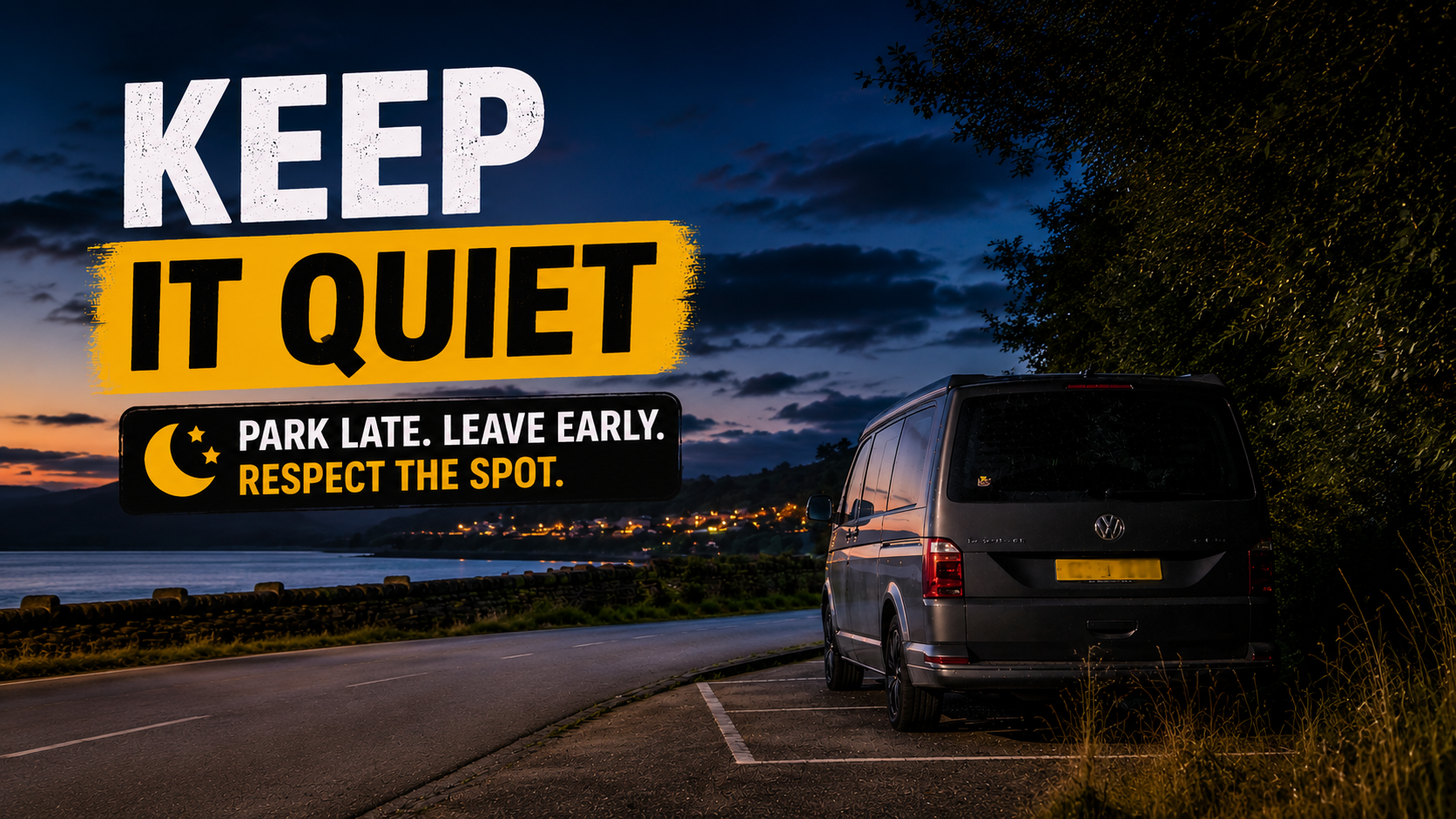
Stealth camping in the UK is one of those van life subjects that sounds simple until you actually try it. On paper, it means parking somewhere quiet for the night without drawing attention. In practice, it is a mix of judgement, patience, local awareness and knowing when to move on.
For van and campervan travellers, it can be useful. Campsites are not always nearby, prices add up, and sometimes you just need a safe, low-key place to sleep before carrying on in the morning. But it also comes with responsibility. You are sharing roads, villages, car parks and rural spaces with people who live and work there.
Done well, stealth camping is quiet and uneventful. You arrive, sleep, leave no trace and go. Done badly, it can upset locals, damage access for other van travellers, or lead to a knock on the door in the middle of the night.
This guide looks at how stealth camping works in the UK, what the legal position broadly looks like, how to choose a sensible overnight spot, and the etiquette that makes the biggest difference in real use.
What Exactly Is Stealth Camping?
Stealth camping means staying overnight in your van without making it obvious that you are camping. It is closer to discreet overnight parking than setting up camp.
That distinction matters. Parking usually means the van stays self-contained. No chairs outside. No awning. No table. No levelling ramps unless absolutely necessary. No fire pit, barbecue or washing line. From the outside, your van should look parked, not pitched.
The best stealth spots are often unremarkable. A quiet street with other vehicles around. A lay-by that is safe and set back from the road. A car park where overnight stays are allowed or tolerated. A pub or farm shop where you have asked permission. The point is not to hide from everyone. It is to be low-impact, respectful and ready to move if the place is not right.
Think of stealth camping as travelling lightly. You are not trying to claim a space. You are simply passing through.
The Legal Landscape in the UK
The legal side of stealth camping is not as neat as many people would like it to be. Rules vary by country, landowner, council, car park and sometimes by season. A place that was fine last year may have new signs, barriers or enforcement this year.
The safest way to think about it is this: if you have permission to stay overnight, you are on firmer ground. If you do not, you are relying on discretion, local tolerance and being willing to leave if asked.
England and Wales
In most of England and Wales, camping on land usually requires the landowner’s permission. That includes many rural areas, car parks, beaches, woodland and open countryside.
Sleeping in a parked vehicle is not always treated in the same way as pitching a tent, but that does not mean you can park anywhere overnight. Local councils, private landowners, National Trust sites, country parks and coastal car parks may set their own restrictions. If a sign says no overnight parking, no camping, no sleeping in vehicles, or gives a closing time, take it seriously.
Dartmoor is often mentioned in wild camping discussions because backpack camping has a specific legal history there. That does not mean campervans and motorhomes have a general right to stay overnight on Dartmoor or elsewhere. For van travellers, the usual parking restrictions and landowner permissions still matter.
Scotland
Scotland is often seen as more relaxed, and in some ways it is. The Scottish Outdoor Access Code supports responsible access and lightweight camping where access rights apply. But those access rights do not give you a right to drive or park a vehicle on private land.
For campervans and motorhomes, this is an important difference. You may find more tolerance in rural Scotland, especially where travellers are quiet and self-contained, but you still need to respect signs, local parking rules, passing places, croft access, farm gates and fragile ground. In busy areas, including parts of the Highlands and popular coastal routes, restrictions can be tighter than people expect.
Northern Ireland
Northern Ireland generally has fewer informal options for wild or stealth camping in a vehicle. Permission is the cleanest route, and campsites, aire-style stopovers, approved parking areas or pub stops are often the safer choice.
Roadside Parking and Lay-bys
Lay-bys are common overnight choices, but they need a bit of care. A lay-by beside a fast road can be noisy, exposed and unpleasant. Some are used by lorries, which may mean engine noise through the night and early movement in the morning. Others are too narrow or too close to traffic to feel safe.
If you park on a road or in a lay-by at night, normal road parking rules still apply. Avoid creating an obstruction, do not park facing against the flow of traffic unless you are in a recognised parking space, and be aware that lighting rules can apply on roads with speed limits over 30 mph.
In short, stealth camping is not just about whether you can sleep somewhere. It is also about whether the parking itself is safe, legal and considerate.
Finding Discreet Overnight Spots
Good stealth camping starts before you stop for the night. It is much easier to make a sensible decision in daylight than when you are tired, hungry and trying to find somewhere after dark.
Look for places that feel ordinary, safe and easy to leave. Avoid places where your van becomes the most noticeable thing in the area. If you pull up and immediately feel watched, cramped or unsure, that is usually enough reason to keep moving.
1. Residential Streets
Residential streets can work in towns and cities, but they need tact. The best places are usually streets where vans and cars already park overnight, where houses are not too close to the kerb, and where you are not directly outside someone’s front window.
Avoid cul-de-sacs, narrow lanes, private estates, school entrances, busy terraces with limited resident parking, and anywhere you would clearly be taking a valued space from someone who lives there. Arrive late, keep the van closed up, and leave early. One night is usually the limit.
2. Rural Lay-bys
Rural lay-bys can be peaceful when they are set back from the road, screened by hedges or trees, and not obviously used for farm access. They can also be poor choices if they are on fast roads, littered, used as informal meeting spots, or too close to houses.
Check that you are not blocking gates, tracks, passing places or field entrances. In rural areas, access that looks unused at night may be needed early in the morning by a farmer, delivery vehicle or emergency service.
3. Car Parks
Car parks are often tempting because they are flat, easy to find and close to walks, beaches or town centres. They are also where restrictions are most likely to be written down.
Always read the signs at the entrance and around the payment machine. Look for closing times, height barriers, no overnight parking rules, no sleeping in vehicles rules, payment hours and penalty notices. If daytime charges apply, pay what is due. If the car park clearly does not allow overnight stays, move on rather than trying to argue with the wording.
Some places offer designated overnight parking for motorhomes and campervans, sometimes for a small fee. These are worth using when available. They reduce guesswork and help show councils that responsible van travel can work when it is managed properly.
4. Pubs, Farm Shops and Stopover Schemes
One of the simplest ways to avoid uncertainty is to ask. Many rural pubs, farm shops and attractions are open to overnight van stays if you check first and support the business. Some are part of organised stopover schemes, while others handle it informally.
Be clear when you ask. Say you are travelling in a self-contained campervan, you only need one night, and you will leave early or at an agreed time. Buy a meal, drink, produce or entry ticket where appropriate. Do not treat a free stop as an entitlement.
This is not really stealth camping, but it is often better. You get permission, the host gets custom, and there is less stress about being moved on.
5. Apps and Traveller Communities
Apps such as Park4Night and Searchforsites can be useful starting points. Facebook groups and van forums can also help you understand which areas are friendly, which places have changed, and where restrictions have appeared.
Use shared spots carefully. Reviews can be out of date, and popular app locations often become busy enough to attract complaints. If a place looks overused, full of rubbish or covered in “no overnight” signs, do not add to the problem. Find somewhere else.
It is also worth keeping your own notes. The best overnight places are often the ones you find quietly, use respectfully, and do not share widely online.
Stealth Camping Etiquette
Etiquette is what keeps stealth camping possible. Most problems come from people turning parking spots into campsites, leaving waste, staying too long or ignoring local signs.
The basic rule is simple: leave no trace, and leave before your presence becomes a problem.
- Arrive late and leave early. You are there to sleep, not settle in for the day.
- Keep everything inside the van. No chairs, awnings, tables, barbecues, fire pits or outdoor cooking.
- Stay quiet. Keep music off, voices low and doors from sliding open and shut repeatedly.
- Use blackout blinds properly. Light leaking from windows makes a van look occupied from a long way off.
- Do not block access. Gates, tracks, passing places, driveways and turning spaces need to stay clear.
- Take all rubbish with you. This includes food waste, wipes, dog waste, grey water and anything that looks biodegradable but is not helpful where you leave it.
- Do not empty toilets or grey water outside. Use proper disposal points, campsites, service areas or facilities that explicitly allow it.
- Move on if asked. Stay calm, apologise and leave. Arguing rarely helps you or the next van traveller.
A good stealth night is usually quite boring from the outside. That is the point.
Insider Tips for Stealthing Like a Pro
Small habits make stealth camping much easier. Most of them are not dramatic. They are just the practical things that stop a quiet night becoming awkward.
- Scout in daylight when you can. You will spot signs, slopes, broken glass, nearby houses and access issues more easily.
- Have a backup spot. Never rely on one location, especially in tourist areas or late at night.
- Park ready to leave. Face out where possible, keep the cab clear, and avoid getting boxed in.
- Sort the van before you arrive. Fill water, use the toilet, cook dinner and organise bedding somewhere more suitable if needed.
- Keep food simple. Strong cooking smells, steam and extractor noise all make the van more noticeable.
- Know where your next toilet is. Supermarkets, service stations, public toilets, gyms and campsites can all be useful during the day.
- Use campsites strategically. A campsite night every few days lets you shower properly, charge everything, empty waste and reset.
- Do not drink if you may need to move. If you are asked to leave, you need to be able to drive legally and safely.
A portable toilet is worth considering if you spend regular nights away from campsites. It is not glamorous, but it prevents poor decisions in places with no facilities. Being self-contained makes you a better guest in almost every overnight spot.
A Simple Spot Check Before You Stay
Before settling in, take a minute to ask yourself a few plain questions:
- Are there any signs saying no overnight parking, no camping or no sleeping in vehicles?
- Am I blocking anyone’s access, view, turning space or regular parking?
- Would this still feel sensible if someone knocked on the window at midnight?
- Can I leave quickly and safely if I need to?
- Is the ground firm, level and suitable for the weather?
- Is this place likely to be busy with walkers, dog owners, lorries, young people or early morning workers?
- Would I be comfortable if a local resident saw me here?
If you hesitate on more than one of those, it is probably not the right spot. Moving on before you unpack mentally is much easier than moving on after you have settled.
Seasonal Stealth Camping in the UK
The UK changes a lot through the year, and so does stealth camping. A spot that feels easy in October may be impossible in August. A quiet car park in winter may have a locked gate, icy surface or no phone signal when you need it.
Summer
Summer brings longer evenings, busier roads and more pressure on coastal and national park areas. It is harder to arrive discreetly because people are still out late. Tourist car parks are more likely to have patrols, barriers or signs.
Ventilation also matters. A fully closed van can become uncomfortable quickly, but open windows, roof vents and fans can make noise or show light. Plan for airflow before you choose a tight urban spot.
Spring and Autumn
Spring and autumn are often easier. Roads are quieter, popular places have fewer visitors, and temperatures are usually more manageable. These seasons can be a good time to explore areas that feel too busy in peak summer.
Still watch the weather. Heavy rain can turn grass verges, informal pull-ins and unsurfaced tracks into a problem quickly, especially in a heavier campervan.
Winter
Winter can work well for discreet arrivals because it gets dark early. The trade-off is cold, condensation and fewer open facilities. Public toilets may close earlier, rural roads can be icy, and remote places feel very different after dark.
Good insulation, heating, a charged power setup and a sensible exit plan matter more in winter. Avoid remote spots if the forecast is poor or if you are not confident you can get out again in the morning.
Safety Considerations
Stealth camping should feel calm, not tense. If a place makes you uneasy, leave before you talk yourself into staying.
- Trust your instinct. If something feels off, that is enough reason to move.
- Keep the driver’s seat reachable. Do not pile bags, bedding or cooking kit in the cab if you may need to leave quickly.
- Share your rough location. This is especially useful if you travel alone or stay in rural areas.
- Keep your phone charged. A power bank is a small thing until you need it.
- Avoid obvious night-time gathering spots. Some beach car parks, parks and viewpoints are quiet by day but noisy after dark.
- Check signal before settling. No signal is not always a problem, but it is worth knowing before you need maps, weather or help.
- Do not advertise valuables. Keep laptops, cameras and bags out of sight.
If you get the knock, stay polite. It may be a landowner, security guard, police officer, council worker or concerned resident. Keep the conversation simple. Apologise, explain that you will move on, and do it without fuss.
Top UK Regions for Stealth Camping
The best overnight spots are rarely the ones named publicly in detail. Once a location becomes too popular, it often gains signs, barriers or local frustration. So rather than listing exact places, it is more useful to think in regions and travel patterns.
Scottish Highlands
The Highlands have wide landscapes, long distances between towns and plenty of places that feel remote. They also have fragile communities, single-track roads and growing pressure from campervan traffic. Use campsites and official stopovers where possible, avoid passing places, and be especially careful with waste disposal. In summer, midges can make even a good-looking spot hard work.
Northumberland Coast
Northumberland can feel quieter than some southern coastal areas, with beaches, castles, small villages and open countryside. Coastal car parks still need careful checking, and exposed spots can be windy. It is a good region for mixing campsite nights, pub stops and quiet inland parking rather than relying only on beach car parks.
Eryri / Snowdonia
Eryri is popular for a reason, but mountain areas are not automatically easy for overnight parking. Some car parks fill early, some have clear restrictions, and narrow roads leave little room for poor parking. The better approach is to plan your walking or sightseeing separately from where you sleep, then move to a quieter, more suitable overnight place.
The Lake District
The Lake District can be difficult in the main tourist areas. Parking is limited, restrictions are common, and local pressure is high. Outer villages, lower-key valleys and authorised stopovers are often more realistic than trying to stay close to the busiest lakes. If you are visiting in peak season, have a campsite or paid stopover in mind as a backup.
East Anglia
East Anglia is flatter, quieter in places, and often overlooked by van travellers heading for mountains or dramatic coastlines. The Broads, small coastal villages and inland lanes can be rewarding, but many car parks near beaches and nature reserves have specific rules. Watch for soft verges and respect protected landscapes and wildlife areas.
Cornwall and Devon
Cornwall and Devon are much easier outside the busiest summer weeks. In peak season, coastal roads, beach car parks and village parking can be heavily restricted or closely watched. Off-season travel gives you more breathing room, but you still need to check signs and avoid places where vans have clearly become a local issue.
Yorkshire Dales
The Yorkshire Dales can work well for quiet van travel, especially if you stay away from the most obvious honeypot spots. Valleys, market towns and rural roads give plenty of route options, but farm access is constant. Never block gates or passing places, and be realistic about narrow roads in larger vans.
Common Challenges and How to Handle Them
Getting Asked to Move
It happens. The best response is calm and practical. Do not argue about technicalities at midnight. Apologise, say you will leave, and move to your backup spot. A polite departure protects you and makes life easier for the next person travelling through.
Running Out of Water
Water is easy to underestimate. Carry enough for drinking, cooking, washing up and basic hygiene, then top up before you are desperate. Campsites, some garages, service areas and official motorhome points may be options, but do not assume every tap is public or suitable for filling containers.
Toilet and Waste Problems
This is where van travellers cause the most damage to local goodwill. If your van has a toilet, know where you can empty it properly. If it does not, plan your stops around public toilets, cafés, supermarkets, gyms or campsites. Never leave toilet waste, wipes or grey water at a parking spot.
Power Shortages
Solar can be excellent in summer and disappointing in winter. If you work from the van, use a fridge, run heating controls or charge camera gear, keep an eye on your battery rather than guessing. A campsite night, longer drive or proper charging setup may be needed in darker months.
Feeling Isolated
Stealth camping can be peaceful, but too many quiet nights in a row can feel lonely. Mix it with campsites, pub stops, friends, meet-ups or daytime time in towns. Van travel is easier when you build in a bit of comfort and contact, not just cheap nights.
Arriving Too Late Without a Plan
This is the classic mistake. Everything feels harder when you are tired. Save a couple of possible spots before you set off, check them in daylight if you can, and have a paid option in reserve. Paying for a campsite or official stopover is better than forcing a bad stealth spot to work.
When Not to Stealth Camp
Sometimes the most responsible choice is not to stay. Move on or book somewhere official if:
- signs clearly prohibit overnight parking or camping;
- the area is already busy with vans;
- you would need to park on soft ground, a verge or fragile habitat;
- you cannot stay without needing an outdoor setup;
- you have no toilet plan;
- you feel unsafe or too visible;
- you are too tired to make a sensible judgement.
There is no shame in using a campsite, aire, CL site, pub stop or paid motorhome parking area. Often it is the better travel decision.
Stealth camping in the UK works best when it stays simple. Arrive quietly. Keep the van self-contained. Respect signs and local people. Leave no trace. Move on if asked.
It is not about getting away with something. It is about travelling with enough awareness that your overnight stop does not become someone else’s problem.
The more prepared you are, the easier it feels. Have water, power, a toilet plan, a backup spot and the sense to leave if a place is not right. Some nights will be forgettable. Some will give you a quiet view, a good sleep and an early start on the road. That is usually enough.
Have you tried stealth camping in the UK? Share your practical tips, lessons learned or favourite regions in the comments below.