
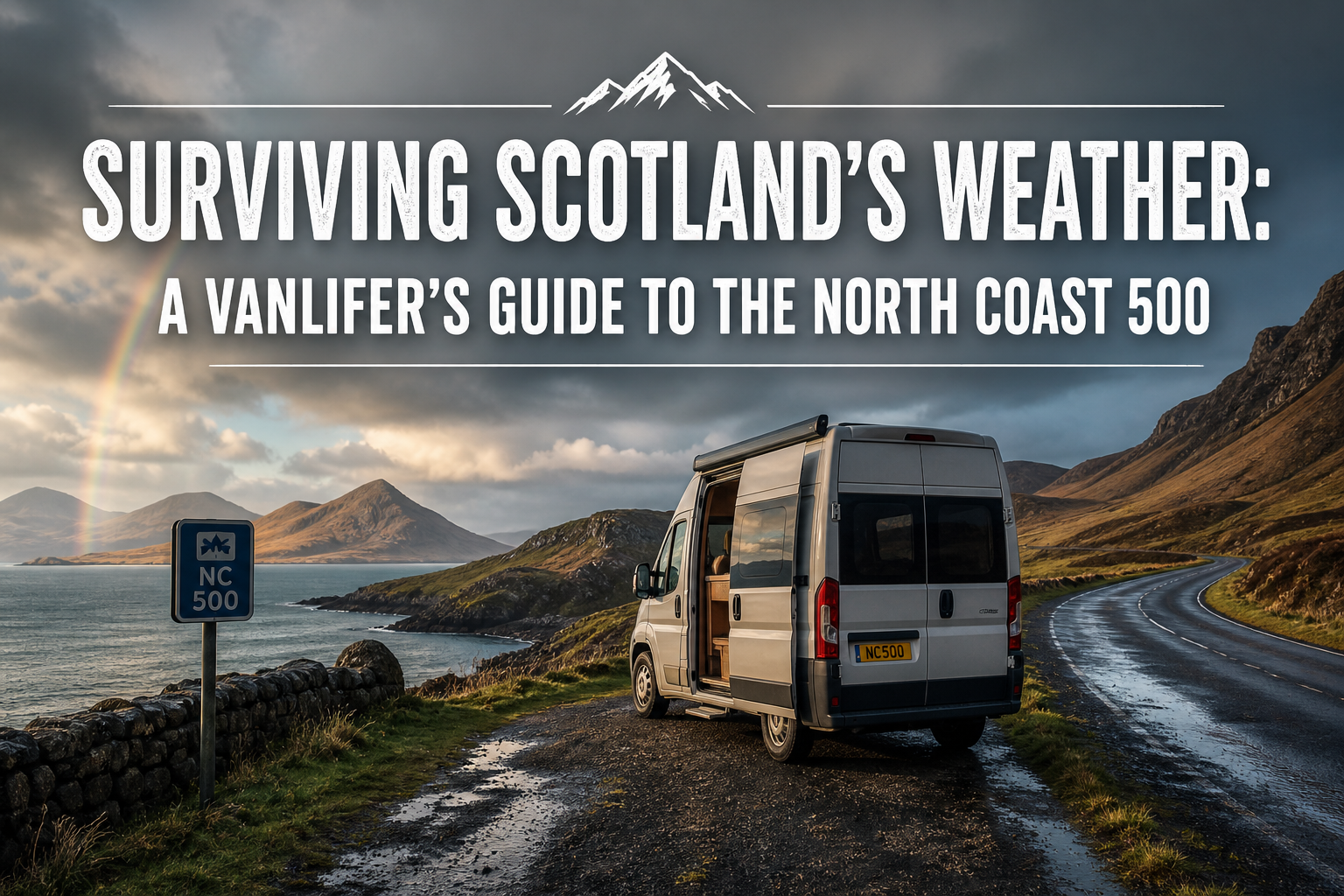
The North Coast 500 is one of the most memorable van routes in the UK, but it is not a route where the weather sits politely in the background. Wind, rain, low cloud, bright sun and sudden temperature drops can all shape the day. Sometimes they shape the whole trip.
The route loops for around 516 miles around the north of Scotland, starting and ending in Inverness. It takes in remote coastline, small villages, mountain roads, beaches, exposed headlands and long stretches where services are more spread out than many first-time visitors expect.
That is part of the appeal. It is also why preparation matters. A van trip on the NC500 does not need to be overplanned, but it does need a bit of respect for the conditions. The more comfortable you are with changing plans, waiting out bad weather and keeping the van warm and dry, the better the route feels.
This guide focuses on the practical side of travelling the NC500 in a campervan or motorhome when the Scottish weather is doing what Scottish weather does. It covers what to expect by season, how to prepare your van, what to pack, how to drive the route safely, and how to make sensible decisions when the weather turns.
Understanding Scotland’s Weather
Scotland’s weather is changeable, and in the north that change can feel quick. A still morning can become a wet and windy afternoon. A clear coastal view can disappear into low cloud. You might start the day in sunshine, pull over for lunch in rain, then end the evening watching the sky clear again.
The west coast is often wetter and milder because it faces the Atlantic. The east tends to be a little drier and cooler. The NC500 crosses both sides of the north, so you may notice the feel of the weather shift as you move around the route. The exposed northern coast can also be windy, especially around headlands, open beaches and higher roads.
For vanlife, the issue is not just whether it rains. It is what the weather does to daily routines. Damp clothes take longer to dry. Condensation builds up faster. Cooking inside becomes more common. Parking in an exposed place can mean a noisy night. A road that felt easy in calm weather can feel very different in wind, fog or winter ice.
The best approach is to treat the forecast as part of your daily planning. Check it before you drive, especially if you are heading for a single-track section, a high road, a coastal park-up or a long walk away from the van.
Seasons and What to Expect
Spring: March to May
Spring can be a good time to travel the NC500 if you want quieter roads and longer days without the full summer rush. The landscape starts to open up again after winter, and there can be some clear, bright days that are ideal for walking and slow coastal stops.
It can still be cold, particularly in the evenings and early mornings. Wind and showers are common, and higher ground can still feel wintry at times. If you are travelling in spring, pack as though you may get a little of everything rather than assuming the season will behave consistently.
This is also a useful season to be flexible. If the west coast is wet, the east may be more settled. If a walk looks poor in low cloud, a village stop, short beach walk or sheltered campsite can still make the day worthwhile.
Summer: June to August
Summer gives you the longest daylight hours and usually the best chance of warmer weather. This makes it easier to slow down, drive shorter days and fit in walks, swims, viewpoints and food stops without feeling rushed.
It is also the busiest time on the NC500. Campsites, small parking areas and popular viewpoints can fill quickly, especially in good weather. Narrow roads need patience, and it helps to start early or stop earlier in the afternoon rather than chasing a last-minute place to stay.
Midges can be a real irritation in summer, especially in still, damp conditions and around dusk. A breeze often keeps them down, but sheltered park-ups beside water or boggy ground can be uncomfortable. Take repellent, keep mesh screens closed where you can, and avoid leaving van doors open in the evening unless the wind is doing you a favour.
Autumn: September to November
Autumn is often one of the most rewarding times to travel the route. The colours change, the roads become quieter, and the light can be low and clear when the weather settles.
The trade-off is that rain becomes more frequent and the days shorten quickly. By late autumn, you have less room for casual delays. A late start, a slow road and an early sunset can make the day feel compressed.
For van travel, autumn is when condensation, drying gear and reliable heating become more important. It is worth planning shorter driving days and choosing overnight stops with a bit more shelter when strong winds are forecast.
Winter: December to February
Winter is the hardest season for vanlife on the NC500. It can also be quiet and atmospheric, but it needs more caution than the rest of the year. Expect short daylight hours, cold nights, wet roads, frost, ice and possible snow, especially inland and on higher ground.
Some attractions, campsites, toilets and food stops may run reduced hours or close for the season. Do not rely on summer-style spontaneity in winter. Check openings, carry enough food and water, and avoid leaving fuel, gas or battery levels too low.
If snow, ice or high winds are forecast, it is better to wait than to push on. The NC500 includes remote stretches where help, phone signal and turning options may be limited. A slower trip with a missed section is better than a difficult recovery in poor weather.
Preparing Your Van
A comfortable NC500 trip starts before you reach Inverness. The van does not need to be complicated, but it does need to cope with damp, cold and wind. Small weaknesses in a van setup tend to show themselves quickly in Scottish weather.
Insulation and Heating
Good insulation makes a real difference on this route. It helps the van hold heat overnight, reduces cold surfaces inside, and makes wet-weather days less draining. Thermal curtains, insulated window covers and proper wall or panel insulation all help keep the living space more stable.
A reliable heater is worth having, especially outside summer. Diesel and gas heaters are common options, but whatever system you use, make sure it is installed and maintained safely. Test it before the trip rather than discovering a problem on a cold night in Sutherland.
Heating is not only about comfort. It also helps dry the van out. Damp bedding, wet jackets and condensation all become harder to manage if you cannot warm the space properly.
Ventilation
Ventilation matters just as much as heating. Cooking, breathing and drying wet kit all add moisture to the van. Without airflow, that moisture settles on windows, metal surfaces, bedding and cupboards.
Roof vents, cracked windows, wind deflectors and safe cooking habits all help. Even in poor weather, a small amount of controlled ventilation can make the van feel less clammy. If you use a heater or cook inside, follow the safety guidance for your equipment and keep airflow in mind.
A carbon monoxide alarm is a sensible non-negotiable in any van using gas, diesel heating or other combustion-based equipment.
Power Supply
Power is easy to underestimate on a route like the NC500. In summer, solar panels can work well during long daylight hours. In autumn and winter, shorter days, cloud and rain can reduce what you get back into the batteries.
A leisure battery, split charge system, solar setup or portable power station can all help, depending on your van. The key is knowing your limits. Heating fans, fridge use, lights, phones, cameras and laptops all take power, and bad weather often means more time inside using them.
If you are travelling in colder months, plan occasional campsite stops or charging opportunities rather than assuming solar alone will cover everything.
Water, Waste and Drying Space
Remote travel makes water and waste more important. Carry enough fresh water for cooking, drinking and basic washing, but do not assume every stop will have somewhere to refill. Use proper waste points for grey water and toilet waste, and avoid putting anything into roadside drains, burns, lochs or public toilets that are not designed for it.
Drying space is another practical detail. A rail, hooks, a small washing line or a place to hang waterproofs can save a lot of frustration. Wet gear dumped on the bed or floor quickly makes the whole van feel damp.
Packing Essentials
Packing for the NC500 is less about taking lots of things and more about taking the right layers, backup items and weather-proof basics. The aim is to stay dry, warm and able to change plans without stress.
Clothing
Layers work best in Scotland. Pack moisture-wicking base layers, warm mid-layers and a properly waterproof outer layer. A lightweight jacket that only copes with drizzle may not be enough when rain and wind arrive together.
Warm hats, gloves and dry socks are useful for most of the year, not just winter. A spare dry layer kept separate from your day bag can make a big difference if you return to the van wet and cold.
For summer, add midge repellent, long sleeves and something comfortable to wear in the evening when insects are active. For winter, think more seriously about thermal layers, insulated jackets and gloves you can still drive or work in.
Footwear
Waterproof footwear is one of the easiest wins on the NC500. Even short walks to beaches, viewpoints or toilets can involve wet grass, mud, puddles or rough ground.
Walking boots or sturdy waterproof shoes are useful for exploring, while a dry pair of trainers or slip-ons makes van life more comfortable when driving or moving around camp. Keeping wet boots away from bedding is worth planning for.
Cooking and Eating
Carry simple food that can be cooked quickly when the weather is poor. Pasta, rice, soups, oats, tinned ingredients and long-life basics are useful when you do not want to search for a shop at the end of a wet day.
A portable stove, enough fuel, basic utensils and a reliable lighter or ignition method are all worth checking before you leave. In remote areas, shops may close earlier than expected or be some distance apart, especially outside peak season.
Keep some food that needs little or no cooking. If you arrive tired, cold or unable to cook outside because of wind, an easy meal can stop the evening becoming harder than it needs to be.
Safety Gear
A basic safety kit should include a first aid kit, torch or headtorch, spare batteries or charging options, warning triangle, high-visibility vest, tyre inflator or repair kit, spare tyre if your vehicle carries one, and a few tools for simple fixes.
In colder months, add a shovel, ice scraper, warm blanket, extra food, extra water and something to help with traction if you get stuck. Cat litter or sand can sometimes help a tyre find grip on a slippery surface, though it is not a substitute for avoiding poor road conditions in the first place.
Phone signal can be patchy in parts of the Highlands. Download maps offline before you go, and do not rely entirely on live data for navigation, weather or overnight stop research.
Navigating the NC500
The NC500 rewards slow travel. Trying to rush it often leads to longer driving days, late arrivals and more pressure when the weather changes. A rough plan gives you enough structure without removing the freedom that makes van travel enjoyable.
Planning Your Route
Although the NC500 is often described as a road trip, it is better treated as a series of small sections. Each part has a different feel. Some days may be about beaches and villages. Others may be about mountain roads, open moorland or slow single-track driving.
Plan a loose itinerary before setting off. Mark possible campsites, service points, fuel stops, food shops and places where you can pause if the weather gets worse. Apps such as Park4Night and Campercontact can be useful for research, but always check local signs and current restrictions when you arrive.
It is sensible to have a backup overnight option most days. A peaceful-looking park-up can be full, unsuitable in high wind, restricted by local rules or simply not somewhere you feel comfortable once you get there.
VisitScotland suggests allowing at least five to seven days for the route. For vanlife, longer is usually better. Extra time lets you wait out poor weather, spend more money locally, and avoid driving tired just to keep up with a rigid schedule.
Dealing with Road Conditions
Many NC500 roads are narrow, winding or single-track. Passing places are part of normal driving here, not parking spaces or photo stops. Use them to let oncoming traffic pass and to allow faster local traffic to get by when safe.
You should be comfortable reversing your van before taking on the smaller roads. On single-track sections, you may need to reverse to the nearest passing place. This is much easier if the van is packed securely, mirrors are clear and you are not rushing.
Large motorhomes and inexperienced drivers should be especially careful with routes such as Bealach na Bà and the B869 between Lochinver and Kylesku. These roads are often highlighted as unsuitable for larger vehicles because of steep gradients, sharp bends and difficult single-track sections. Use the recommended alternatives if your vehicle is large or if you are not confident reversing for a long distance on narrow roads.
In winter, ice and snow can make even ordinary roads more difficult. Check the forecast, check road updates, and leave space in the plan to stay put. It is rarely worth forcing a drive in poor conditions just because the itinerary says so.
Respecting the Environment
The NC500 passes through working communities and fragile landscapes. Responsible travel is not an optional extra here. It affects whether local people continue to welcome vans and motorhomes, and whether the route remains enjoyable for everyone.
Use campsites and designated overnight areas where possible, especially in busy places. Take all rubbish with you. Empty toilets and grey water only at proper disposal points. Do not block gates, passing places, driveways or access tracks.
It is also worth understanding the difference between wild camping and sleeping in a vehicle. Scotland’s access rights do not give motor vehicles an automatic right to park or stay overnight wherever they like. If signs restrict parking or overnight stays, respect them and move on.
A simple rule helps: leave the place quieter, cleaner and less pressured than you found it.
Embracing the Scottish Weather
The weather is not something to beat on the NC500. It is part of travelling here. The trick is knowing when to work with it and when to step back.
Rain and Wind
Rain and wind are the two conditions you are most likely to deal with. Rain affects visibility, walking plans, drying clothes and general morale. Wind affects driving, sleeping, cooking and whether an exposed coastal stop feels relaxing or uncomfortable.
Check your van seals before the trip. A small leak around a window, roof vent or door can become a much bigger annoyance after several wet days. Keep waterproofs easy to reach rather than buried under bedding or storage boxes.
When the wind picks up, choose overnight stops with shelter where possible. Avoid parking too close to unstable trees, cliff edges or exposed ground. If the van is rocking badly or the weather warning looks serious, a campsite, village stop or lower inland location may be the more sensible choice.
Bad weather days are not wasted days. They are good for shorter walks, cafés, laundry, van admin, food shopping and giving yourself a slower reset before the next clear spell.
Sun and Clear Skies
When the weather clears, make use of it. Dry clothes, air bedding, charge solar if you have it, and do the outdoor things that would be harder in rain or low cloud.
Clear skies can also bring colder nights, particularly in spring, autumn and winter. Do not assume a bright afternoon means a warm evening. Keep warm layers handy and think about where the van will be parked overnight if temperatures drop.
On sunny summer days, popular beaches and viewpoints can become busy. Starting early and stopping before the late-afternoon rush often makes the day calmer.
Snow and Ice
Snow and ice change the NC500 completely. Stopping distances increase, small roads become less forgiving, and remote sections can feel much more serious. If you are not used to winter driving in a van, avoid taking risks.
Carry winter basics if travelling in the colder months: warm bedding, extra food, water, a shovel, scraper, torch and enough fuel to wait if needed. Winter tyres may be worth considering if you expect to drive regularly in ice or snow.
Before setting off each day, check weather warnings and road information. If warnings are in place for snow, ice or strong wind, change the plan. The safest decision is often to stay where you are, take a lower route, or skip a section entirely.
A Slower Way to Travel the NC500
The best NC500 van trips usually leave room for the weather. That might mean spending two nights somewhere because the rain has settled in. It might mean swapping a mountain road for a sheltered coastal village. It might mean doing less in a day and enjoying it more.
Preparation gives you that freedom. A warm van, dry clothes, enough food, reliable power and a flexible route make poor weather easier to live with. They also make good weather easier to enjoy, because you are not constantly recovering from being cold, wet or rushed.
Scotland’s weather will always have a say on the North Coast 500. Let it. Watch the forecast, respect the roads, look after the places you stop, and travel at a pace that fits the conditions. The route is better that way.