
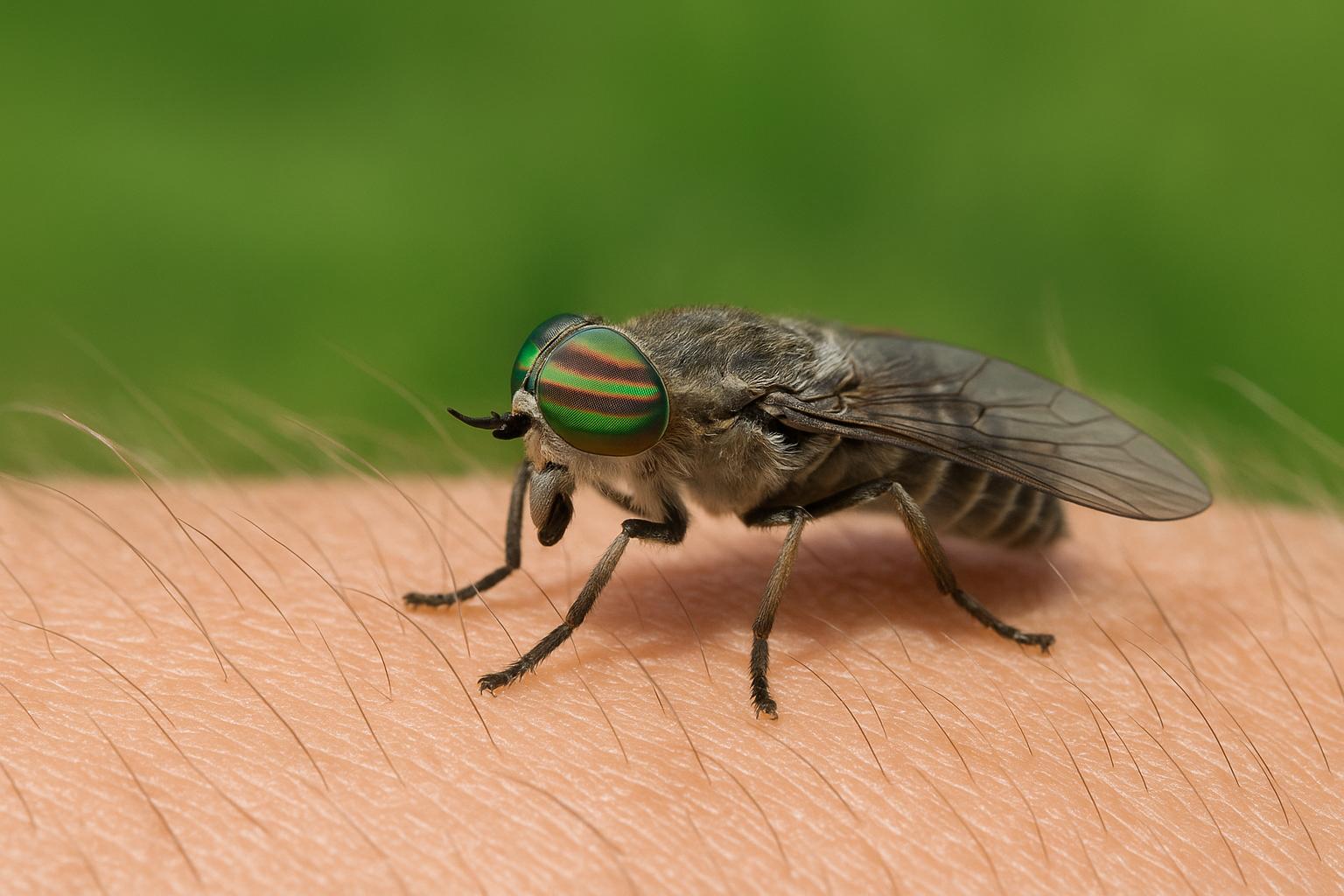
If you have ever been parked beside a quiet river with a mug of tea, enjoying the stillness, only to be repeatedly dive-bombed by a loud and determined fly, there is a good chance you have met a horse fly.
They can look fairly ordinary at first glance, but the bite quickly tells a different story. It is sharp, painful, and delivered with surprising commitment. A horse fly can interrupt an otherwise calm summer walk, picnic, swim stop, or wild camping evening very quickly.
After years of travelling and living in a campervan, horse flies have appeared often enough to become familiar. Not welcome, but familiar. Over time you start to notice where they turn up, when they are most active, and what actually helps when they do.
This is a practical look at what horse flies are, why they bite, where you are most likely to find them, and how to reduce the chances of being bitten while travelling, walking, camping, or spending time outdoors in summer.
Why horse flies bite: quick explanation
Horse flies bite because female flies need blood to produce eggs. Male horse flies feed on nectar and plant matter, but females need protein from blood as part of their reproductive cycle.
Unlike mosquitoes, which pierce the skin, horse flies cut it with scissor-like mouthparts. That is why a horse fly bite usually hurts straight away and can swell more than expected afterwards.
They are most active in warm weather, particularly between June and August. Moist environments such as riversides, lakes, woodland edges, wetlands, and fields with grazing animals tend to attract them. Hot, still and humid conditions can make them more noticeable, while even a light breeze can make a difference.
For anyone travelling by car, van or campervan, encounters usually happen during the day when parked near water, walking through rural areas, sitting outside on warm afternoons, or stopping close to livestock.
What horse flies are and how to recognise them
Horse flies, known as clegs in parts of the UK, are large biting flies commonly found near water, woodland and open countryside. Unfortunately, those are often the same kinds of places people choose for walks, swim stops, picnics and quiet park-ups.
They are usually between 1 and 2.5 centimetres long, with dark, solid-looking bodies and large eyes that can appear metallic or patterned depending on the light. Compared with a house fly, they look heavier and move with more purpose.
One of the easiest ways to recognise a horse fly is its persistence. Once one takes an interest in you, it rarely disappears after the first attempt. It may circle, hover, follow movement, and return again and again.
How to recognise a horse fly
- Noticeably larger than a standard house fly
- Large, prominent eyes, sometimes metallic or patterned
- Clear or slightly smoky wings
- A dark, solid-looking body
- Persistent behaviour, including hovering, circling and returning repeatedly
Why horse flies bite
Only female horse flies bite. They are not doing it out of aggression. They need blood in order to develop their eggs.
Female horse flies locate hosts through movement, warmth and carbon dioxide in the air. That is why walking, cycling, sitting outside after a warm day, or moving around near water and livestock can draw their attention.
They are not especially selective either. Horses, cattle, dogs and humans can all become targets. If there are grazing animals nearby, horse flies may already be in the area, and people passing through can become an easy second option.
Put simply:
- Male horse flies feed on nectar and plant matter
- Female horse flies require blood to reproduce
- Warm, moving animals and people nearby tend to attract them
- Their cutting bite is why the pain is often immediate
Where and when you are most likely to encounter horse flies
Horse flies are mainly active during warm weather, especially between June and August. They do best in places with moisture, vegetation and animals, which is why they are common in many countryside areas during summer.
Common environments include:
- Wetlands and marshes
- Lakes, rivers and slow streams
- Woodland edges and clearings
- Fields with grazing livestock
- Damp, sheltered areas with little airflow
From a travel perspective, this often means they appear when you are:
- Parked near water for a swim or lunch stop
- Camping in green countryside
- Walking or hiking through rural areas
- Sitting outside a car, van or tent on a warm afternoon
- Stopping near livestock or damp woodland
Horse flies are daytime insects and tend to be most noticeable on hot, still and humid days. Wind changes things quickly. Even a light breeze can discourage them because they are not strong fliers.
That small detail matters in practice. A shady riverside spot might look ideal at first, but if it is damp, still and surrounded by grazing fields, it can become uncomfortable. Moving to a more open place with better airflow can sometimes reduce the problem without changing your plans completely.
What a horse fly bite is like
Reactions vary from person to person. Some people experience little more than a sore spot, while others are left with swollen, itchy welts that last several days.
Common symptoms include:
- Immediate sharp pain, similar to a sting
- A red, raised bump or blister
- Itching or burning
- Swelling around the area
- Slight bleeding at first
Because the skin is cut rather than pierced, a horse fly bite can sometimes bleed slightly when it happens. It can also feel more dramatic than a mosquito bite, partly because the pain is immediate rather than something you only notice later.
In rare cases, bites can become infected or trigger a stronger allergic reaction. When you are travelling, camping, or spending time away from easy facilities, it is worth keeping an eye on the bite rather than ignoring it completely.
Preventing horse fly bites outdoors
Avoiding horse flies entirely during summer is difficult, especially in warm countryside areas. Still, small choices about where you stop, what you wear and how you set up can make a noticeable difference.
1. Avoid the worst areas when you can
Damp, sheltered places with livestock nearby often attract horse flies. If a location feels humid, still and enclosed, moving a short distance can sometimes reduce the problem.
This does not always mean abandoning a walk, swim stop or camp spot. Sometimes it is enough to move away from the wettest ground, avoid sitting right beside slow water, or choose a more open place where the air moves more freely.
2. Cover exposed skin
Loose-fitting clothing that covers your arms and legs can help more than you might expect. It gives horse flies less exposed skin to target and can make sitting outside or walking through problem areas more comfortable.
Lighter colours are generally better, as horse flies tend to be attracted to darker shades and shiny skin. Thin summer layers can still be practical, especially if you are walking through damp woodland, fields or riverside paths.
3. Use a suitable repellent
Standard mosquito repellents do not always work well against horse flies. Products containing DEET, picaridin or oil of lemon eucalyptus are usually more effective, though stronger formulas may be needed in areas where horse flies are persistent.
It is worth applying repellent before you settle outside rather than waiting until the first bite. Once horse flies are circling, they can be difficult to ignore.
4. Choose places with airflow
Horse flies struggle in windy conditions. Parking, sitting or camping in open areas where air moves freely can noticeably reduce their activity.
For van and campervan travellers, this can make a real difference. A sheltered lowland pull-in near water may feel calm, but an open spot with a breeze can be much more comfortable in horse fly season.
5. Camp higher when possible
Higher ground tends to have fewer horse flies than damp valley floors. Once you move away from wet lowland areas, their numbers often drop.
This is not a fixed rule, but it is a useful pattern to notice when planning summer stops. If you have a choice between a still, damp valley and a breezier higher spot, the higher option may be the easier place to sit outside.
6. Fit mesh screens in a van or campervan
Door and window screens are one of the most useful van upgrades for summer travel. They allow ventilation while helping keep insects outside.
This matters most when you are parked up in warm weather and want airflow through the van without leaving doors and windows fully open. Horse flies are persistent and will happily follow you inside if they get the chance.
If you sit outside regularly, a small net canopy can also help create a more comfortable space, especially at a campsite, longer stop, or relaxed riverside pitch where insects are becoming a nuisance.
7. Try natural deterrents as extra support
Some people have partial success with natural options such as lavender, citronella or eucalyptus oils. Clove-studded lemons placed nearby, or burning herbs such as sage or rosemary, may also help in certain situations.
Results vary, so it is best not to rely on natural deterrents alone. They are more useful as extra support alongside clothing, repellent, airflow and sensible stopping choices.
What to do if you get bitten by a horse fly
Even with care, bites still happen.
Start by cleaning the area with soap and water. A cold compress can help reduce swelling, and antihistamine creams or tablets may ease itching. Try not to scratch, especially if you are travelling without easy access to regular washing or shower facilities.
Keep an eye on the bite over the next day or two. Seek medical advice if the bite becomes very swollen, hot or infected, if you feel unwell, or if swelling develops around the eyes, lips or throat.
If you spend a lot of time outdoors in summer, it is worth keeping a small bite kit in your car, walking bag, van or campervan. Antiseptic wipes, antihistamine cream and basic first aid supplies take up very little space and can make a bite easier to manage.
Lessons learned from van life
A few small habits make summer travel easier over time.
Close van doors quickly. Horse flies are persistent and will happily follow you inside, especially if you are parked in a warm, damp place.
Camp higher when possible. Above around 300 metres they tend to be less common than they are on damp lowland ground.
Keep a small bite kit on board with basics such as antiseptic wipes and antihistamine cream. It is one of those small practical things that becomes more useful than expected.
Expect more flies near animals. Livestock attract them first, but humans nearby are an easy second option.
Pay attention to stillness. If the air is warm, humid and barely moving, horse flies are more likely to become a problem. If there is a breeze, life usually gets easier.
They are frustrating, but once you start noticing the patterns they become more predictable. Like many small irritations of outdoor travel, knowing when and where they are likely to appear makes them easier to manage.
Final thoughts
Horse flies are an unwelcome part of summer travel in the countryside, but they do not need to derail your plans. With a bit of awareness and a few simple adjustments, it is usually possible to stay comfortable and avoid the worst of them.
The main thing is to notice the conditions they favour: warm weather, still air, moisture, vegetation and animals. Once you recognise those patterns, you can make better choices about where to walk, where to stop, and where to park up for a while.
And if nothing else, horse flies are a reminder that even the calmest summer park-ups come with their own small challenges.