


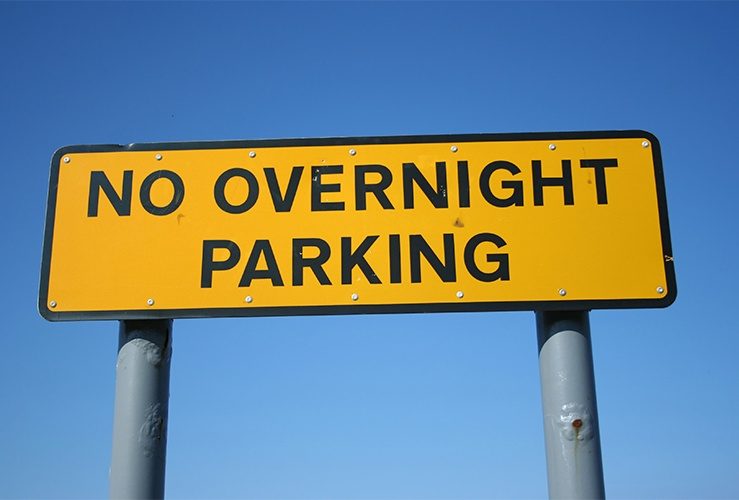

Overnight parking is one of the most persistent areas of uncertainty for people travelling by campervan in the UK. The question is usually framed as a legal one — is it allowed or not? — but on the road, the answer is rarely clear-cut.
In practice, overnight parking sits somewhere between written law, local authority interpretation, and how visible or disruptive your stay appears to be. England, Scotland and Wales each approach this slightly differently, and even within the same council area, enforcement can vary from one car park to the next.
What follows breaks down how overnight campervan parking works across the UK: what’s formally restricted, what’s often tolerated, and where assumptions commonly lead people astray.
Parking vs Camping: Why the Distinction Matters
A common misunderstanding is that sleeping in a van automatically counts as camping. In most cases, it doesn’t — but the distinction is still important.
- Parking generally means leaving a vehicle legally parked.
- Camping, as defined by councils, usually involves external signs of occupation: awnings, chairs, tables, cooking outside, levelling ramps, or waste disposal.
Enforcement tends to focus less on whether someone is asleep inside a vehicle and more on impact and duration: how long you stay, how visible you are, and whether complaints are likely.
England: Overnight Parking Is Council-Controlled
There is no single national law in England that bans sleeping in a campervan. Instead, most overnight restrictions are set locally.
What Usually Applies
- Sleeping in a vehicle is not illegal in itself
- Councils regulate parking via Traffic Regulation Orders (TROs)
- Restrictions may apply even where signage is limited or unclear
How This Plays Out on the Ground
In England, signage is your first reference point, but not the only one. Many council car parks clearly prohibit overnight parking during set hours. Others say nothing at all.
Where no restriction is displayed, enforcement often depends on:
- Location pressure (especially coastal or tourist areas)
- Time of year
- Past misuse of the site
- Local complaint history
I’ve stayed overnight in unsigned council car parks without issue, particularly outside peak season. I’ve also been asked to move on from places that appeared unrestricted but were informally monitored.
Wales: Similar Law, Firmer Messaging in Key Areas
Legally, Wales mirrors England, but the practical experience can feel more structured, particularly in sensitive locations.
National Parks and Coastal Zones
Welsh national parks and popular coastal car parks are more likely to:
- Display explicit overnight bans
- Use height barriers
- Actively discourage vehicle stays outside campsites
Inland areas and less visited regions tend to be more tolerant, especially midweek and out of season, but this isn’t consistent enough to rely on.
Scotland: Often More Tolerant, Not Unrestricted
Scotland is frequently described as more permissive, but that reputation needs context.
The Access Code
Scotland’s Outdoor Access Code allows wild camping on foot, not by vehicle. Campervans remain subject to land ownership, local authority controls and byelaws.
What’s Different in Practice
- Fewer formal restrictions in rural areas
- Greater tolerance of low-impact, short stays
- Stronger expectation of responsible behaviour
That said, pressure in popular areas — notably parts of the NC500 and Loch Lomond — has led to permit schemes, designated zones and outright bans. Past experience is not always a reliable guide.
What Actually Triggers Enforcement
Across all three nations, enforcement is rarely random. Based on experience, problems are most likely when:
- Staying multiple nights in one location
- Using external equipment
- Blocking access, views or paths
- Generating noise or waste
- Parking in high-pressure tourist areas in peak season
Arriving late, keeping everything inside the van and leaving early often reduces attention — but it’s a pattern, not a rule.
Common Misunderstandings
“No sign means it’s allowed.”
Not necessarily. Some restrictions exist via TROs that aren’t clearly displayed.
“You’re allowed one night anywhere.”
There is no legal one-night allowance in UK law. This is a social convention, not a right.
“Scotland allows campervans everywhere.”
Tolerance exists, but so do exclusions, permits and enforcement zones.
Practical Takeaways
- Always check signage, but don’t rely on it alone
- Be especially cautious in national parks and coastal hotspots
- Keep stays short and self-contained
- Expect rules and tolerance to change with season and pressure
How to Think About Overnight Parking in the UK
Overnight campervan parking in the UK isn’t governed by a single rulebook. It’s shaped by local authority powers, land ownership and social tolerance.
England and Wales rely heavily on council-level restrictions, while Scotland often allows more flexibility — though that flexibility is shrinking in busy areas.
The most reliable approach isn’t finding a loophole, but staying informed, minimising impact, and accepting that sometimes the correct decision is simply to move on.